connect with us
Twitter Linkedin

Type To Search

Octavian Precious Metals Trading DMCC

Octavian Precious Metals Trading DMCC

  • Home
  • About
  • Products
  • Services
  • News
  • Contact
MARKETS
HomeMARKETSPage 9

Category: MARKETS

Cobalt-Market-Value-Will-More-Than-Double-by-2030-KMET-Invests-440×250
COBALTMARKETSMINING
October 20, 2022 By Octavian News

Cobalt Market Value Will More Than Double by 2030

The global market size of cobalt is expected to grow from $8.7 billion in 2021 to over $19.4 billion by 2030 according to a recently updated report from Straits Research. Demand for cobalt and other raw metals necessary for electrification is ramping up substantially.

Cobalt is a raw material that has a wide range of uses across many industries and is a by-product of nickel or copper mining. It’s a key component in rechargeable batteries and demand is anticipated to drive a 9.3% compound annual growth rate for the metal between now and 2030.

Use cases for cobalt continue to grow, as the metal is known for its high-temperature resilience, energy storage capabilities, hardness, process efficiency, and more according to the report. Demand is growing within the artificial intelligence industry, additive manufacturing, as well as digital processing as R&D drives continued innovation in the use of cobalt.

Cobalt is currently used in several sectors. It’s used in batteries of portable electronics like laptops and smartphones. It is in integrated circuits, in permanent magnets in wind turbines, and rechargeable batteries for storing renewable energy. It is also used in superalloys used by the aerospace and defense sector as well as in orthopedics and dental implants.

Over half of the cobalt produced today is used for rechargeable batteries for electric vehicles, with each battery requiring between 5-15 kilograms (11-33 pounds) of cobalt. As demand increases exponentially for EVs, so too will the demand for cobalt.

Investing in Cobalt and Electrification Metals With KMET

KraneShares launched its newest fund this month, the KraneShares Electrification Metals ETF (KMET), which offers targeted exposure to the metals that will be necessary for the electrification and clean energy transition of the world’s economy in the pivot to net-zero emissions.

The fund seeks to track the Bloomberg Electrification Metals Index and is comprised of futures contracts on copper, nickel, zinc, aluminum, cobalt, and lithium. These metals are all core components for batteries, electric vehicles, and the renewable energy infrastructure that is being created and expanded as countries aim for net-zero emissions by 2050 to curtail global warming.

KMET has an expense ratio of 0.79% and is part of the climate-focused lineup of funds from KraneShares.

Source: ETF Trends
READ MORE
1200x675_cmsv2_bdfbbfd3-60b3-521c-b568-23359b060381-6444452
LITHIUMMARKETSMININGTECHNOLOGY
October 19, 2022 By Octavian News

Europe Joins the ‘White Gold’ Rush for Lithium and Faces an Energy Transition Challenge

Shortly before arriving at the Paris Motor Show on Monday, French President Emmanuel Macron told the financial daily Les Echos that his administration wanted to make electric vehicles “accessible to everyone”.

Macron then proceeded to announce a series of measures to enable households to acquire electric vehicles. With the EU seeking to ban the sale of combustion engine vehicles from 2035, France is trying to gradually phase out fossil-fuel cars. While the move is seen as an essential step on the road to energy transition, it also poses a serious problem: it will require massive quantities of metals needed to manufacture batteries, especially lithium.

The figures speak for themselves. Since 2015, production volumes of lithium – also known as “white gold” – have tripled worldwide, reaching 100,000 tonnes per year by 2021, according to the International Energy Agency. The volumes could increase sevenfold by 2030. At the European level, about 35 times more lithium will be needed in 2050 than today, according to an April study by KU Leuven, a Catholic research university in Belgium.

“We are at a stage where all countries are starting their energy transition more or less at the same time and this generates very significant metal needs,” noted Olivier Vidal, a geologist and director of research at the French National Centre for Scientific Research (CNRS). “This will certainly create tensions in the coming years, with expected increases in costs and, possibly, supply difficulties. So, there is a real strategic and sovereignty issue for states.”

The European Commission is well aware of these concerns and included lithium in the list of critical raw materials with a risk of shortage, back in 2020. Lithium “will soon be even more important than oil and gas”, said European Commission chief Ursula von der Leyen in September 2022.

Extraction projects in their infancy

Lithium production today is dominated by just a handful of countries: Australia, which has 20% of the world’s reserves of “white gold”, and Argentina, Chile and Bolivia, which have 60%. China, on the other hand, was an early investor in refining and controls 17% of the world’s lithium production. With just five countries controlling 90% of world production, the International Energy Agency calls it a “quasi-monopoly” situation.

Europe hopes to make the most of the new “white gold” rush by exploiting its own subsoil. The continent’s main reserves are in Portugal, Germany, Austria and Finland. In France, the French Geological and Mining Research Bureau (BRGM) drew up an inventory in 2018 highlighting reserves in Alsace, the Massif Central region, as well as in the Armorican Massif area in Brittany.

Europe’s lithium extraction and production projects have been mostly undertaken by small and medium-scale companies across the continent. “The most successful ones are in Finland. Lithium production could start in 2024 thanks to the exploitation of a small mining site located about 600 km north of Helsinki,” explained Christian Hocquard, a geologist-economist and co-author of a book on lithium energy transition. “In the Czech Republic, an Australian company, European Metals, wants to exploit old tin mines located north of Prague. There are similar projects in Germany and Austria,” he noted.

“These are generally minor projects, carried out by small companies. The big ones prefer to invest in Australia or Latin America,” explained Hocquard. “Few of them will see the light of day, blocked by the difficulties of obtaining permits but above all due to resistance from local communities,” he predicted.

Facing the environmental consequences of our consumption

Mining projects often faced public discontent. In Portugal, an open-pit mine – the largest in Western Europe – was supposed to be built in 2026 in the village of Covas do Barroso. Work has however been currently suspended following numerous protests. In Serbia, the opening of the Jedar mine was cancelled a few months before the January 2022 presidential election. In France, Barbara Pompili, former ecological transition minister, floated the idea of exploiting lithium in the tiny village of Tréguennec, in Brittany’s Finistère region back in February 2021. The area however is classified as a protected zone and sparked a local outcry.

Lithium extraction “produces considerable volumes of waste that must then be stored. The waste can also lead to water or air pollution,” explained Vidal.

While Vidal views the outcry as “completely understandable”, he nevertheless supports these projects. “It would be much more ethical. We consume lithium daily, it would be normal for us to suffer the impacts related to our use. Today, this pollution already exists, but in other countries, far from our eyes. This would raise awareness among users, who would be confronted with the impacts of their consumption,” he said.

France looks to ‘green lithium’

France, for its part, is studying an alternative, called the extraction of “green lithium”. Unlike extractions from rocks or salt deserts, which function like traditional mines, “green lithium” is produced from geothermal sources, with an extraction method similar to that of a well. In France’s Alsace region, the European project EuGeLi (for European Geothermal Lithium) is a pioneer in this field. It recently succeeded in extracting its first kilograms of lithium using this technique. “For the time being, however, the technique remains too expensive to be considered on an industrial level,” noted Hocquard.

The other alternative is to focus on refining lithium rather than mining it. A project was announced in Germany in early June and the Strasbourg-based company Viridian Lithium plans to open the first French lithium factory for batteries there by the end of 2025. It will source ores from Latin America and aims to produce 100,000 tons of lithium hydroxide by 2030. “This would not solve the issue of dependence, but it would create know-how and jobs,” said Vidal.

From an ecological perspective, this would also have a major advantage. At present, lithium is almost systematically transited through China to be refined. The EU now plans to open three “gigafactories” for battery production.

Focusing on battery recycling

Vidal warns that even if all these projects come to fruition, they would still not be able to compete with the salt deserts of South America or with Australian production. “On the other hand, where the European Union could really make its mark in the coming years is in battery recycling,” he noted.

“Currently, the quantities of metals to be recycled are still limited since lithium batteries did not exist ten years ago. But by 2035, we will have batteries for electric vehicles at the end of their life and therefore a stock that can be recycled,” he explained. According to the University of Leuven, 40% to 75% of the EU’s metal needs could be met through recycling by 2050. This would guarantee supply security as well as reduce the environmental impact.

“For that to happen, we have to act now,” said Vidal. “We need to design products that will be easily recyclable, at lower cost, to reassure investors.”

But most important, according to Vidal, is our consumption habits. “We need to think about our uses. Lithium is certainly used in car batteries, but also in many everyday gadgets,” he explained. “One of the levers is also to learn to move towards more material sobriety.”

Source: France24

READ MORE
gold-bars-hand
GOLDMARKETSTECHNOLOGY
October 18, 2022 By Octavian News

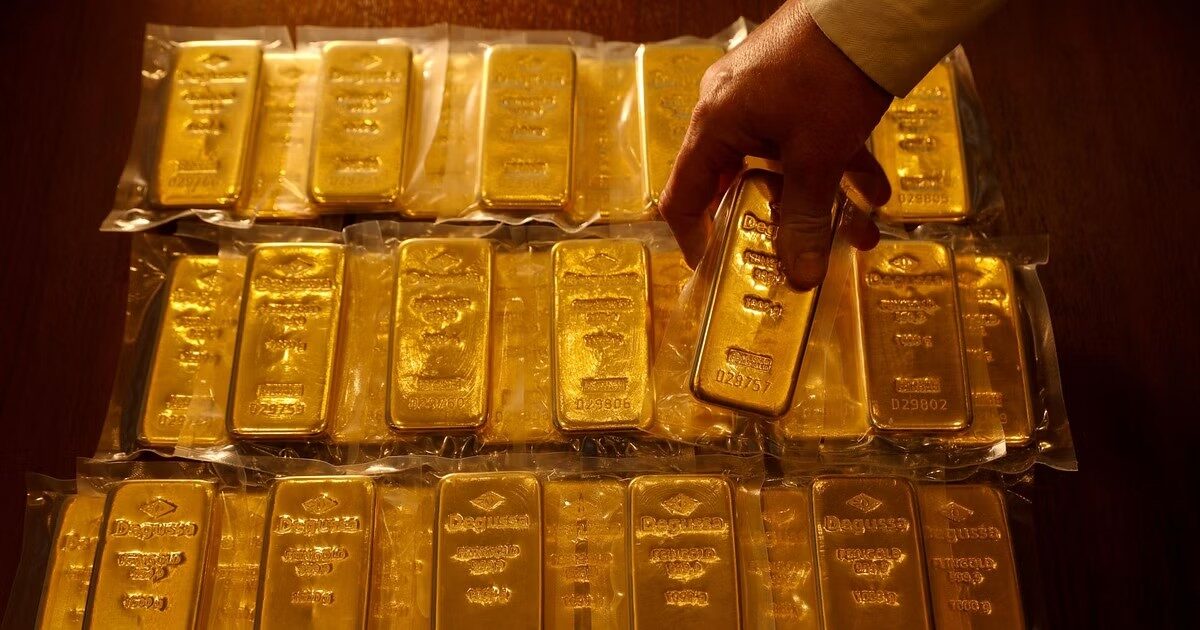
A Digital Drive to Reform the $11 Trillion Global Gold Market

The World Gold Council has a plan to make trading more liquid, starting with the $500 billion in gold bars beneath London. Critics say it’ll meet stiff resistance.

For Dubai Multi Commodities Centre (DMCC), its foundation was underpinned by gold.

Conceived to provide the physical and financial infrastructure required to create a hub for the global commodities trade, it wasn’t until Standard Bank London and Dubai Islamic Bank became the first to make gold Sharia-compliant by launching the first and only ground-breaking gold Sukuk, which raised $200 million, the proceeds of which were used to finance the construction of its first commercial towers, namely Gold, Silver and Almas.

With a foundational environment created, the Dubai Gold & Commodities Exchange (DGCX) debuted as one of its subsidiaries in 2005 and, with it, the region’s first commodity derivatives exchange.

With a formally established bourse that not only provided guaranteed settlements, reduced counter-party risk, fully transparent fee structures and access to regional and international liquidity pools, DMCC’s facilities and services – particularly its vault, which was developed in conjunction with Brink’s Global Services – helped to support not just the development of its futures market but that of the physical. Which today includes Sharia Gold, India Gold Quanto, Daily Gold and Physical Gold Futures & Spot Gold Contracts.

Having captured the physical market, DMCC’s next focus is on possibilities for bullion in the digital space.

Research to refining

As a single location that fully services the entire gold value chain, from research and refining to trading and investing, Dubai has risen to become responsible for roughly 25 per cent of global trade. However, this was only made possible, but creating and nurturing the right environment. In a similar way to how China, Indonesia and Uzbekistan remain the largest producers in Asia, with China and India being the largest consumers, it is Singapore and Hong Kong that remain the favored trading centres due to their zero rate tax for bullion and strong rule of law.

Similarly, other centres such as Luxembourg have also remained attractive and competitive by catering to the increasing demand for ESG products by offering Fair Trade bullion through its state savings bank. Akin to other Fair Trade products, BCEE guarantees that for each kilo of gold sold, in addition to the minimum fair wage guaranteed, Fair Trade receives a premium of $2,000, which is directly paid to the community of the Macdesa mine in Southern Peru, where the gold is mined.

As a lesson learned from the regulated economies of least resistance, hopefully the same philosophy will be applied to the UAE’s mint and coin industry, thereby attracting another branch of the gold industry to benefit from the country’s existing verticals.

An epicenter for gold

If I were to mention a second key policy advantage, it would be DMCC’s steadfast commitment to serving its stakeholders by remaining an impartial entity whose sole commitment is to its community and the greater long-term vision of Dubai and the UAE. Driven by its own decree, its duty to provide an optimal environment has led to Dubai becoming an epicenter for the global physical gold ecosystem, connecting mining supply sources from Africa and the former CIS countries with the major demand markets of Asia, Europe, and the US, in a globally centralized timezone that facilitates trading activities around the clock.

An additional practice that has dramatically served Dubai’s gold industry is that of collaboration, most recently illustrated through DGCX’s agreement with FinMet, who will not only bring their wealth of experience but support the rollout of new products and in an advisory capacity to onboard banks and new members seeking greater diversity with their product needs.

Bullion’s place in digital economy

It will be interesting to see how gold translates into the digital economy, in particular blockchain and crypto – with companies including Pax (PAXG) providing an asset-backed token where one token represents one fine troy ounce of a London Good Delivery gold bar, stored in professional vault facilities, perhaps more investors will consider this as an easier and safer way to invest.

Certainly, DMCC Crypto Centre will continue to monitor the market and be ready when opportunity, regulation and demand meet.

In a similar fashion to the development of Dubai’s wider gold industry, the release of our latest bullion coins are still in their infancy, particularly in comparison to the Krugerrand, which has been on the market since 1967 and is by far the world’s most popular 1 oz coin. However, as a store of value, which reflects the extraordinary progress made and forged using only fully-compliant 999.9 24-carat gold, I believe it is just a matter of time before history will repeat itself.

Source: Gulf News

READ MORE
501273_gettyimages462432081_191545
LITHIUMMARKETS
October 17, 2022 By Octavian News

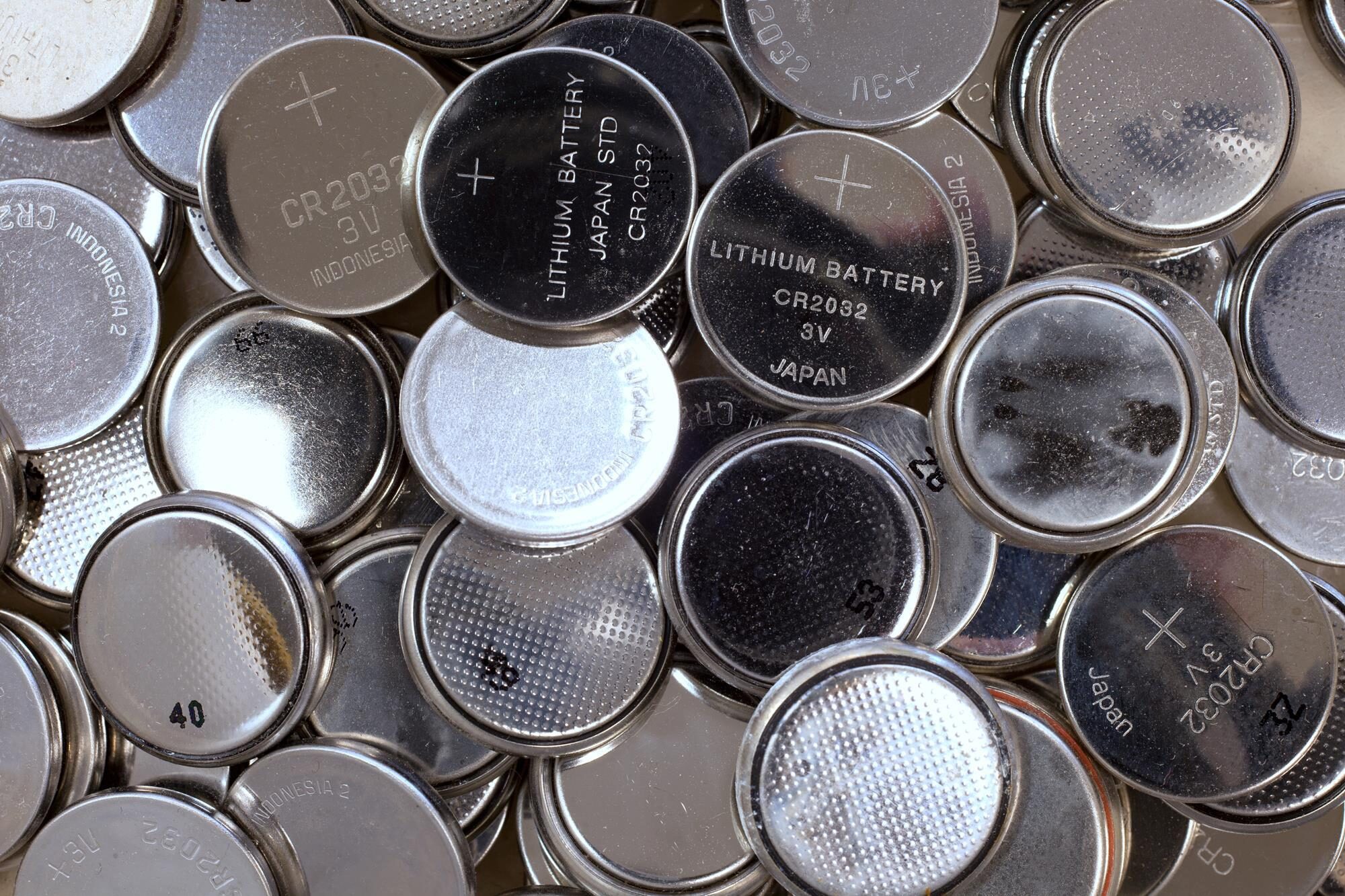
Lithium Demand Is Soaring

Lithium demand is growing like gangbusters, but that isn’t enough for everyone on Wall Street to recommend lithium stocks.

That is because it can be hard to reconcile fast growth and rocketing commodity prices with shareholder value.

J.P. Morgan analyst Jeffrey Zekauskas launched coverage on Monday of lithium producer Livent (ticker: LTHM) with a Hold rating and $28 price target. Zekauskas also covers the world’s largest lithium miner, Albemarle (ALB). He has rated those shares Hold since May 2021. His Albemarle  price target is $270 a share.

“ Livent has a strong earnings trajectory,” Zekauskas wrote in his launch report. He forecasts Livent ’s per-share earnings will grow from 18 cents in 2021 to $1.50 in 2022 and $2.30 in 2023.

That is incredible growth in just two years. Most of those gains come from rises in lithium pricing instead of from capacity expansion. Benchmark lithium prices are up about 200% over the past 12 months and up roughly 12-fold compared with late 2020.

Electric vehicles are the reason for the increases—demand of lithium-ion batteries that power EVs has nearly tripled since 2020. Demand is expected to double again between 2022 and 2024.

Supply is scrambling to catch up will all that demand. Livent, for its part, is working to increase its capacity by about 170% between 2022 and the end of 2025.

The supply and demand change make calling long-term lithium prices difficult. Ultimately, commodities tend to move toward the marginal cost of production. Where on the globe that marginal—higher cost—lithium comes from, what the cost of production looks like, and when things normalize, however, is anyone’s guess.

Where things settle out has big implications for lithium-linked stocks. At a benchmark lithium price of $40,000 per metric ton, J.P. Morgan projects Livent and Albemarle stocks’ free cash flow yield in 2023 would come in at about 0.3%, or near break-even, and 5.2%, respectively. At prices of $70,000 a metric ton, however, yields would be dramatically higher, at almost 9% and 16%, respectively.

Benchmark prices are roughly $75,000 a metric ton today.

That wide range of free cash flow yields, depending on what prices do, is a reason Zekauskas is on the sidelines and says Livent stock is an above average risk.

The rest of Wall Street is a little more bullish. While only 47% of analysts covering Livent stock rate shares Buy, roughly 60% of analysts covering Albemarle stock and shares of lithium producer SQM ( SQM ), rate them Buy.

The average Buy-rating ratio for stocks in the S&P 500 is about 58%.

Livent was up 4.9% in midday trading. The S&P 500 and Dow Jones Industrial Average were up 2.2% and 1.8, respectively.

It is a green day for markets and EV stocks. Shares of EV leader Tesla (TSLA) were up 6.3%.

Source: Barron’s

READ MORE
frank-giustra
GOLDMARKETS
June 28, 2022 By Octavian News

Gold’s Role in a Changing World Order: Finance Titan Frank Giustra Interview

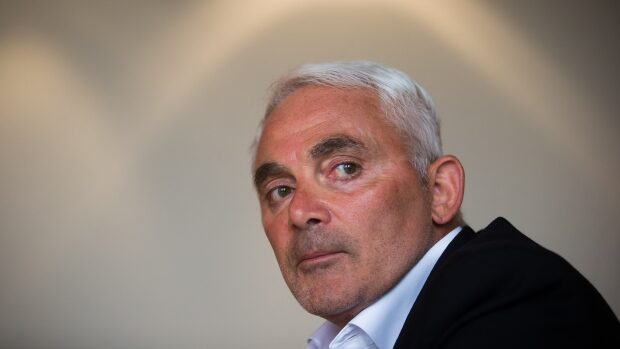
China is “like a black hole where the gold goes in and never comes out,” says Frank Giustra, a major player in the mining industry and founder of Lionsgate Entertainment.

As the largest producer and importer, Giustra believes China is under-reporting their gold reserves. “My guess is they are preparing themselves, as Russia is, to exit the US dollar system… to one where gold plays a role.”

In an exclusive series of interviews with CEO.CA taped over a couple of days, Giustra says war in Europe is accelerating a bifurcation of the monetary system. Countries representing ~80% of the world’s population refused to condemn Russia for its Ukraine invasion despite pressure from the West. Meanwhile, global central banks have been selling dollars to stockpile gold.

“Currency is being debased and inflation is out of control,” he says. Giustra believes CPI is manipulated to prevent a confidence crisis, and actual inflation may be double what is reported.

Global debt has gotten to “insane” levels according to Giustra. He cites $300 trillion or 250% of GDP in most developed countries. “Raise rates in that environment.. you’ll implode the whole system. They know this. So [the Fed] can talk a lot about raising rates and they can make a lot of threats about unwinding the balance sheet. None of it is going to happen.”

In the interview, Giustra shares for the first time how his family lost everything to hyperinflation in Argentina in the 1970s. They landed broke in a small trailer on Canada’s Texada Island where Giustra’s father laboured in an iron ore mine. 

Gold would have “absolutely” protected the family from inflation, Giustra believes. He fears a similar unravelling of the Western economy is happening now and is warning investors to prepare themselves.

“People don’t believe that [hyperinflation is] possible in America or Europe… It can happen, and it’s always caused by the same thing, the printing of too much money.”

“Gold is the only constant [through history] that no one can print,” he says, while also advocating for diversification in certain stocks, real-estate, and even cash. “This is not the time for speculation,” Giustra says. 

In 2001, he famously forecast a coming gold bull market and, with Ian Telfer and Neil Woodyer, built Wheaton River Minerals —which would become Goldcorp— from a $25 million shell into a $50 billion producer in 10 years. Goldcorp combined with Newmont in 2019 and today is the world’s largest gold company. Telfer joined Giustra for part of the interview to share experiences of building businesses together. 

Since Goldcorp, Giustra and Woodyer co-founded Endeavour Mining, now worth $7 billion, and Leagold, a gold miner acquired for ~$600 million by Equinox in 2019. Giustra, Telfer and Woodyer are partners in a new venture, Aris Gold (TSX:ARIS), which they plan to transform from its current ~$200 million valuation into another major producer. 

Success has enabled Giustra to connect with history as a major collector. He showed CEO.CA the personal trunk of Spanish conquistador Francisco Pizarro he acquired and had restored. With less than 150 men in 1532, Pizarro conquered the Incas in what is now Peru. They plundered a room full of gold in the fabled city of Eldorado —today Cuzco— which contributed to the rise of the Spanish empire. It’s an incredible museum-worthy relic which reminds Giustra of gold’s role in history and the ugly, greedy aspect of human nature.

The interview with Frank Giustra is full of insights on the economy, wealth preservation and building companies. Watch his perspectives on YouTube now.

Source: Kitco

READ MORE
  • 1
  • …
  • 7
  • 8
  • 9

© 2023 Octavian Precious Metals Trading DMCC. All Rights Reserved.