
connect with us
Twitter Linkedin

Type To Search

Octavian Precious Metals Trading DMCC

Octavian Precious Metals Trading DMCC

  • Home
  • About
  • Products
  • Services
  • News
  • Contact
Author: Octavian News
HomeOctavian NewsPage 10
960×0
AFRICAGOLDMINING
October 19, 2022 By Octavian News

Mining Law in Democratic Republic of the Congo

Mining represents a critical sector for the development of the Democratic Republic of the Congo (DRC). According to the World Bank, the mining sector has dominated the Congolese economy since the early 1910s.

This domination is unsurprising, given that the country is incredibly rich in minerals. For example, the Katanga Copper Belt’s cobalt reserves total an astounding 5 million tonnes, making it the world’s largest known cobalt deposit. The DRC also possesses the largest known diamond deposits and the largest gold deposits in the world. Its copper reserves make this region the second richest copper region in the world, with 70 million tonnes, surpassed only by Chile. Other significant mineral resources in the DRC include tin, tantalum and tungsten.

Since peace returned to the DRC, successive governments have faced significant challenges in their efforts to establish or re-establish both industrial production and a legal framework for this key sector.

After several years of discussion, the Congolese Mining Code was enacted by the Congolese Congress in 2002, replacing outdated mining legislation. This resulted in both an increase in foreign direct investments and a steady increase in copper production in the years prior to the global financial crisis of 2008. Despite this crisis, more than 1 million tonnes of copper were transported in 2014, up from 9,000 tonnes in 2003, the year a peace agreement officially ended Africa’s deadliest civil war.

The 2002 Mining Code was substantially amended by Law No. 18-001 of 9 March 2018 (the New Mining Code). The New Mining Code notably reinforces local content requirements, reduces the tax regime attractiveness and abrogates the 10-year stability clause provided for in the 2002 Mining Code.

Major mining companies have threatened to challenge the New Mining Code through international investment arbitration. However, the DRC government has maintained all the problematic amendments in the New Mining Code.

Some commentators had predicted that, as a consequence, the DRC’s mining sector could suffer a slowdown. This has, however, not been the case and the DRC’s mining sector continues to grow. In 2021, the mining sector was still a key driver of DRC’s growth, with copper and cobalt production rising by 12 per cent and 7.6 per cent respectively.

Legal Framework

The New Mining Cod was adopted by the Congolese Parliament on 27 January 2018 and promulgated by the President of the DRC on 9 March 2018. The implementing measures of the New Mining Code are set forth in the Mining Regulations adopted in June 2018.

The DRC is a member of several international organisations, including the World Trade Organization, the World Bank Group, the Multilateral Investment Agency, and the International Centre for Settlement of Investment Disputes. The DRC has also ratified the 1958 New York Convention on the recognition of foreign arbitral awards.

In addition, the DRC voluntarily adhered to the Extractive Industries Transparency Initiative criteria, and has entered into several bilateral investment treaties and into a convention for the avoidance of double taxation with Belgium.

Additionally, with the stringent UK Bribery Act and US Foreign Corrupt Practices Act in force, it is essential for any company doing business in the DRC to seek professional commercial and legal guidance to mitigate business and regulatory risks. Section 1502 of the US Dodd–Frank Wall Street Reform Act and the new EU Conflict Minerals Regulation are also relevant for businesses active in the DRC. Depending on the type of mineral traded (tin, tungsten, tantalum and gold), these laws impose extensive supply-chain due diligence obligations on both upstream and downstream companies.

At the regional level, in July 2012 the DRC joined the Organisation for the Harmonisation of Business Law in Africa (OHADA). OHADA law can only benefit further investment by providing companies doing business in the DRC with a single, modern, flexible and more reliable business law framework, which already applies in 17 OHADA Member States and which supersedes previous or subsequent national legislation. OHADA law is of particular interest to mining companies, as it primarily covers commercial, corporate, loan-guarantee, accounting and arbitration law. OHADA law entered into force in the DRC on 12 September 2012. In addition, a one-stop shop for business start-ups was instituted and shows encouraging development.

Congolese law, which is based on civil law and closely modelled on Belgian law in particular, will remain applicable in areas not governed by OHADA law. It will, thus, be of paramount importance to understand the myriad applicable pieces of legislation to properly navigate the remaining bureaucratic, legal and, especially, cultural and linguistic hurdles.

The Mining Cadastre receives applications for mining rights, grants mining rights and keeps records of mining rights, among other functions. Moreover, the DRC has created a national transparency initiative committee with respect to the management of extractive industries in the DRC. Any regulation is issued by the Ministry of Mines, which supervises mining activities at the national level. At the highest level, the President of the DRC is empowered to enforce the mining regulations and to classify mineral substances as reserved mineral substances, if applicable.

Mining rights and required licenses and permits

Underground minerals belong exclusively to the state. However, any private party may be authorised by the state to engage in mining activities (from exploration to exploitation and distribution), provided that specific objectives of eligibility, priority and capacity criteria set forth in the Mining Code are met. The types of mining permits available in the DRC are research permits, exploitation permits (including small-scale mines) and tailing exploitation permits. Specific legislation regarding artisanal mining and quarry rights also exists.

Companies that wish to develop mining activities in the DRC are required either to incorporate a Congolese company or to elect domicile with a ‘mining agent’ as a condition of eligibility to obtain an exploitation permit. In addition, to be eligible for a mining permit, companies are obliged to either form a joint venture with a state-owned company (such as Gécamines) that already holds the necessary permits, or freely assign a mandatory 10 per cent stake of its share capital to the DRC.

Any person wishing to engage in prospecting or reconnaissance activities must make a prior declaration to the Mining Cadastre and seek a prospecting permit. This permit entails no priority whatsoever in relation to potential future exploration or exploitation rights.

An exploration permit may be granted to any eligible private company for a period of five years, renewable once for the same duration, with respect to all mineral substances (Article 52). To be eligible for an exploration permit, a company must demonstrate a minimum financial capacity of at least five times the total amount of the annual surface rights payable for the area covered by the exploration permit (Article 58). The surface rights amount to US$5.89 per square metre (Article 397). In addition, the company will have to submit a rehabilitation and mitigation plan before starting any research activity. There are specific obligations for maintaining the permit, including the requirement to start exploration work within one year of delivery of the permit (Article 197).

Should the holder of a research permit demonstrate through a feasibility study the existence of an economically workable ore deposit (including tailings, for which specific permits exist) and sufficient financial capacity for the development, construction and exploitation of a mine, the Minister of Mines may grant an exploitation permit for a duration of 25 years, renewable for successive periods of 15 years. The exploitation permit may be refused by the Minister of Mines only for specific reasons, which are exhaustively listed in the Mining Code. Obtaining an exploitation permit obliges the operator to transfer to the state a free carry participation of 10 per cent of the operator’s share capital (Article 71). In practice, however, operators that are engaged in joint ventures with state-owned permit holders, such as Gécamines, are not required to transfer 10 per cent of their share capital to the state.

In addition to exploration and exploitation permits, the Mining Code contains specific provisions with respect to artisanal or small to very small-scale mining rights, and quarry rights. Quarry rights relate to construction materials rather than mineral substances.

The timeline for obtaining an exploration or exploitation permit is as follows.

The Mining Cadastre has 20 working days to examine the request and to make a decision (Article 40). Following this, the Directorate of Mines must conduct a technical investigation. The office in charge of the protection of the environment examines the environmental impact study and the environment management plan. These reviews must be conducted within a period of time set forth in the Mining Code for each type of request (typically, for exploitation permits, within 30 working days for the Mining Cadastre, 60 working days for the Mining Directorate and 180 working days for the environmental investigation). Should any of the aforementioned authorities fail to reach a decision within the required time frame imposed by the Mining Code, the mining permit will be considered granted.

When a favourable decision is made, the Mining Cadastre will then grant the mining permit to the applicant, provided that the relevant surface rights have been paid for within 30 business days.

All mining rights are conveyable under the Mining Code. A specific right of amodiation (comparable to a long lease agreement) also entitles the holder of an exploitation permit to transfer all or part of such rights under a rental scheme. Exploitation permits can also be mortgaged. Finally, while mining rights are valid only for specified mineral substances, permits can be extended to additional minerals through specific procedures.

Processors of mineral substances who do not hold mining rights and whose activities are limited to processing activities must obtain a specific licence in this respect pursuant to the Mining Code.

The holder of a research permit will also have to submit a rehabilitation plan for the site after its closure to be eligible for an exploitation permit. The closure of a research or exploitation centre must be promptly notified to the Mining Administration.

The holder of the mining rights is required to obtain a financial guarantee in an amount sufficient to carry out environmental rehabilitation.

Environmental and social consideration

iEnvironmental, health and safety regulations

The New Mining Code and the Mining Regulations contain several environmental and health and safety regulations. Environmental regulations are by far the most detailed.

While most health and safety regulations are contained in the Congolese Labour Code, and are therefore not specific to the mining sector, the Mining Regulations do contain specific safety directives regarding the use of explosives.

In order to conduct mining operations, an Environmental Exploitation Permit from the Ministry of the Environment is mandatory, in addition to the environmental obligations arising from the New Mining Code.

Environmental Compliance

Environmental compliance obligations exist at every stage of a mining project:

  1. the holder of an exploration permit must apply for the approval of a mitigation and rehabilitation plan in which the measures taken to limit and remedy environmental damage caused by exploration work are described;
  2. any person applying for an exploitation permit is required to submit an environmental impact study and a project environmental management plan, which must contain a description of the ‘greenfield’ ecosystem and of the measures envisaged to limit and remedy harm caused to the environment throughout the duration of the project; and
  3. to be granted an environmental exploitation permit, the holder of a mining right is required to submit an environmental impact study and an environment management plan to the Ministry of the Environment for approval.

As mentioned above, rehabilitation costs must be covered by a financial guarantee to be set up in accordance with the Mining Regulations.

Under the Mining Code, occupants of the land covered by a mining permit have a right to be indemnified when their activities (such as agriculture) are affected by a mining project, in accordance with the conditions set out in the New Mining Code.

Other rights include an obligation for the operator to consult with local authorities.

Additional provisions of the New Mining Code are intended to ensure the conservation of any archaeological findings that occur during the course of the project.

Generally speaking, the DRC’s infrastructure is either outdated or non-existent. In order to develop and maintain activities and personnel, mining operators are therefore frequently required to participate in local development, for instance by funding roadworks, hospitals or schools.

The New Mining Code authorises a permit holder obtaining any further licences or permits to install and operate processing plants inside the perimeter of the relevant permit.

There are no specific restrictions on the import of equipment and machinery, or on the use of foreign labour and services, save for certain tax measures pursuant to the New Mining Code. However, when applying for the granting of a mining right, mining operators must, pursuant to the New Mining Code, commit to process and manufacture minerals in the DRC. If for any reason it is impossible to do so, a derogation may be granted subject to the fulfilment of several criteria. However, current mining title owners will benefit from a three-year period to comply with this industrialisation requirement.

Expatriate labour may be hired but the New Mining Code (like its predecessor) provides that, assuming equal qualifications, priority must be given to the local labour force for the performance of mining operations.

The sale and processing of mineral substances are unrestricted under the New Mining Code: the exploitation permit holder is free to sell the products to customers of his or her choice, at freely negotiated prices.

Generally, there are no legal restrictions on foreign investment in the mining sector, and currency exchange provisions are quite liberal.

There are, however, some basic obligations with which operators must comply. The DRC adopted new Exchange Control Regulations on 25 March 2014, which have been in force since 24 September 2014. Their main characteristics are as follows:

  1. the export or import of funds equal to or above US$10,000 is subject to a licence called ‘Modèle RC’ issued by the Central Bank as an approved intermediary; certain documents justifying the transfer will need to be provided;
  2. subject to the relevant tax being paid, the filing of the Modèle RC form and the delivery of other supporting documents required by the Central Bank, commercial banks in the DRC are authorised to transfer dividends, capital gains, interest, principal, fees and commissions on foreign loans outside the DRC. There is no exchange control restriction on transfers abroad of profit by a foreign company;
  3. there is a restriction for the payment in cash of amounts above or equal to US$10,000;
  4. repatriation of incomes is within 60 days;
  5. transactions are paid for in local currency, unless otherwise agreed; and
  6. taxes are paid in local currency.

A recent ministerial decree adopted on 2 February 2022 introduced the Centre de négoce (Trading Centre), which takes the form of a public centre for artisanal miners with adequate infrastructure to regulate and facilitate activities related to the sale of mineral substances from areas open to artisanal mining.

Trading Centres will offer a range of practical and supply chain-related services to artisanal miners, such as the receipt of batches, weighing, sampling, packaging, sealing and quantitative and qualitative analysis of mineral substances. Trading Centres aim to provide a safe space whereby offer and demand for artisanal mining can meet in a regulated environment. They will also serve as central points for the collection of taxes and duties that are due as a result of the mining operations and transactions.

Each Trading Centre is to be formally and effectively set up by a provincial decree deliberated in the provincial council of ministers, on a proposal of the provincial minister of mines, after consultation with other state services and civil society organisations.

This initiative constitutes a revolutionary step towards the formalisation of the artisanal mining sector, subject to significant tensions between miners and traders.

The tax and customs regime applicable to DRC mining companies is exhaustively set forth in the New Mining Code.

The main taxes levied on mining companies include surface taxes and rights, corporate income taxes, royalties, taxes on dividends and interest rates, and taxes on wages.

The value added tax regime entered into force on 1 January 2012. Since then, import of goods is subject to VAT at a rate of 16 per cent. The tax base equals the cost, insurance and freight value plus any (customs) duties and taxes (with the exception of VAT itself). Import of goods is deemed to take place when the goods cross the border of the DRC, but VAT is only due upon the declaration for release of the goods.

Prior to the entering into force of the DRC 2021 Financing Act, the Ordinance Act instituting the VAT, as amended and completed from time to time, exempted the imports of goods made by the mining companies from VAT. However, the 2021 Financing Act has removed this special VAT exemption and introduced a new VAT treatment for the imports of goods by mining companies. The VAT due on goods imported by mining companies will now be established and liquidated by way of declaration of goods to customs at the point of entry and will subsequently be declared to the DRC tax administration department to which the licensed company belongs at the first VAT declaration due date following the import.

The modalities of application of the provisions of the 2021 DRC Finance Act, with respect to the aforementioned VAT regime on importation of goods, remain to be set out in a Ministerial Decree of the Minister of Finance.

Royalties (i.e., specific mining tax) are due on the gross commercial value of all commercial products. Royalties become due at the exploitation phase and are payable at the leaving of the goods from the exploitation or processing site of the project. They amount to 1 per cent for iron or ferrous metals, 3.5 per cent for non-ferrous metals, 3.5 per cent for precious metals, 6 per cent for gemstones, 1 per cent for industrial minerals, zero per cent for common construction materials and 10 per cent for strategic minerals determined by the government (i.e., copper, cobalt and coltan and geranium).

Although mining royalties are deductible expenses for the determination of corporate income tax, they are due regardless of the mining company’s profitability (Article 255).

The corporate income tax rate is set at 30 per cent of turnover, as it is the case under the DRC’s common regime.

Specific taxes are subject to the standard or common tax regime, such as taxes on rental revenues, real estate contributions (for surfaces falling outside the scope of the mining surface taxes or rights) and taxes on vehicles and roads.

The tax rate on expatriate remunerations only amounts to half the common tax rate set at 25 per cent.

The withholding tax rate payable on dividends is set at 10 per cent of the gross amount.

In principle, withholding tax on interest is levied at the ordinary rate of 20 per cent on the gross amount.

However, interest paid in respect of loans granted from abroad in a foreign currency is not subject to withholding tax provided that the interest rate and other loan conditions are at least as favourable as those the company could obtain from unaffiliated companies.

The New Mining Code has further implemented a super profit tax at a rate of 50 per cent. The super profit tax is due when the commodity prices rise by 25 per cent in comparison to those referred to in the feasibility study. The revenues subject to the super profit tax are then exempted from the profit tax (i.e., the corporate income tax at 30 per cent).

Lastly, the New Mining Code has introduced a capital gain tax, which will become due in the case of a share transfer; the amount that is taxable is calculated on the basis of the share transfer price and the accounting value of the share.

The customs regime applicable to mining companies includes some exemptions, particularly for temporary (for up to 18 months) imports, furniture imported by expatriates, etc. In addition, various preferential rates on imports apply to mining companies. These rates increase as the project progresses:

  1. 2 per cent for all goods and products strictly for mining use, which are imported before exploitation of the mine has commenced;
  2. 5 per cent for all goods and products strictly for mining use, which are imported after exploitation of the mine has commenced; and
  3. 5 per cent for fuel, lubricants, reagents and consumer goods, which are destined for mining activities throughout the duration of the project.

The preferential rates of 2 per cent and 5 per cent only apply to goods that appear on the list that the holder of the mining licence must submit to the Congolese authorities, which must be approved by a joint Decree issued by the Ministry of Mines and the Ministry of Finance.

Any holder of a research or exploitation permit is subject to a surface right at the rate of US$5.89 per quadrangle.

The 2021 Financ ing Act provides for the application of the ‘non-tax revenue procedure’ to: (1) the payment of the 50 per cent share of royalties; (2) the transfer of grants; (3) the additional royalty; and (4) rents (in the case of amodiation) provided for in various mining contracts and paid to the companies in the state’s mining companies.

Outlook and trends

In early 2013, the Congolese government initiated a review of the 2002 Mining Code. The fact that some international institutions, such as the Carter Centre and The World Bank, have pointed out several flaws in the 2002 Mining Code has undoubtedly influenced the government’s decision to initiate such a major review of the Code. According to the New Mining Code’s explanatory statement, among other points, the aim of the Code is to:

  1. enhance the government’s control over the mining sector;
  2. increase the state revenues generated by mining activities;
  3. further regulate elements related to the social and environmental responsibility of mining corporations; and
  4. incorporate the latest changes in the Congolese administrative context; for instance, the introduction of VAT in the Congolese tax regime.

In 2015, the government decided to suspend the review of the 2002 Mining Code, presumably because of the turmoil that the contemplated amendments would cause for the mining industry. However, in May 2017, the new DRC government announced that it would pursue the review.

On 27 January 2018, after unsuccessful discussions with mining operators, the New Mining Code was approved by Parliament, promulgated by the President of the Republic on 9 March and published in the Official Gazette on 28 March 2018. In June 2018, a new mining regulation came into force, closing the legislative procedure of the mining sector reform.

Mining companies seeking to invest in the DRC must note that, pursuant to the New Mining Code, subcontracting activities in the mining sector are subject to Act No. 17/001 of 8 February 2017 establishing the rules applicable to subcontracting in the private sector (the Subcontracting Act). The Subcontracting Act notably provides that:

  1. activities can only be subcontracted to Congolese-owned companies promoted by Congolese nationals (with strictly limited exceptions);
  2. all companies established on Congolese national territory must put in place, internally, a policy of training that should allow Congolese nationals to acquire the technical know-how and the qualifications necessary to accomplish certain activities; and
  3. companies may not subcontract more than 40 per cent of the value of a contract.

In this respect, whereas local content requirements were already imposed on subcontracting activities in the mining sector by a Ministerial Decree, the Subcontracting Act’s implementation measures impose rather unclear obligations on mining operators and subcontractors. Furthermore, it appears that the subcontracting authority has recently increased the frequency of its on-the-ground visits to control compliance of the mining actors with the Subcontracting Act and related regulations.

In line with a current African trend, the New Mining Code reinforces local content requirements. By way of example, 25 per cent of purchase desks’ share capital is reserved for Congolese citizens.

From a political point of view, DRC President Felix Tshisekedi has stated, in May 2021, his intention to revise all the contracts the DRC has signed with China as the scope of the terms of these contracts is now deemed contrary to the national interest and inequitable for the DRC. In particular, the contracts that were entered into between the DRC and China under the ‘infrastructure for minerals’ deal have remained on the President’s radar since then. The announced renegotiations are not expected to impact the current state of the mining sector at large.

The adverse economic conditions continue to take a high toll on several local mining companies, which are frequently managed primarily for the benefit of foreign shareholders, to the detriment of the companies themselves.

In November 2021, and after reading a parliamentary report denouncing the illegal exploitation of the country’s mines, specifically in South Kivu, DRC President Felix Tshisekedi issued a list of recommendations, including the suspension of the granting and transfer of mining permits and rights, both for research and for exploitation, until further notice.

The lifting of this measure was confirmed in a notice signed on 14 March 2022 by the General Director of the Mining Registry, on the instructions of the Minister of Mines in her letter No. CAB.MIN/MINES.ANSK/000589/01/2022 of 5 March 2022.

On 29 March 2022, the DRC became the seventh member of the East African Community (EAC). The accession to the EAC will imply access for the DRC to the customs union and single common market existing between the Member States of the Community. This will facilitate cross-border trade and transport of mining products, including through a better access to the strategic ports of Mombasa (Kenya), and Dar es Salaam (Tanzania).

Source: Lexology

READ MORE
3496156-1587787043
DUBAIGOLD
October 18, 2022 By Octavian News

Gold Industry Commits to Responsible Sourcing and Human Rights Protection in New Pledge

Leading gold firms from across the world have signed an agreement pledging to work closer with governments to support robust standards in the industry.

The Declaration of Responsibility and Sustainability Principles was agreed at the Global Precious Metals Conference in Lisbon on Oct. 18.

Signatories to the declaration include the industry’s global trade association LBMA, the World Gold Council, the Singapore Bullion Market Association, and the Swiss Association of Precious Metals Producers and Traders.

Other firms to agree to the principles include the China Gold Association, Dubai Multi Commodities Center, and the Indian Bullion and Jewellery Association.

David Tait, CEO at the World Gold Council said: “I believe this is just the starting point, as we move to improve collaboration across the supply chain for the benefit of all stakeholders, end-users and the future of the gold industry.” 

The declaration has ten key sustainability objectives, including commitments to responsible sourcing standards, respect for human rights, the advancement of the UN’s sustainable development goals, and action and disclosures on climate change. 

As a part of the declaration, gold industry players are also expected to continue to work with governments, international organizations, other private sector actors, and civil society to define and support robust standards of integrity and governance.

“I am pleased that we have been able to define a shared pathway to progress and unite our industry around these principles. By coming together in this way, we can demonstrate our collective commitment to responsible and sustainable business practices,” said Ruth Crowell, CEO at LBMA.

Source: Arab News

READ MORE
Stock_DMCC-Gold-4_183eb0e01bb_large
DUBAIGOLD
October 18, 2022 By Octavian News

Dubai’s DMCC goes the distance with Gold

For Dubai Multi Commodities Centre (DMCC), its foundation was underpinned by gold.

Conceived to provide the physical and financial infrastructure required to create a hub for the global commodities trade, it wasn’t until Standard Bank London and Dubai Islamic Bank became the first to make gold Sharia-compliant by launching the first and only ground-breaking gold Sukuk, which raised $200 million, the proceeds of which were used to finance the construction of its first commercial towers, namely Gold, Silver and Almas.

With a foundational environment created, the Dubai Gold & Commodities Exchange (DGCX) debuted as one of its subsidiaries in 2005 and, with it, the region’s first commodity derivatives exchange.

With a formally established bourse that not only provided guaranteed settlements, reduced counter-party risk, fully transparent fee structures and access to regional and international liquidity pools, DMCC’s facilities and services – particularly its vault, which was developed in conjunction with Brink’s Global Services – helped to support not just the development of its futures market but that of the physical. Which today includes Sharia Gold, India Gold Quanto, Daily Gold and Physical Gold Futures & Spot Gold Contracts.

Having captured the physical market, DMCC’s next focus is on possibilities for bullion in the digital space.

Research to refining

As a single location that fully services the entire gold value chain, from research and refining to trading and investing, Dubai has risen to become responsible for roughly 25 per cent of global trade. However, this was only made possible, but creating and nurturing the right environment. In a similar way to how China, Indonesia and Uzbekistan remain the largest producers in Asia, with China and India being the largest consumers, it is Singapore and Hong Kong that remain the favored trading centres due to their zero rate tax for bullion and strong rule of law.

Similarly, other centres such as Luxembourg have also remained attractive and competitive by catering to the increasing demand for ESG products by offering Fair Trade bullion through its state savings bank. Akin to other Fair Trade products, BCEE guarantees that for each kilo of gold sold, in addition to the minimum fair wage guaranteed, Fair Trade receives a premium of $2,000, which is directly paid to the community of the Macdesa mine in Southern Peru, where the gold is mined.

As a lesson learned from the regulated economies of least resistance, hopefully the same philosophy will be applied to the UAE’s mint and coin industry, thereby attracting another branch of the gold industry to benefit from the country’s existing verticals.

An epicenter for gold

If I were to mention a second key policy advantage, it would be DMCC’s steadfast commitment to serving its stakeholders by remaining an impartial entity whose sole commitment is to its community and the greater long-term vision of Dubai and the UAE. Driven by its own decree, its duty to provide an optimal environment has led to Dubai becoming an epicenter for the global physical gold ecosystem, connecting mining supply sources from Africa and the former CIS countries with the major demand markets of Asia, Europe, and the US, in a globally centralized timezone that facilitates trading activities around the clock.

An additional practice that has dramatically served Dubai’s gold industry is that of collaboration, most recently illustrated through DGCX’s agreement with FinMet, who will not only bring their wealth of experience but support the rollout of new products and in an advisory capacity to onboard banks and new members seeking greater diversity with their product needs.

Bullion’s place in digital economy

It will be interesting to see how gold translates into the digital economy, in particular blockchain and crypto – with companies including Pax (PAXG) providing an asset-backed token where one token represents one fine troy ounce of a London Good Delivery gold bar, stored in professional vault facilities, perhaps more investors will consider this as an easier and safer way to invest.

Certainly, DMCC Crypto Centre will continue to monitor the market and be ready when opportunity, regulation and demand meet.

In a similar fashion to the development of Dubai’s wider gold industry, the release of our latest bullion coins are still in their infancy, particularly in comparison to the Krugerrand, which has been on the market since 1967 and is by far the world’s most popular 1 oz coin. However, as a store of value, which reflects the extraordinary progress made and forged using only fully-compliant 999.9 24-carat gold, I believe it is just a matter of time before history will repeat itself.

Source: Gulf News

READ MORE
gold-bars-hand
GOLDMARKETSTECHNOLOGY
October 18, 2022 By Octavian News

A Digital Drive to Reform the $11 Trillion Global Gold Market

The World Gold Council has a plan to make trading more liquid, starting with the $500 billion in gold bars beneath London. Critics say it’ll meet stiff resistance.

For Dubai Multi Commodities Centre (DMCC), its foundation was underpinned by gold.

Conceived to provide the physical and financial infrastructure required to create a hub for the global commodities trade, it wasn’t until Standard Bank London and Dubai Islamic Bank became the first to make gold Sharia-compliant by launching the first and only ground-breaking gold Sukuk, which raised $200 million, the proceeds of which were used to finance the construction of its first commercial towers, namely Gold, Silver and Almas.

With a foundational environment created, the Dubai Gold & Commodities Exchange (DGCX) debuted as one of its subsidiaries in 2005 and, with it, the region’s first commodity derivatives exchange.

With a formally established bourse that not only provided guaranteed settlements, reduced counter-party risk, fully transparent fee structures and access to regional and international liquidity pools, DMCC’s facilities and services – particularly its vault, which was developed in conjunction with Brink’s Global Services – helped to support not just the development of its futures market but that of the physical. Which today includes Sharia Gold, India Gold Quanto, Daily Gold and Physical Gold Futures & Spot Gold Contracts.

Having captured the physical market, DMCC’s next focus is on possibilities for bullion in the digital space.

Research to refining

As a single location that fully services the entire gold value chain, from research and refining to trading and investing, Dubai has risen to become responsible for roughly 25 per cent of global trade. However, this was only made possible, but creating and nurturing the right environment. In a similar way to how China, Indonesia and Uzbekistan remain the largest producers in Asia, with China and India being the largest consumers, it is Singapore and Hong Kong that remain the favored trading centres due to their zero rate tax for bullion and strong rule of law.

Similarly, other centres such as Luxembourg have also remained attractive and competitive by catering to the increasing demand for ESG products by offering Fair Trade bullion through its state savings bank. Akin to other Fair Trade products, BCEE guarantees that for each kilo of gold sold, in addition to the minimum fair wage guaranteed, Fair Trade receives a premium of $2,000, which is directly paid to the community of the Macdesa mine in Southern Peru, where the gold is mined.

As a lesson learned from the regulated economies of least resistance, hopefully the same philosophy will be applied to the UAE’s mint and coin industry, thereby attracting another branch of the gold industry to benefit from the country’s existing verticals.

An epicenter for gold

If I were to mention a second key policy advantage, it would be DMCC’s steadfast commitment to serving its stakeholders by remaining an impartial entity whose sole commitment is to its community and the greater long-term vision of Dubai and the UAE. Driven by its own decree, its duty to provide an optimal environment has led to Dubai becoming an epicenter for the global physical gold ecosystem, connecting mining supply sources from Africa and the former CIS countries with the major demand markets of Asia, Europe, and the US, in a globally centralized timezone that facilitates trading activities around the clock.

An additional practice that has dramatically served Dubai’s gold industry is that of collaboration, most recently illustrated through DGCX’s agreement with FinMet, who will not only bring their wealth of experience but support the rollout of new products and in an advisory capacity to onboard banks and new members seeking greater diversity with their product needs.

Bullion’s place in digital economy

It will be interesting to see how gold translates into the digital economy, in particular blockchain and crypto – with companies including Pax (PAXG) providing an asset-backed token where one token represents one fine troy ounce of a London Good Delivery gold bar, stored in professional vault facilities, perhaps more investors will consider this as an easier and safer way to invest.

Certainly, DMCC Crypto Centre will continue to monitor the market and be ready when opportunity, regulation and demand meet.

In a similar fashion to the development of Dubai’s wider gold industry, the release of our latest bullion coins are still in their infancy, particularly in comparison to the Krugerrand, which has been on the market since 1967 and is by far the world’s most popular 1 oz coin. However, as a store of value, which reflects the extraordinary progress made and forged using only fully-compliant 999.9 24-carat gold, I believe it is just a matter of time before history will repeat itself.

Source: Gulf News

READ MORE
cobalt-congo-1024
COBALTMINING
October 18, 2022 By Octavian News

Mining and Refining: Cobalt, the Unfortunately Necessary Metal

The story of humankind is largely a tale of conflict, often brought about by the uneven distribution of resources. For as long as we’ve been down out of the trees, and probably considerably before that too, our ancestors have been struggling to get what they need to survive, as often as not at the expense of another, more fortunate tribe. Food, water, land, it doesn’t matter; if They have it and We don’t, chances are good that there’s going to be a fight.

Few resources are as unevenly distributed across our planet as cobalt is. The metal makes up only a fraction of a percent of the Earth’s crust, and commercially significant concentrations are few and far between, enough so that those who have some often end up at odds with those who need it. And need it we do; what started in antiquity as mainly a rich blue pigment for glass and ceramics has become essential for important industrial alloys, high-power magnets, and the anodes of lithium batteries, among other uses.

Getting access to our limited supply of cobalt and refining it into a useful metal isn’t a trivial process, and unfortunately its outsized importance to technological society forces it into a geopolitical role that has done a lot to add to human misery. Luckily, market forces and new technology are making once-marginal sources viable, which just may help us get the cobalt we need without all the conflict.

A Side of Cobalt

The chemical properties of cobalt play a large role in its uneven distribution. Like aluminum, it’s essentially impossible to find any elemental cobalt in nature, and for much the same reason — it reacts readily with oxygen, forming oxides that are fairly inert. It also tends to form minerals that are closely associated with other metals, like copper and nickel. In fact, almost all cobalt produced today — 98% — is a byproduct of mining and refining those two important industrial metals.

Cobalt also easily forms minerals that incorporate sulfur and, unfortunately, arsenic. There are over 30 different ores that bear cobalt in commercially significant concentrations, making it hard to pinpoint one main ore. However, the geology that makes these diverse ores readily available is fairly limited, and knowing what sorts of rock formations cobalt ores are likely to be found in helps explain why viable deposits are scattered around the globe.

Cobalt ores tend to occur in two broad geological settings: sedimentary and volcanogenic. Sedimentary deposits, which account for more than 50% of cobalt mining today, are sandstones and shales that formed beneath ancient oceans and lakes, where organic sediments accumulated and eventually mineralized, mainly with metal sulfides. Two large sedimentary deposits are the European Kupferschiefer, or “copper shale”, and the Central African Copperbelt. Both of these deposits contain vast amounts of copper sulfides along with a significant amount of associated cobalt minerals.

Volcanogenic ore deposits, on the other hand, come from hydrothermal processes, where copper and cobalt sulfide minerals precipitate from fluids passing through hydrothermal vents. These mineral deposits originally form on the sea floor, but tectonic activity and other geological processes eventually expose these minerals or put them close enough to the surface to make for relatively easy access. Volcanogenic cobalt deposits are very rare indeed, with only a handful scattered across the globe, and are the only formations where cobalt is mined as a primary product, rather than as a byproduct of copper or nickel mining.

Old Sources, New Methods

The vast majority of cobalt currently produced is a byproduct of copper production, and since the ores for the two metals are so closely associated in their sedimentary deposits, it’s not possible to selectively mine one or the other. So the process of extracting cobalt from its ores is essentially the same as mining and refining copper, which we’ve already covered in this series. Briefly, crushed sulfide ore from vast open-pit mines is heaped up in pits with impervious linings to catch a rich mineral soup that’s leached from the rock by a constant rain of sulfuric acid. Copper is pulled out of the solution by electrolysis, leaving behind a spent electrolyte that is relatively rich in cobalt and other metals.

A series of chemical precipitation steps and a secondary leaching step selectively remove the other metals from the electrolyte, gradually enriching the cobalt in the solution until it can finally be precipitated out by adding lime to create cobalt (II) hydroxide. Despite cobalt’s association with the color blue, the precipitate is a lovely shade of pink; the famous “Cobalt Blue” pigment only results when cobalt (II) oxide is mixed with aluminum oxide.

For the few commercially viable volcanogenic cobalt sources, such as the Bou-Azzer mine in Morocco and the new Idaho Cobalt Operations (ICO) project, the recovery process is quite a bit different, mainly because the cobalt concentration in the rocks is usually significantly lower. The plan for the ICO project, which will be the only cobalt mine in the United States and the first to open in decades, shows just what’s involved in recovering cobalt as a primary product from these deposits.

The ICO project is located outside of the city of Salmon, Idaho, in the middle of the Salmon-Challis National Forest. The site is located in a 1.6-billion-year-old geological formation known as the Idaho Cobalt Belt, which was first developed in the 1940s as the need for a domestic source of cobalt became obvious after World War II. An open-pit mine operated there until the early 1980s, when cheaper foreign sources of cobalt made it hard for the mine to stay viable.

An open-pit mine in the middle of a pristine forest would be a hard sell these days, of course, so the mine’s new owners, Australia’s Jervois Mining, will be investing in deep-shaft mining to access the ore, which is primarily cobaltite, which is a compound of cobalt, arsenic, and sulfur (CoAsS). The veins they’ve identified are up to 1% cobalt, which is pretty rich for a volcanogenic deposit, and occurs alongside some decently rich chalcopyrite copper ore, as well as a good amount of gold.

The ICO project is just getting started, with work beginning on the mine workings and on the concentrator plant that will process the ore on site. When the project is in full swing, ore will be transported up from the mine face to the surface, to be stockpiled before being fed into a jaw crusher plant. The crushed ore will then be sent to a ball mill to be reduced to a powder and made into a slurry with the addition of water. A surfactant called potassium amyl xanthate (PAX) will then be added before the slurry is sent to a series of froth flotation tanks. Here, air will be injected into the slurry, which thanks to the PAX will form large bubbles. The metal sulfides will float to the top and be skimmed off, while the heavier rock bits will fall to the bottom of the tank. After thickening with vacuum filtration, the concentrate will be dried, bagged, and shipped off-site for further refining using the electrowinning methods described above.

Cobalt at Any Price

The ICO project is expected to produce about 45 million pounds (20,400 tonnes) of cobalt and 175 million pounds (80,000 tonnes) of copper before being closed up for site remediation by around 2030. In a global market that produces about 116,000 tonnes every year, the Idaho project might seem like small potatoes, but the fact that new sources of cobalt are being developed is good news, primarily because it stands to offset some problematic cobalt sources.

In 2021, about 60% of the world’s supply of cobalt came from the Democratic Republic of Congo (DRC), which sits atop a big chunk of the Central African Copperbelt and is no stranger to conflict over cobalt. The majority of that is mined in traditional mines and refined as described above, but a huge portion comes from what’s euphemistically known as “artisanal miners.” These are generally desperately poor people who locate high-grade cobalt deposits outside traditional mines and gather ore manually. The work is incredibly dangerous, both in terms of the usual hazards found in any mine, and compounded by the lack of personal protective equipment, the presence of toxic materials, and the threat of violence from other miners. Children are used as labor, and the miners sometimes earn only pennies a day.

Despite the challenges, the artisanal miners are incredibly productive — in 2021, they produced more than twice as much cobalt as Russia did. Bringing previously unviable deposits like those in the Idaho Cobalt Belt into production might offset some of this demand, which is of course a double-edged sword since cobalt is the only source of income for many artisanal miners. The whole thing may be academic, though, since global cobalt demand is predicted to rise to almost a quarter-million tonnes annually by 2025, which suggests the struggle for cobalt will do nothing but continue to escalate.

Source: Hackaday

READ MORE
501273_gettyimages462432081_191545
LITHIUMMARKETS
October 17, 2022 By Octavian News

Lithium Demand Is Soaring

Lithium demand is growing like gangbusters, but that isn’t enough for everyone on Wall Street to recommend lithium stocks.

That is because it can be hard to reconcile fast growth and rocketing commodity prices with shareholder value.

J.P. Morgan analyst Jeffrey Zekauskas launched coverage on Monday of lithium producer Livent (ticker: LTHM) with a Hold rating and $28 price target. Zekauskas also covers the world’s largest lithium miner, Albemarle (ALB). He has rated those shares Hold since May 2021. His Albemarle  price target is $270 a share.

“ Livent has a strong earnings trajectory,” Zekauskas wrote in his launch report. He forecasts Livent ’s per-share earnings will grow from 18 cents in 2021 to $1.50 in 2022 and $2.30 in 2023.

That is incredible growth in just two years. Most of those gains come from rises in lithium pricing instead of from capacity expansion. Benchmark lithium prices are up about 200% over the past 12 months and up roughly 12-fold compared with late 2020.

Electric vehicles are the reason for the increases—demand of lithium-ion batteries that power EVs has nearly tripled since 2020. Demand is expected to double again between 2022 and 2024.

Supply is scrambling to catch up will all that demand. Livent, for its part, is working to increase its capacity by about 170% between 2022 and the end of 2025.

The supply and demand change make calling long-term lithium prices difficult. Ultimately, commodities tend to move toward the marginal cost of production. Where on the globe that marginal—higher cost—lithium comes from, what the cost of production looks like, and when things normalize, however, is anyone’s guess.

Where things settle out has big implications for lithium-linked stocks. At a benchmark lithium price of $40,000 per metric ton, J.P. Morgan projects Livent and Albemarle stocks’ free cash flow yield in 2023 would come in at about 0.3%, or near break-even, and 5.2%, respectively. At prices of $70,000 a metric ton, however, yields would be dramatically higher, at almost 9% and 16%, respectively.

Benchmark prices are roughly $75,000 a metric ton today.

That wide range of free cash flow yields, depending on what prices do, is a reason Zekauskas is on the sidelines and says Livent stock is an above average risk.

The rest of Wall Street is a little more bullish. While only 47% of analysts covering Livent stock rate shares Buy, roughly 60% of analysts covering Albemarle stock and shares of lithium producer SQM ( SQM ), rate them Buy.

The average Buy-rating ratio for stocks in the S&P 500 is about 58%.

Livent was up 4.9% in midday trading. The S&P 500 and Dow Jones Industrial Average were up 2.2% and 1.8, respectively.

It is a green day for markets and EV stocks. Shares of EV leader Tesla (TSLA) were up 6.3%.

Source: Barron’s

READ MORE
c297c728-f44a-4588-a635-ca7a89416df9_w782_r1.5_fpx56.01_fpy50
AFRICAGOLDLOGISTICSMINING
October 12, 2022 By Octavian News

Tracking Down Blood Gold in the Democratic Republic of Congo

A string of lights hangs from the ceiling, glowing in myriad bright colors, as if a child’s birthday party were underway. Raymond is sitting on a plastic chair under the lights, wearing a bright red cowboy hat and a yellow T-shirt with a large bottle of beer set on the table in front of him. Raymond laughs a lot and then pulls out his phone and scrolls through the photos.

The first pictures show a number of children, but they aren’t playing or carrying their book bags – they’re holding guns. And instead of wearing school uniforms, they’re in camouflage. Raymond is also in the photos with the rebels, looking far more aggressive. He’s not wearing a cowboy hat and is instead holding a gun and posing next to the children. He scrolls further. At some point, the photos stop, and dozens of porn videos follow. Embarrassed, he turns off his mobile.

We are visiting the Mai-Mai Yakutumba in South Kivu in the Democratic Republic of Congo. The notorious rebel group dominates this region, massacring entire villages, raping women and extorting the populace – all to expand their power. And they control the gold business.

Raymond refers to himself as the secretary general of the Mai-Mai rebels, but it is hard to tell if the title really exists or if it is just something he has made up. He’s an emissary of sorts, because the rebel chief himself, William Yakutumba, is scheduled to arrive that night. For now, though, the DER SPIEGEL team must content itself with hanging out under the string of lights and listening as the secretary general shares his war stories.

At some point, the beer runs out and we are assigned rooms in the rebel’s flophouse. They can only be locked from the outside. The next morning, Yakutumba still hasn’t arrived, but there are serious-looking older men who again query us about what we want to ask the boss. Raymond with the cowboy hat is rebuked by them in Kiswahili. They tell him he doesn’t look tough enough and that the foreign journalists aren’t going to get the correct impression. Ultimately, though, the boss doesn’t show up at all – and no real reason is given for his absence. Raymond seems a bit disappointed.

Ultimately, though, the group does provide DER SPIEGEL, and the German international broadcaster Deutsche Welle, with access to the notorious gold mines around Misisi. It is the first time international journalists have been allowed inside. And there’s a reason for that: Gold is the main source of income for the Mai-Mai Yakutumba rebels and they use it to finance their armed conflict. The precious metal eventually ends up in rings and necklaces in Europe and the United States, but beneath that luster is the blood of the rebels’ victims.

Victims like Esther Nanduhura’s husband. It was early one morning in October 2021, the sun hadn’t even fully risen, when the fighters arrived in Bibokoboko, the village where they lived. They charged in from three sides with machine guns, machetes and torches. “I was sure at that moment that I was going to die,” Nanduhura says.

She’s a member of the Banyamulenge ethnic group, a minority that migrated from Rwanda and other regions generations ago. The Mai-Mai Yakutumba view them as their main enemy, as alien Tutsies who must be exterminated. They have already driven the Banyamulenge out of large parts of South Kivu and Bibokoboko is one of their last strongholds, guarded by United Nations peacekeepers and the Congolese military.

Nanduhura managed to find a hiding place, but her 80-year-old father-in-law wasn’t fast enough. The rebels shot him to death without hesitating. In the end, the Mai-Mai also found the 35-year-old and her family, making them go on a forced march that lasted for several days. After two days, they dragged her husband away and he never came back. Nanduhura later learned he had been hacked to death with a machete. “They threatened to kill us too, we didn’t get anything to eat and the children kept fainting,” she recalls. The prisoners weren’t released until a week later, and only a few returned to their village.

Nanduhura is safe now and lives in a large city far away from the horrors. “People in Europe buy gold from the rebels, thus financing the weapons they use to kill us. This has to end,” she demands.

In other words, the men under the string of lights, drinking beer in their red cowboy hats and showing off their photos and porn, are essentially murderers and rapists.

The Mines of the Rebels

Two porters carry mineral sand on their bicycle down into the valley. The path down is very dangerous. 

The road to the Mitondo gold mine is challenging, to say the least. The road gets narrower and narrower behind the town of Misisi. At some point, the old Land Cruiser gets stuck in a deep water hole, and from that point on, it is only possible to continue by motorcycle. Another motorcycle approaches with two sticks attached in an upright position behind the driver. Something is tied tightly between the sticks – it looks like a big sack or a mummy wrapped in cloth bandages. The motorcycle is carrying a body, which has been positioned upright. A miner has died, as so often happens. His body is now driven for hours over bumpy roads, back to his family, who will bury him.

After a few kilometers in the direction of Mitondo, it is no longer possible to go further by motorcycle and the journey continues by foot on a steep path. The climb is relentless, with the hot sun beating down, even though it is already late afternoon.

The mineral sand is carried down into the valley from the mines in sacks. From there, it is transported further using muscle power and bicycles. 

Suddenly a rattling can be heard, it gets louder, and someone gasps. “Look out” someone yells from above. Then a rickety contraption emerges, a bicycle the men cobbled together themselves, but without working brakes. A young man holds the handlebars, his feet in rubber boots dragging on the ground, panic can be seen in his eyes, even though he somehow manages this grueling descent every day. He has loaded large sacks with the ore and now has to find a way to transport them down into the valley, using his rubber boots as brakes.

Eventually the path flattens out a bit, winds around a rock to the left, and a dystopia suddenly comes into sight. Dozens of makeshift huts covered with blue tarpaulins line the road. People can be seen lying, squatting or sitting in them. Many still have their headlamps on their heads, their naked torsos shimmer brightly, they are completely covered in mud. Some look up briefly as they notice the visitors, but most continue to doze lethargically, their eyes half open. They don’t even seem to have the strength to nod in greeting anymore.

The miners live in these makeshift dwellings for weeks and months at a time and work in the mines every day. They eat in makeshift restaurants in a secluded parallel world. This young man is trying to earn some extra money by selling grooming products and alcohol. 

Behind the tents, two steep slopes rise to the left and right with a small stream flowing between them. Workers with shovels can be seen everywhere digging artificial pools or heaving brownish mud into wooden troughs and sieves. Then, suddenly, there’s a loud burst of thunder, a few men quickly jump to the side, and seconds later it becomes clear why: Huge chunks of stone are rolling down the slope toward where the workers had been standing only a moment before. A life-threatening job even outside the actual tunnels.

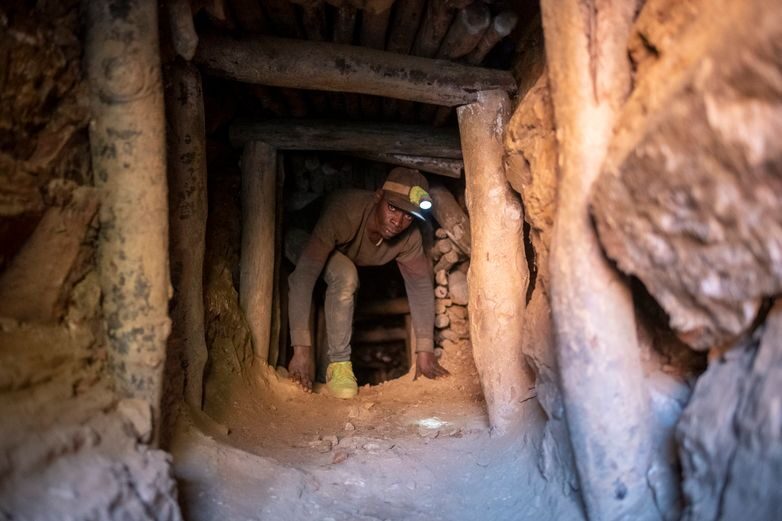
Only at second glance does it become clear that the steep slopes are littered with tunnels, barely more than a meter high, supported by thin wooden beams. The wet rock with the gold ore is pounded out in these tunnels using a hammer and chisel. Many don’t survive the search for the precious metal.

The United Nations issues an annual report on the Democratic Republic of Congo with a special focus on armed groups and their access to raw materials. The mines around Misisi make a regular appearance in that report. The experts write: “The Mai-Mai Yakutumba control the Makungu and Mitondo mines.” In Mitondo, the report states, the rebels forcibly drove out the Congolese army in December 2021 and established their own administration.

But armed men are nowhere to be seen. A group leads us through the mine, with some introducing themselves as representatives of the local gold cooperative, one man as a security officer, others cannot be identified. No one wears a uniform. Later, the miners say that several rebels dressed in civilian clothing had been part of the entourage. The boundaries are often blurred, with the rebels working hand in hand with government security forces and sharing the profits from gold mining.

James Mulemi*, 22, takes a break from washing the slurry in a yellow plastic container to talk about working in the mine. A man standing near him introduces himself as an intelligence officer, whatever that might mean. But James still speaks openly about the rebels, as if it were the most normal thing in the world.

“They’re up there in the mountains,” the wiry teenager tells us, pointing to the slope next to him. He’s referring to the Mai-Mai with the guns who control everything here. He says that although they may be out of sight, they can still see everything that takes place down below – an invisible power that determines the lives of miners. In confidential conversations, other workers confirm James’ descriptions.

James then discusses how the rebels exert control. For every gram of gold he extracts from the mountain, he has to pay a fee: first to the Mai-Mai, then to the army and, next, to the cooperative, to the Mining Ministry and the local village chiefs. He says they’re all aware of what the other is doing and that they leave each other alone – the main thing is that the money keeps flowing. James recounts how the rebels kept meticulous records. “Since they arrived, we have had to pay the money upfront. Those who don’t are beaten brutally. There’s very little left for us to live on.”

After the beatings, usually with a heavy drill rod, the victims are then placed in the “hole,” as they call it. James describes it as being about 3 meters deep and 1 meter wide, adding that they are thrown in if the don’t pay their “taxes,” with as many as 10 people in the hole at a time. Several people claim they were forced to stay there for days without food. The Mai-Mai rebels didn’t respond to questions about the accusations submitted to them by DER SPIEGEL via WhatsApp.

Brutal Working Conditions

Another gold mine, Makungu, is located just a few hundred meters away from Mitondo, though they look almost identical. In one of the narrow tunnels, a light suddenly flickers on, the glow growing brighter and brighter until, finally, a mud-caked figure emerges from the gloom. Michael* rolls a bag of gold ore out of the tunnel, his eyes only slowly getting used to the daylight.

Michael is on guard, he owes the Mai-Mai money. He had recently ran into financial troubles and didn’t have the necessary protection money. “I was in the hole for a week and lost 10 kilos,” he says. You can still see the traces of the torment – he looks haggard despite his muscular body, with sunken cheeks. His tormentors could come back at any moment, and he still doesn’t have the money to pay them.

“I was making twice as much before the rebels came,” Michael says, adding that some of his co-workers have even been killed. Other miners confirm the torture and the violence, but say they haven’t been witness to murders.

Yet working conditions here are bad enough without the Mai-Mai. The tunnels are bored several hundred meters deep into the mountainside, and it is pitch dark inside, with only the light of headlamps piercing the darkness. The miners have to hunch as they walk through the tunnels, even crawling on all fours in some places. And the further they advance into the mountain, the hotter it gets, sometimes over 40 degrees Celsius (104 degrees Fahrenheit). The air is so thin that workers use a special breathing technique, shallow and steady, to avoid fainting.

The Dangerous Work of Gold Mining

The tunnels frequently collapse when the timbered beams yet again fail to hold them up. In a single incident six years ago, 20 young men were buried alive in the mine. They didn’t stand a chance. Michael’s brother died in the accident, and his body still hasn’t been recovered to this day. It’s only worth digging for gold, not for the dead. “Everyone here knows they could die at any time. But there’s no other way to make money in the area, so we keep going,” the 21-year-old says.

The Path of Gold

Below the gold mines, not far from the village, a deafening grating noise fills the air as a cement mixer-like device crushes the rocks that have been carted out of the mine. The stone powder is then mixed with water to form slurry and sieved several times. After a time, mercury is added, the chemical that separates the gold from the unwanted residue, ultimately yielding porous yellow nuggets that are some of the best in the world.

M’mbongecha Nyange stands next to the noisy machines built by his cooperative. This is where the traders come to buy the valuable nuggets before reselling them. Asked about the rebels and the role they play in the mines, Nyange answers: “In the past, the armed groups used to be here, but not any longer. None of it is true.” Every gram is supposedly strictly accounted for. Yet, according to official statistics, only about 5 kilograms (11 pounds) of gold were produced at Misisi between November and April 2022, an impossible figure given the daily output at the mines.

There is no receipt or even a certificate – the price is negotiated after reviewing the current rate for gold. “My boss is in Bukavu, that’s where the gold goes. He pays me to get him supplies and doesn’t ask questions,” says one shopkeeper.

Everything in the gold-mining town of Misisi revolves around the precious metal. The gold is resold in many shady stores. The owners report that the Mai-Mai collect protection money from them, as well. 

U.S. officials estimate that more than 90 percent of Congo’s gold is traded illegally, and it is impossible for consumers to know whether the product they are buying is clean or not. For the Congolese state, this means that millions in tax revenues are lost every year, while a corrupt elite shamelessly enriches itself.

The traders bring the gold from the mines to Misisi.

The precious metal is taken from city to city along the eastern border of the Democratic Republic of Congo to Bukavu.

From Bukavu, it usually continues further across the border into Rwanda, either smuggled in or officially exported.

From there, the traders ship the gold, sometimes through intermediary sites, often to Dubai.

The city in the United Araba Emirates is considered the global trade center for gold.

Bukavu is a notorious trading hub on the Rwandan border. Gold from all over the south of the country passes through the city, and from here, it is either smuggled to Rwanda or other East African countries, or it is officially exported with fake certificates. Then, the journey of the coveted precious metal continues to places like the United Arab Emirates, one of the world’s largest trading centers for gold, before finally ending up as jewelry in places like Paris, Berlin or Madrid.

The Godfather of the Gold Business

One name has been in the headlines repeatedly in recent years: Alain Goetz. The Belgian is a godfather of sorts in the gold business in Africa. He set up large gold refining plants in Uganda and Rwanda and has allegedly negotiated with an armed group in the 1990s. He has also been convicted of money laundering and fraud. At times this year, he hasn’t even able to use his credit cards, laments Goetz in an interview with DER SPIEGEL.

In March, the U.S. Treasury Department imposed sanctions on Goetz because he was allegedly sourcing gold from regions controlled by armed groups, including the Mai-Mai Yakutumba. Goetz’s network of companies generated hundreds of millions of dollars a year in revenues from trade in Congolese gold. “These illicit acts provide income for armed groups that threaten the peace, security and stability of the Democratic Republic of Congo,” a Treasury Department press release stated in justification of the sanctions.

The United States has slapped Alain Goetz, a Belgian citizen, with sanctions for allegedly buying gold that supports the rebels. 

For his part, Goetz accuses politicians in Washington of meddling in African affairs. But he also tries to portray himself as naïve. “Conflict gold? That term is very easy to use. Then also bananas, water, everything would be ‘conflict’ in that region. The only things I see as products of conflict are weapons, ammunition and bad people,” he says. Besides, he adds, it’s impossible to know exactly where the gold really comes from. Experts, though, believe that tracking its origin should be the duty of traders, since they earn a fortune with the controversial commodity.

Yasin Somji says he wants to build a flagship gold refining plant in Bukavu. 

Goetz’s competitors, meanwhile, are already working on their next steps. On a busy main road in Bukavu, a tall, corrugated iron fence keeps out prying eyes. Behind it, construction workers are laboring away as heavily armed police officers secure the site. Yasin Somji greets his visitors wearing a hardhat and a tight-fitting shirt, walking past huge vaults whose doors are being installed, while brand new machines from Italy are ready for installation. Somji plans to open Congo’s first gold refining plant soon.

When he talks about his plans, he sounds like the opposite of Goetz: young, smart and ethically responsible. He speaks about transparency and the ability to trace the origins of gold. But when asked about the concrete steps, he just repeats, “We will work closely with the government” – not exactly reassuring in a country like Congo.

In any case, he says the mines in Misisi have “great potential.” After all, the gold from the Congo is among the best in the world. The rebels feel the same.

*We have changed the names of the main protagonists in this story to protect their identities. 

Source: Spiegel

READ MORE
Copy+of+DRC_20160710_1995
AFRICAMINING
October 3, 2022 By Octavian News

Tensions Continue Over Precious Resources After Two Decades of Conflict in the Democratic Republic of Congo

In 2017, Peace Direct’s ‘Peace Gold’ project was one of the five winning submissions in the BridgeBuilder Challenge, run by the GHR Foundation in collaboration with OpenIDEO. Gold mining in Eastern DRC degrades the environment and compromises the health of hundreds of thousands of people. Working with local partner Centre Résolution Conflits (CRC), Peace Direct developed the ‘Peace Gold’ project to support ex-combatants affected by war to produce ethical and environmentally friendly gold. After only two years, communities have increased their incomes and strengthened prospects for peace in the region.

Two ‘Peace Gold’ cooperatives bring communities together in the volatile province of Ituri with a common aim: producing ethical and environmentally friendly gold.

This important work has enabled former fighters to reintegrate into their communities. Previously feared, ex-combatants now play an active role in community life, and Peace Direct and CRC are working hard to reduce stigmatisation around former fighters, and to raise awareness on child protection in conflict. Nearly 2,000 cooperative members have received training in conflict resolution, of which one third were former fighters.

Child labour is another problem faced in the region. Through the Peace Gold project, over 950 children have been supported to return to school once more. Children who currently work in the mines will be able to return to school as their parents earn a decent income.

In an area struggling with active and ongoing ethnic tensions, this project is one example of what local peacebuilders do all around the world: help communities affected by violent conflict to heal themselves. The local population will also benefit from a less polluted environment due to fewer chemicals being used, and a more peaceful environment as ex-combatants will be supported to manage conflicts non-violently.

Source: For Peace

READ MORE
cbe0aff0431f4264b7be77d1ef16971d
GOLDLITHIUMMININGSAFETY
September 29, 2022 By Octavian News

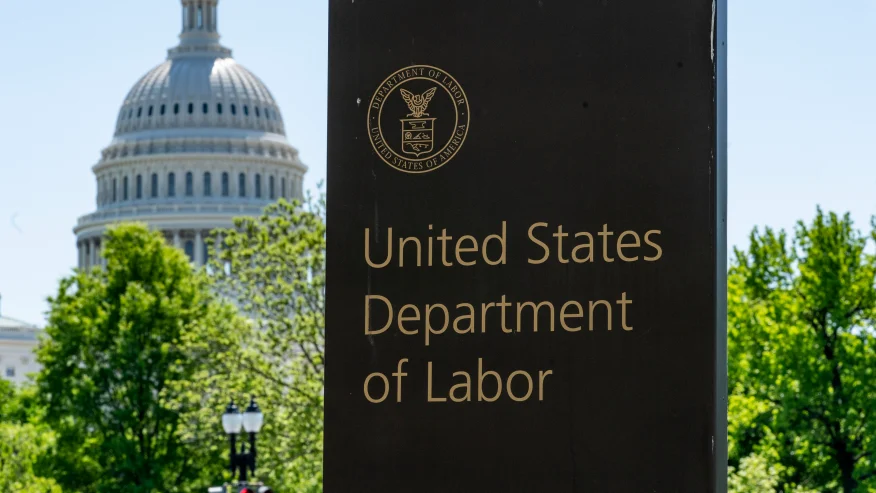
U.S. Department of Labor Publishes 10th Edition of List of Goods Produced by Child Labor or Forced Labor

On September 28, 2022, the U.S. Department of Labor published the 10th edition of its List of Goods Produced by Child Labor or Forced Labor. The Bureau of International Labor Affairs (“ILAB”) within the Department of Labor maintains a list of goods and their source countries which it has reason to believe are produced by child labor or forced labor in violation of international standards, as required under the Trafficking Victims Protection Reauthorization Act (“TVPRA”) of 2005. Under the TVPRA, ILAB must submit a list of foreign-made goods that it has reason to believe are produced by forced and/or child labor in violation of international standards to Congress every two years. The 10th edition of the List comprises 158 goods from 77 countries, adding 32 goods, including two new ones: dairy products and açaí berries.

According to the Department of Labor, “ILAB drew on a broad body of evidence to trace, for the first time, goods tainted with forced or child labor as they move through complex global supply chains and which final and intermediate products contain them to produce these studies.” The September 28 report alleges that 27.6 million people are engaged in forced labor, with 57% of those being male and 43% of those being female. Of those 27.6 million, the report alleges that 3.9 million experience state imposed forced labor, 17.4 million experience non-state imposed forced labor, and 6.4 million experience forced sexual exploitation. The report claims that goods produced by forced labor in China are artificial flowers, Christmas decorations, coal, fish, footwear, garments, gloves, hair products, polysilicon, nails, thread/yarn, and tomato products, while products produced by child labor and forced labor are bricks, cotton, electronics, fireworks, textiles, and toys. The report alleges that China is “the country with the greatest number of products made with forced labor, including state-sponsored forced labor.”

The report also includes three in-depth, supply-chain studies on lithium ion batteries, palm oil, and solar panels. The introduction by the Deputy Undersecretary for International Affairs, Thea Mei Lee, states that the ILAB is “drawing attention to critical supply chains in clean energy–highlighting China’s use of forced labor in polysilicon production (a key input in solar panels),” as well as the use of child labor in the Democratic Republic of the Congo (“DRC”) for the mining of cobalt, the majority of which allegedly is then imported into China for the production of lithium batteries. According to the report, China owns or  finances most cobalt mines in the DRC, and China imports almost 90 percent of its cobalt from the DRC.

The report also focuses on the claim regarding force labor concerns in Xinjiang and the steps the U.S. Government is taking “to raise further awareness among companies that do business in or source goods from China.” These steps include joining the Office of the U.S. Trade Representative and the U.S. Departments of States, Treasury ,Commerce, and Homeland Security in issuing an updated Xinjiang Supply Chain Business Advisory in July 2021. Only two days before the publication of this report, Eric Choy, acting executive director of U.S. Customs and Border Protection’s trade remedy law enforcement directorate, told The Dispatch that, from October 1, 2021, through mid-September 2022, “Customs and Border Protection targeted more than 3,600 shipments worth nearly $800 million from around the world for potential ties to forced labor. . . .” Of those 3,600 shipments, Choy stated that “around 1,500 were targeted under the Uyghur Forced Labor Prevention Act, adding up to about $420 million.” Both the report and Choy’s comments make clear that alleged forced labor in China will remain a focus of multiple branches of the U.S. Government.

Source: Mayer Brown

READ MORE
frank-giustra
GOLDMARKETS
June 28, 2022 By Octavian News

Gold’s Role in a Changing World Order: Finance Titan Frank Giustra Interview

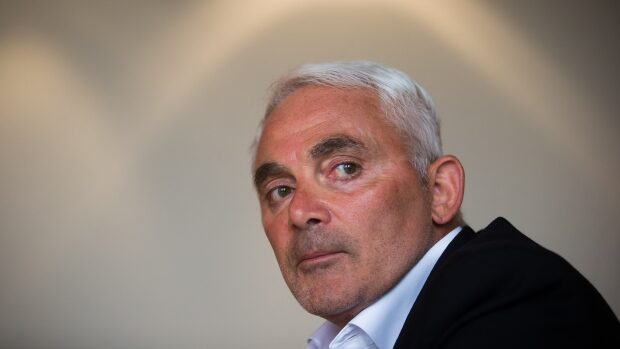
China is “like a black hole where the gold goes in and never comes out,” says Frank Giustra, a major player in the mining industry and founder of Lionsgate Entertainment.

As the largest producer and importer, Giustra believes China is under-reporting their gold reserves. “My guess is they are preparing themselves, as Russia is, to exit the US dollar system… to one where gold plays a role.”

In an exclusive series of interviews with CEO.CA taped over a couple of days, Giustra says war in Europe is accelerating a bifurcation of the monetary system. Countries representing ~80% of the world’s population refused to condemn Russia for its Ukraine invasion despite pressure from the West. Meanwhile, global central banks have been selling dollars to stockpile gold.

“Currency is being debased and inflation is out of control,” he says. Giustra believes CPI is manipulated to prevent a confidence crisis, and actual inflation may be double what is reported.

Global debt has gotten to “insane” levels according to Giustra. He cites $300 trillion or 250% of GDP in most developed countries. “Raise rates in that environment.. you’ll implode the whole system. They know this. So [the Fed] can talk a lot about raising rates and they can make a lot of threats about unwinding the balance sheet. None of it is going to happen.”

In the interview, Giustra shares for the first time how his family lost everything to hyperinflation in Argentina in the 1970s. They landed broke in a small trailer on Canada’s Texada Island where Giustra’s father laboured in an iron ore mine. 

Gold would have “absolutely” protected the family from inflation, Giustra believes. He fears a similar unravelling of the Western economy is happening now and is warning investors to prepare themselves.

“People don’t believe that [hyperinflation is] possible in America or Europe… It can happen, and it’s always caused by the same thing, the printing of too much money.”

“Gold is the only constant [through history] that no one can print,” he says, while also advocating for diversification in certain stocks, real-estate, and even cash. “This is not the time for speculation,” Giustra says. 

In 2001, he famously forecast a coming gold bull market and, with Ian Telfer and Neil Woodyer, built Wheaton River Minerals —which would become Goldcorp— from a $25 million shell into a $50 billion producer in 10 years. Goldcorp combined with Newmont in 2019 and today is the world’s largest gold company. Telfer joined Giustra for part of the interview to share experiences of building businesses together. 

Since Goldcorp, Giustra and Woodyer co-founded Endeavour Mining, now worth $7 billion, and Leagold, a gold miner acquired for ~$600 million by Equinox in 2019. Giustra, Telfer and Woodyer are partners in a new venture, Aris Gold (TSX:ARIS), which they plan to transform from its current ~$200 million valuation into another major producer. 

Success has enabled Giustra to connect with history as a major collector. He showed CEO.CA the personal trunk of Spanish conquistador Francisco Pizarro he acquired and had restored. With less than 150 men in 1532, Pizarro conquered the Incas in what is now Peru. They plundered a room full of gold in the fabled city of Eldorado —today Cuzco— which contributed to the rise of the Spanish empire. It’s an incredible museum-worthy relic which reminds Giustra of gold’s role in history and the ugly, greedy aspect of human nature.

The interview with Frank Giustra is full of insights on the economy, wealth preservation and building companies. Watch his perspectives on YouTube now.

Source: Kitco

READ MORE
  • 1
  • …
  • 8
  • 9
  • 10
  • 11

© 2023 Octavian Precious Metals Trading DMCC. All Rights Reserved.