connect with us
Twitter Linkedin

Type To Search

Octavian Precious Metals Trading DMCC

Octavian Precious Metals Trading DMCC

  • Home
  • About
  • Products
  • Services
  • News
  • Contact
Author: Octavian News
HomeOctavian NewsPage 11
7360
AFRICAGOLDMINING
May 12, 2022 By Octavian News

Price of Gold: DRC’s Rich Soil Bears Few Riches for its Miners

The muddy slopes surrounding the eastern Congolese gold-mining town of Kamituga hold vast wealth and crippling deprivation.

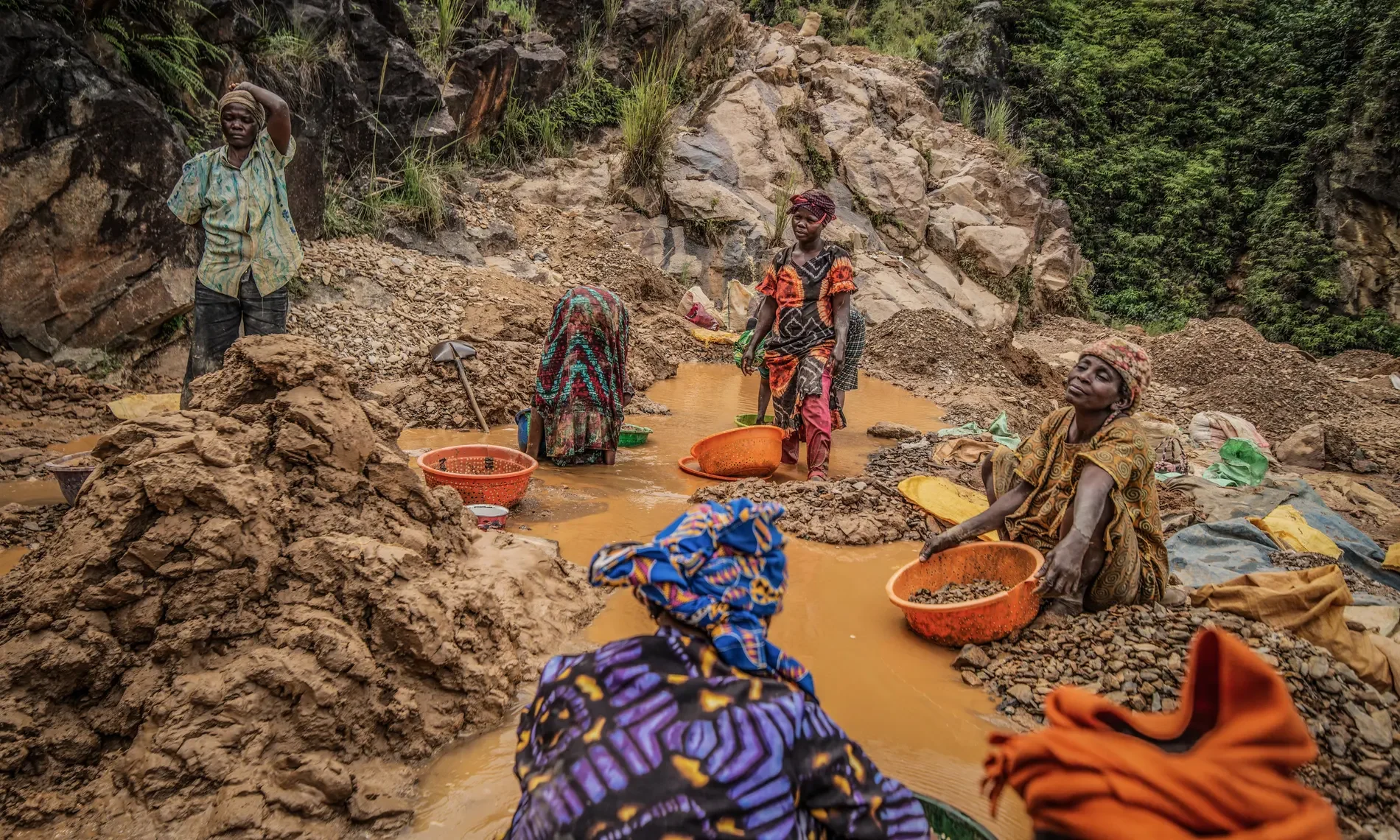
In South Kivu province near the borders of Rwanda and Burundi, Kamituga has mineral resources estimated to be worth $24tn (£17tn) in untapped deposits. Yet the Democratic Republic of the Congo (DRC) has one of the lowest levels of GDP per capita in the world and people work in dangerous conditions with little hope of scratching out anything more than a meagre existence from tough and dangerous work.

This longstanding disparity has only grown as the coronavirus pandemic pushed up the global gold price to its highest value ever last August ($2,048 an ounce). Meanwhile, local prices offered from buyers in Africa went down, according to the Africa Report, reflecting the imbalance in an international supply chain that exploits poor workers at the source of wealth. Hundreds of thousands of people in South Kivu, including women and children, work in the informal mining sector, mostly in gold.

Artisanal subsistence mining is the informal, small-scale mining done independently by people not officially employed by a mining company, using their own resources, usually by hand. Roughly one-fifth of the global mineral supply is produced by these miners. In 2019, there were an estimated 10 million people working in the sector across sub-Saharan Africa.

Germany’s Federal Institute for Geosciences and Natural Resources estimates DRC’s artisanal gold production to be 14 to 20 tonnes a year, with a value of $543m to $812m.

The miners face plenty of risks excavating the gold – 50 mostly young people died in a mine collapse at Kamituga last September – while health care and education for children is virtually nonexistent. Heavy metals such as mercury, which is used to separate gold particles from mud, can seep into the water table and food chain. And with much of the local population working in the mines, it makes for a labour shortage in the fields, so crops become scarce and food prices and malnutrition rise.

While DRC law bans child labour, children can be seen digging through the red mud of Kamituga’s rivers.

“Some children here work in the mines every day, working several hours at a time,” Idi Kyalondwana, who works for a mining co-operative, told France 24 after a visit to Kamituga in February. “Some actually go down into shafts that are several hundred metres deep and tunnels to dig for gold without any safety measures. It’s incredibly dangerous. There are often cave-ins.”

Gold mining also feeds into interlocking conflicts, shrouded in various forms of illicit trading. A recent Impact report documents how registered traders and exporters provide a veneer of legality by declaring a small percentage of their gold exports while pocketing huge profits and avoiding official taxes from illicit trade. This means that the gold smuggled out of DRC which flows on to the legal international gold market is tied to criminality, money laundering, armed groups and human rights abuses, according to the report.

The London Bullion Market Association published recommendations in November 2020 to reduce the illicit gold trade, but over the past hundred years little has changed.

Kamituga has been a mining town since the 1920s, when gold was discovered there, and a succession of big companies arrived.

The Kivu Mining Society and the Canadian company Banro Corporation, which has the principal mining concession in the town, control most of South Kivu’s gold deposits. Banro suspended operations in September 2019 due to rebel militia activity in the province. The company had been tolerant of artisanal mining on its concessions but has discouraged illegal mechanised efforts to extract gold.

Most of the miners are young men, but more and more women are drawn to the work in the hope of earning more than they can from agriculture. But female miners face discrimination and obstacles from local authorities, and have to sell through middlemen, according to the World Bank. Women have the least profitable jobs in the mines, depriving them of bargaining power when it comes to pay and working conditions. They are also vulnerable to sexual exploitation and violence. Women have started to unite and have built a network known by the French acronym of Renafem (National Network of Women in Mining), to fight discrimination.

Efforts to introduce greater transparency into DRC’s mining sector have seen minimal progress in a trade that enriches individuals and companies far from Kamituga’s murky rivers and hills. With little political will to drive real change, it seems the situation for those living on some of the richest soil in the world will remain precarious.

Source: The Guardian
READ MORE
1542818819401943400
AFRICADUBAI
April 2, 2022 By Octavian News

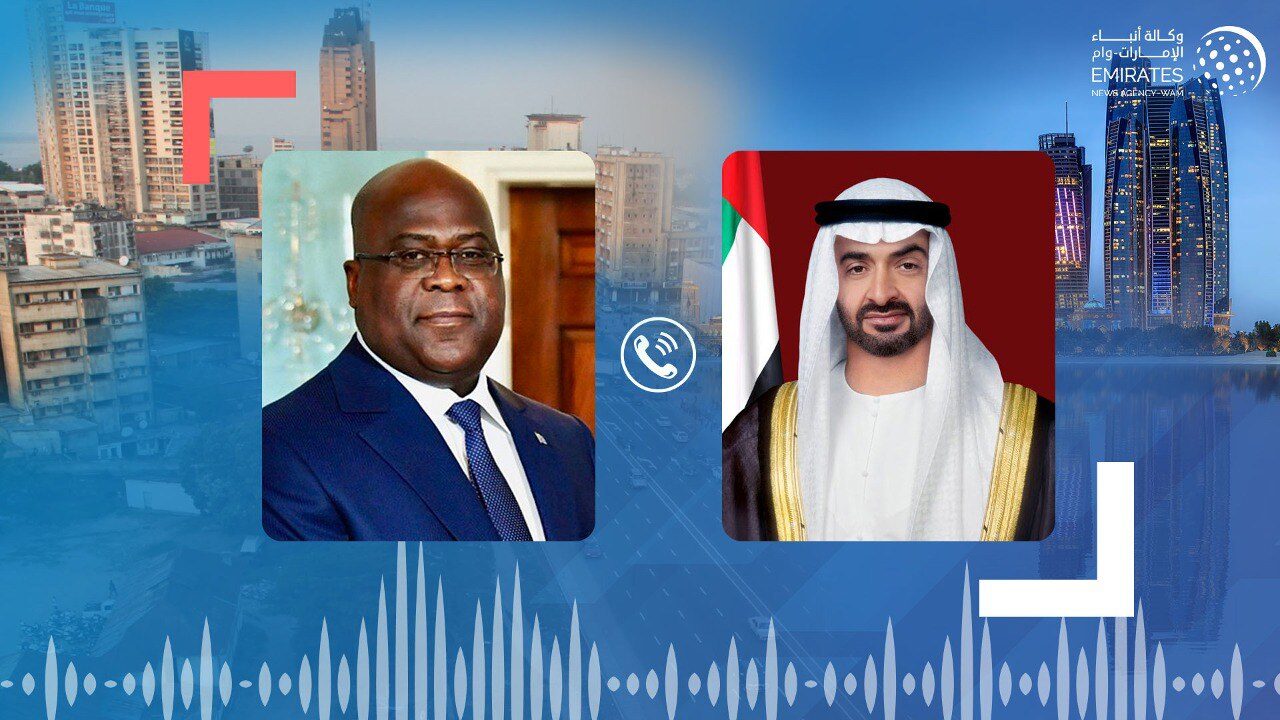
UAE, Congo Discussing Boosting Relations

His Highness Sheikh Mohamed bin Zayed Al Nahyan, Crown Prince of Abu Dhabi and Deputy Supreme Commander of the UAE Armed Forces, and Felix Tshisekedi, President of the Democratic Republic of the Congo, have discussed ways of enhancing friendship and cooperation between the two countries.

During a phone call Sheikh Mohamed received from the Congolese president, they reviewed the prospects of expanding their cooperation, especially in economic, trade and investment fields, to advance mutual interests.

The two leaders also exchanged views on a number of regional and international issues of mutual concern and relevant developments.

Source: Emirates News Agency

READ MORE
lithium-battery
AFRICALITHIUMMINING
March 30, 2022 By Octavian News

Building the Sustainable Battery Supply Chain of Tomorrow

“The nation’s mining sector presently accounts for 98% of exports, 18% of GDP and 11% of jobs. If the DRC captures 20% of the market share for battery manufacturing, it can add round US$54 billion to its revenue and lift its GDP tremendously,” says UN Beneath-Secretary-Basic Vera Songwe.

Africa is a resource-rich continent, dwelling to some 30% of the world’s recognized mineral reserves, together with 40% of recognized gold and as much as 90% of chromium and platinum reserves.

For hundreds of years, this mineral wealth has been extracted by international nations or corporations with little or no worth returned to the international locations they’re taken from, leaving Africa with little to realize from the worldwide mineral provide chain.

The Democratic Republic of Congo (DRC) is in search of to alter that unequal dynamic, taking the primary steps to constructing a sustainable battery worth chain inside the DRC and higher Africa with the help of the brand new Democratic Republic of Congo Battery Council.

What’s the DRC Battery Council?

The primary goal of the Democratic Republic of Congo’s DRC-Africa Enterprise Discussion board in 2021 was to foster “the event of a battery, electrical automobile and renewable power worth chain and market in Africa”.

The DRC-Africa Enterprise Discussion board – after two hours of roundtable debate – introduced collectively high-level stakeholders to type the Democratic Republic of Congo’s Battery Council with three strategic goals:

  • Assist worth creation of strategic minerals in Africa and strengthen productive capabilities within the battery worth chain, to generate job creation on the continent through the battery worth chain;
  • Guarantee a socially, environmentally accountable and sustainable battery worth chain, which improves the lives of girls and the youth; and
  • Encourage native and African champions to spend money on the battery business.

The council intends to arrange a particular monetary automobile to facilitate non-public investments and the participation of the inhabitants, and also will:

  • Leverage partnerships to draw and promote funding and innovation and expertise for the transformation of Africa’s strategic minerals;
  • Speed up intra-African commerce, expertise constructing and analysis to unlock innovation alongside the battery worth chain leveraging the African Continental Free Commerce Space (AfCFTA);
  • Collaborate to advertise intensive partnerships and far-reaching exchanges of modern concepts to make sure that the battery worth chain is sustainable and accrues worth to the native economic system;
  • Catalyse, fast-track and scale up motion in direction of the imaginative and prescient; and
  • Facilitate the era of evidence-based research, knowledge, data on the battery worth chain within the DRC and Africa.

The council’s objectives have garnered help from the UN Financial Fee for Africa, which champions financial cooperation amongst its member states.

“The DRC is on the coronary heart of the battery worth chain, as it’s dwelling to about 70% of world’s cobalt reserves,” UN Beneath-Secretary-Basic and govt secretary of the Financial Fee for Africa Vera Songwe stated.

“The nation’s mining sector presently accounts for 98% of exports, 18% of GDP and 11% of jobs.

“If the DRC captures 20% of the market share for battery manufacturing, it can add round US$54 billion to its revenue and lift its GDP tremendously.”

The pinnacle of state of the DRC and present chair of the African Union Fee (AU), Félix-Antoine Tshisekedi Tshilombo, additionally expressed his enthusiasm for the council to start pursuing its objectives: “The machine is now launched, it’s mandatory to start out proper after this discussion board.”

Who’s concerned?

The important thing members included representatives of Zambia, Tanzania and Morocco, the UN Financial Fee for Africa, African Union Fee and Afreximbank.

Different organisations included Africa Finance Cooperation, African Improvement Financial institution Group, Bosch Africa, The Arab Financial institution for Financial Improvement in Africa, and AVZ Minerals Ltd (ASX:AVZ).

AVZ Minerals was the one aspiring mining firm to be invited to the discussion board, which managing director Nigel Ferguson sees as a logical selection.

“We’re sitting with one of many globally vital lithium and tin sources and the present geopolitical local weather is gaining higher give attention to inexperienced expertise,” Ferguson stated.

“The Australian Ambassador visited only recently and she or he stated the DRC President, Felix Tshisekedi, was very eager on having extra Australian corporations come and do enterprise in nation as a result of we have an excellent fame for our technical experience, our transparency and our professionalism.

“We additionally recognise the significance of getting a local people that is realising profit from a nationwide asset.”

AVZ Minerals has constructed its model on a close to ‘zero emissions’ operation, with an impartial greenhouse fuel evaluation confirming the Manono Lithium and Tin Mission might have one of many lowest carbon footprints of any exhausting rock lithium mine on the planet.

“The DRC and Africa are strategically positioned to play a pivotal position within the international transition to wash power and decarbonisation and the Manono challenge will tremendously help to enhance the fortunes of the Congolese folks, which AVZ Minerals could be very supportive (of),” Ferguson commented.

Challenges to be overcome

There are lots of structural challenges to be overcome earlier than the DRC Battery Council can meet its objectives, not least of which is power and transport infrastructure.

The DRC presently operates underneath a big electrical energy deficit, the place as soon as it equipped extra power to its neighbours.

Secretary-Basic of EGC (Basic Cobalt Firm) and power skilled Vincent-Noël Vika Raissa Kikunda stated that overcoming this primary hurdle was paramount, and “the nation should make investments a billion {dollars} every year to hope to unravel its electrical energy drawback”.

Secretary-Basic Vika highlights that with out entry to financing and sovereign ensures, long-term power buy contracts might fill the hole.

DRC will even possible want a extra sturdy rail community, doubtlessly a big industrial port and higher integration of the native inhabitants into the electrical battery business.

The non-public sector shall be integral to the upskilling of DRC residents, a task AVZ Minerals is already engaged in.

The mining firm has plans to construct and fit-out a college at Manono, the native city adjoining to AVZ’s mining challenge, and likewise intends to attract on a big pool of intensive mining expertise within the type of domestically recruited on-the-job traineeships.

“Giving locals a chance to have a ability or a commerce and uplift themselves is one thing that is very near us,” Ferguson defined.

“The DRC is properly endowed with not solely pure mineral sources but additionally of their folks. There’s an extended historical past of mining within the nation and many individuals are very technically succesful.

“I am completely snug with the truth that there’s sufficient technical capability right here to have the ability to fulfil these roles.”  

Ferguson additionally highlighted a necessity for political stability and regulatory flexibility throughout higher Africa, usually cited as one of many main causes the continent might be dangerous to spend money on.

David McLachlan-Karr, the Resident and Humanitarian Coordinator of the UN in DRC, commented that the Congo has the capability to alter the distribution of advantages from the inexperienced mineral worth chains.

“Traders imagine on this challenge and are concerned. The work shall be very advanced, requiring a centered strategy,” McLachlan-Karr stated.

“Investing on this sector in DRC gained’t simply yield monetary returns, however shall be important for the worldwide reaching of the Paris settlement, and bettering lives in DRC.”

Source: Bojuri

READ MORE
FMOXH5UXEAEUs4b
LITHIUMMINING
March 1, 2022 By Octavian News

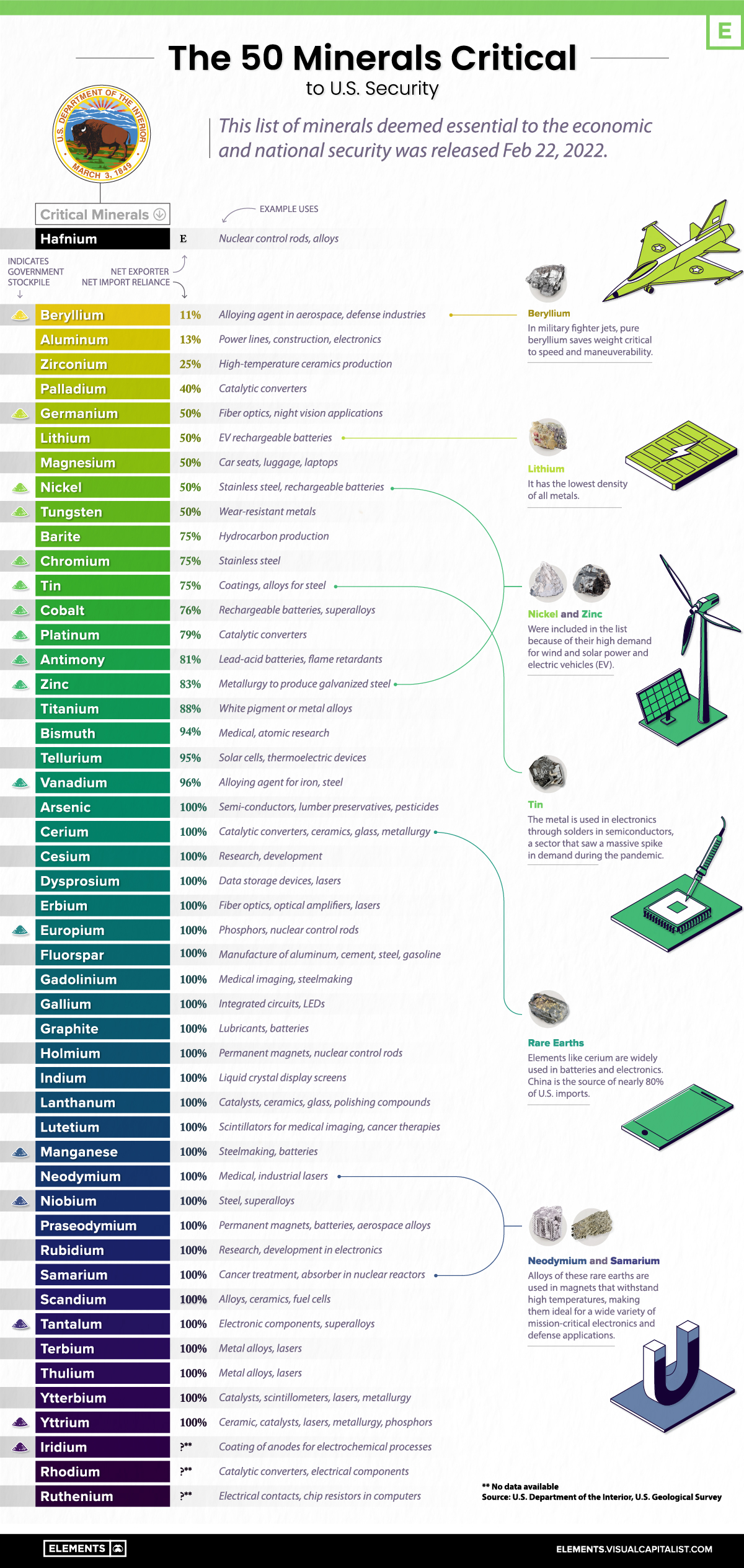
The 50 Minerals Critical to U.S. Security

The U.S. aims to cut its greenhouse gas emissions in half by 2030 as part of its commitment to tackling climate change, but might be lacking the critical minerals needed to achieve its goals.

The American green economy will rely on renewable sources of energy like wind and solar, along with the electrification of transportation. However, local production of the raw materials necessary to produce these technologies, including solar panels, wind turbines, and electric vehicles, is lacking. Understandably, this has raised concerns in Washington.

In this graphic, based on data from the U.S. Geological Survey, we list all of the minerals that the government has deemed critical to both the economic and national security of the United States.

What are Critical Minerals?

A critical mineral is defined as a non-fuel material considered vital for the economic well-being of the world’s major and emerging economies, whose supply may be at risk. This can be due to geological scarcity, geopolitical issues, trade policy, or other factors.

In 2018, the U.S. Department of the Interior released a list of 35 critical minerals. The new list, released in February 2022, contains 15 more commodities.

Much of the increase in the new list is the result of splitting the rare earth elements and platinum group elements into individual entries rather than including them as “mineral groups.” In addition, the 2022 list of critical minerals adds nickel and zinc to the list while removing helium, potash, rhenium, and strontium.

The challenge for the U.S. is that the local production of these raw materials is extremely limited.

For instance, in 2021 there was only one operating nickel mine in the country, the Eagle mine in Michigan. The facility ships its concentrates abroad for refining and is scheduled to close in 2025. Likewise, the country only hosted one lithium mine, the Silver Peak Mine in Nevada.

At the same time, most of the country’s supply of critical minerals depends on countries that have historically competed with America.

China’s Dominance in Minerals

Perhaps unsurprisingly, China is the single largest supply source of mineral commodities for the United States.

Cesium, a critical metal used in a wide range of manufacturing, is one example. There are only three pegmatite mines in the world that can produce cesium, and all were controlled by Chinese companies in 2021.

Furthermore, China refines nearly 90% of the world’s rare earths. Despite the name, these elements are abundant on the Earth’s crust and make up the majority of listed critical minerals. They are essential for a variety of products like EVs, advanced ceramics, computers, smartphones, wind turbines, monitors, and fiber optics.

After China, the next largest source of mineral commodities to the United States has been Canada, which provided the United States with 16 different elements in 2021.

The Rising Demand for Critical Minerals

As the world’s clean energy transitions gather pace, demand for critical minerals is expected to grow quickly.

According to the International Energy Association, the rise of low-carbon power generation is projected to triple mineral demand from this sector by 2040.

The shift to a sustainable economy is important, and consequently, securing the critical minerals necessary for it is just as vital.

READ MORE
  • 1
  • …
  • 9
  • 10
  • 11

© 2023 Octavian Precious Metals Trading DMCC. All Rights Reserved.