connect with us
Twitter Linkedin

Type To Search

Octavian Precious Metals Trading DMCC

Octavian Precious Metals Trading DMCC

  • Home
  • About
  • Products
  • Services
  • News
  • Contact
Author: Octavian News
HomeOctavian NewsPage 2
russia-palace
DUBAIGOLDMARKETS
August 6, 2023 By Octavian News

These Countries Are Buying up the World’s Gold

Gold buying by central banks reached its highest level in 55 years this February 2023, according to the World Gold Council. The uptick in gold buying is part of a decades-long shift away from the U.S. dollar as the world’s primary reserve currency, and has coincided with the strengthening of emerging economies like Brazil, Russia, India, China, and South Africa. In recent weeks, members of the BRICS economic coalition have announced plans to introduce a new, alternative currency to further challenge the U.S. dollar’s role as primary world currency.

Since the U.S. dollar was officially decoupled from gold in 1971 and the gold standard was fully abandoned in 1973, central banks have bought gold in times of market volatility and uncertainty. Gold can act as a hedge against the U.S. dollar, and may be in higher demand in times of high inflation and political tension with the United States. In recent years, central banks in emerging markets have led the gold buying spree, signaling uncertainty in international relations and a shift towards independence from the U.S. monetary system. (Yet the U.S. is by far the largest holder of gold – here are the countries with the most gold.)

To determine which countries are buying up the world’s gold, 24/7 Wall St. reviewed data on gold reserves by country from the World Gold Council. Countries were ranked based on the net change in gold reserves held by their central bank from 2017 to 2022. Data on the value of gold reserves and gold reserves as percentage of all foreign reserves also came from the WGC and was calculated using the LBMA (London Bullion Market Association) Gold Price for the fourth quarter of each year. Population figures are from the World Bank and are for 2021.

The largest buyer of gold from 2017 to 2022 is, by far, the central bank of Russia (though data for Russia is actually only until the end of 2021. The U.S.-imposed sanctions on Russia in response to its invasion of Ukraine effectively made the hundreds of billions of U.S. dollars the Russian central bank holds worthless. Russia recently said it further increased its bullion holdings in 2022. (Here are the most sanctioned countries of all time.)

Other countries whose relations with the U.S. may be worsening have also purchased gold. From 2017 to 2022, the central banks of Russia, Turkey, India, and China were the largest buyers of gold. 

And while Russia, Turkey, India, and China account for nearly 60% of the net change in gold reserves globally from 2017 to 2022, it is small countries in the Middle East and North Africa that are buying gold at the fastest rates. Mauritania, Qatar, and the United Arab Emirates all more than tripled their gold reserves from 2017 to 2022, while Oman increased its once meager gold supply by more than one hundredfold. 

Countries have also made significant changes to the composition of their central bank holdings, with upper- and middle-income countries in Central Asia and Latin America doubling down on their gold positions the most. In Pakistan, Kazakhstan, Turkey, Lebanon, and Venezuela, gold as a share of central bank holdings increased by more than 15 percentage points from 2017 to 2022, while in Bolivia gold as a percentage of central bank holdings increased by a world-leading 49 percentage points. Globally, gold as a share of total central reserve holdings rose from 9.7% to 12.9%.

25. Czech Republic
> Chg. in gold reserves since 2017: +2.5 metric tons, reaching 12.0 metric tons in 2022
> Chg. in value of gold reserves since 2017: +$305.6 million, reaching $697.4 million in 2022
> Chg. in share of total reserves since 2017: +0.2 ppts, reaching .5% in 2022
> Population, 2021: 10.5 million

24. Kyrgyzstan
> Chg. in gold reserves since 2017: +3.2 metric tons, reaching 10.2 metric tons in 2022
> Chg. in value of gold reserves since 2017: +$306.0 million, reaching $594.4 million in 2022
> Chg. in share of total reserves since 2017: +11.0 ppts, reaching 24.2% in 2022
> Population, 2021: 6.7 million

23. Mongolia
> Chg. in gold reserves since 2017: +3.7 metric tons, reaching 7.9 metric tons in 2022
> Chg. in value of gold reserves since 2017: +$285.3 million, reaching $462.0 million in 2022
> Chg. in share of total reserves since 2017: +10.5 ppts, reaching 16.4% in 2022
> Population, 2021: 3.3 million

22. Ireland
> Chg. in gold reserves since 2017: +6.0 metric tons, reaching 12.0 metric tons in 2022
> Chg. in value of gold reserves since 2017: +$452.8 million, reaching $701.9 million in 2022
> Chg. in share of total reserves since 2017: -0.3 ppts, reaching 5.4% in 2022
> Population, 2021: 5.0 million

21. Argentina
> Chg. in gold reserves since 2017: +7.0 metric tons, reaching 61.7 metric tons in 2022
> Chg. in value of gold reserves since 2017: +$1.3 billion, reaching $3.6 billion in 2022
> Chg. in share of total reserves since 2017: +3.9 ppts, reaching 8.0% in 2022
> Population, 2021: 45.8 million

20. Belarus
> Chg. in gold reserves since 2017: +7.1 metric tons, reaching 53.6 metric tons in 2022
> Chg. in value of gold reserves since 2017: +$1.2 billion, reaching $3.1 billion in 2022
> Chg. in share of total reserves since 2017: +15.3 ppts, reaching 41.8% in 2022
> Population, 2021: 9.3 million

19. Serbia
> Chg. in gold reserves since 2017: +19.1 metric tons, reaching 38.5 metric tons in 2022
> Chg. in value of gold reserves since 2017: +$1.4 billion, reaching $2.2 billion in 2022
> Chg. in share of total reserves since 2017: +5.8 ppts, reaching 12.5% in 2022
> Population, 2021: 6.8 million

18. Ecuador
> Chg. in gold reserves since 2017: +22.0 metric tons, reaching 33.8 metric tons in 2022
> Chg. in value of gold reserves since 2017: +$1.5 billion, reaching $2.0 billion in 2022
> Chg. in share of total reserves since 2017: +3.3 ppts, reaching 25.9% in 2022
> Population, 2021: 17.8 million

17. Singapore
> Chg. in gold reserves since 2017: +26.3 metric tons, reaching 153.7 metric tons in 2022
> Chg. in value of gold reserves since 2017: +$3.7 billion, reaching $9.0 billion in 2022
> Chg. in share of total reserves since 2017: +1.1 ppts, reaching 3.0% in 2022
> Population, 2021: 5.5 million

16. Cambodia
> Chg. in gold reserves since 2017: +29.9 metric tons, reaching 52.4 metric tons in 2022
> Chg. in value of gold reserves since 2017: +$2.1 billion, reaching $3.1 billion in 2022
> Chg. in share of total reserves since 2017: +9.4 ppts, reaching 17.1% in 2022
> Population, 2021: 16.6 million

15. Iraq
> Chg. in gold reserves since 2017: +40.5 metric tons, reaching 130.3 metric tons in 2022
> Chg. in value of gold reserves since 2017: +$3.9 billion, reaching $7.6 billion in 2022
> Chg. in share of total reserves since 2017: +1.4 ppts, reaching 9.0% in 2022
> Population, 2021: 43.5 million

14. Egypt
> Chg. in gold reserves since 2017: +48.9 metric tons, reaching 125.3 metric tons in 2022
> Chg. in value of gold reserves since 2017: +$4.1 billion, reaching $7.3 billion in 2022
> Chg. in share of total reserves since 2017: +14.2 ppts, reaching 22.9% in 2022
> Population, 2021: 109.3 million

13. Kazakhstan
> Chg. in gold reserves since 2017: +51.8 metric tons, reaching 351.7 metric tons in 2022
> Chg. in value of gold reserves since 2017: +$8.1 billion, reaching $20.5 billion in 2022
> Chg. in share of total reserves since 2017: +17.9 ppts, reaching 58.4% in 2022
> Population, 2021: 19.0 million

12. Uzbekistan
> Chg. in gold reserves since 2017: +59.4 metric tons, reaching 395.9 metric tons in 2022
> Chg. in value of gold reserves since 2017: +$9.1 billion, reaching $23.1 billion in 2022
> Chg. in share of total reserves since 2017: -4.4 ppts, reaching 64.5% in 2022
> Population, 2021: 34.9 million

11. Qatar
> Chg. in gold reserves since 2017: +62.0 metric tons, reaching 91.8 metric tons in 2022
> Chg. in value of gold reserves since 2017: +$4.1 billion, reaching $5.4 billion in 2022
> Chg. in share of total reserves since 2017: +3.4 ppts, reaching 11.6% in 2022
> Population, 2021: 2.7 million

10. Brazil
> Chg. in gold reserves since 2017: +62.4 metric tons, reaching 129.7 metric tons in 2022
> Chg. in value of gold reserves since 2017: +$4.8 billion, reaching $7.6 billion in 2022
> Chg. in share of total reserves since 2017: +1.6 ppts, reaching 2.3% in 2022
> Population, 2021: 214.3 million

9. United Arab Emirates
> Chg. in gold reserves since 2017: +72.3 metric tons, reaching 80.0 metric tons in 2022
> Chg. in value of gold reserves since 2017: +$4.3 billion, reaching $4.7 billion in 2022
> Chg. in share of total reserves since 2017: +3.3 ppts, reaching 3.6% in 2022
> Population, 2021: 9.4 million

8. Japan
> Chg. in gold reserves since 2017: +80.8 metric tons, reaching 846.0 metric tons in 2022
> Chg. in value of gold reserves since 2017: +$17.6 billion, reaching $49.3 billion in 2022
> Chg. in share of total reserves since 2017: +1.5 ppts, reaching 4.0% in 2022
> Population, 2021: 125.7 million

7. Thailand
> Chg. in gold reserves since 2017: +90.2 metric tons, reaching 244.2 metric tons in 2022
> Chg. in value of gold reserves since 2017: +$7.8 billion, reaching $14.2 billion in 2022
> Chg. in share of total reserves since 2017: +3.4 ppts, reaching 6.6% in 2022
> Population, 2021: 71.6 million

6. Hungary
> Chg. in gold reserves since 2017: +91.4 metric tons, reaching 94.5 metric tons in 2022
> Chg. in value of gold reserves since 2017: +$5.4 billion, reaching $5.5 billion in 2022
> Chg. in share of total reserves since 2017: +12.9 ppts, reaching 13.4% in 2022
> Population, 2021: 9.7 million

5. Poland
> Chg. in gold reserves since 2017: +125.7 metric tons, reaching 228.7 metric tons in 2022
> Chg. in value of gold reserves since 2017: +$9.1 billion, reaching $13.3 billion in 2022
> Chg. in share of total reserves since 2017: +4.2 ppts, reaching 8.0% in 2022
> Population, 2021: 37.7 million

4. China
> Chg. in gold reserves since 2017: +168.0 metric tons, reaching 2,010.5 metric tons in 2022
> Chg. in value of gold reserves since 2017: +$40.8 billion, reaching $117.2 billion in 2022
> Chg. in share of total reserves since 2017: +1.2 ppts, reaching 3.6% in 2022
> Population, 2021: 1.4 billion

3. India
> Chg. in gold reserves since 2017: +229.3 metric tons, reaching 787.4 metric tons in 2022
> Chg. in value of gold reserves since 2017: +$22.8 billion, reaching $45.9 billion in 2022
> Chg. in share of total reserves since 2017: +2.5 ppts, reaching 8.1% in 2022
> Population, 2021: 1.4 billion

2. Turkey
> Chg. in gold reserves since 2017: +339.8 metric tons, reaching 541.8 metric tons in 2022
> Chg. in value of gold reserves since 2017: +$23.2 billion, reaching $31.6 billion in 2022
> Chg. in share of total reserves since 2017: +18.5 ppts, reaching 27.6% in 2022
> Population, 2021: 84.8 million

1. Russia
> Chg. in gold reserves since 2017: +462.9 metric tons, reaching 2,301.6 metric tons in 2021
> Chg. in value of gold reserves since 2017: +$57.9 billion, reaching $134.2 billion in 2021
> Chg. in share of total reserves since 2017: +3.6 ppts, reaching 21.2% in 2021
> Population, 2021: 143.4 million

Source: 24/7 Wall St
READ MORE
drc-asm-camp
AFRICAGOLDMINING
August 4, 2023 By Octavian News

Congo Gold Mine Innovates to Solve Illegal Mining Dilemma

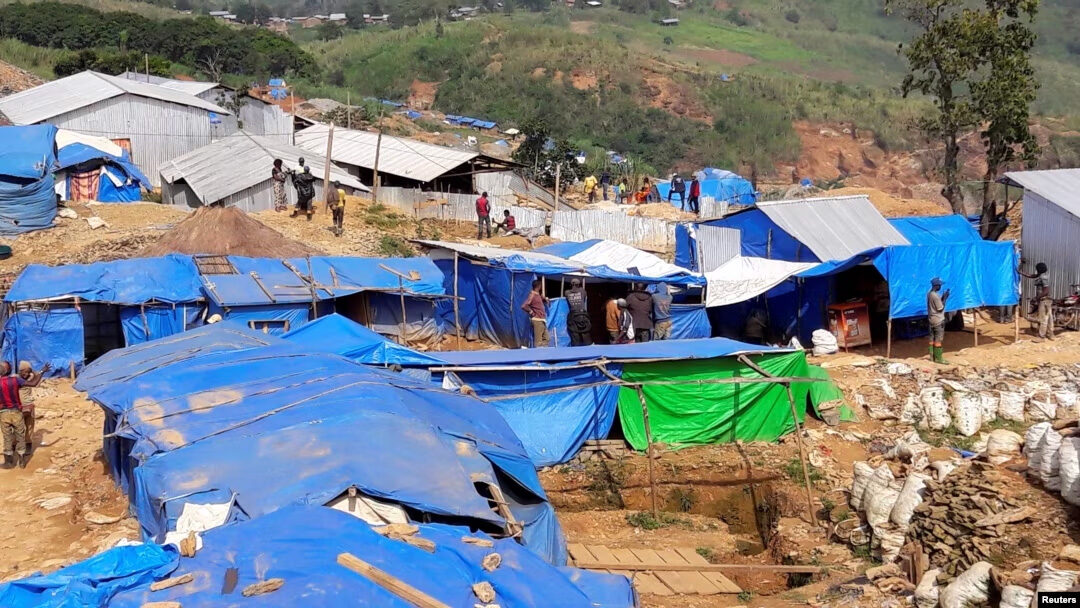
When Guy Robert Lukama looked out at thousands of illegal gold diggers hacking away at the verdant hills in remote northeastern Congo, he glimpsed opportunity where previous owners saw only an intractable problem.

Lukama’s former employer, South Africa’s AngloGold Ashanti, had for years sought to develop the 3,260 square kilometre Mongbwalu concession but pulled out partly due to concern over the sprawling blue-tented camps full of miners.

When he led a buyout of AngloGold’s 86 percent stake in the Mongbwalu Gold Mine (MGM) last year, Lukama knew he couldn’t chase them away if he was to succeed in mining any of the 2.5 million ounces of gold estimated to lie trapped in the earth. Instead, he decided to put them on the payroll.

“We cannot avoid the fact that … we [have] to manage the presence of [the diggers],” Lukama told Reuters.

It is an innovative attempt to address one of the knottiest problems facing industrial miners around the world and the first initiative of its kind in Congo, where up to 2 million people mine with rudimentary tools, most illegally and in dangerous conditions.

While some mines in South America and elsewhere in Africa have experimented with similar concepts, MGM’s could be the most ambitious, particularly in light of concerns over so-called Congolese “conflict minerals.”

Armed groups have long dominated small mines in eastern Congo, a legacy of nearly two decades of war and unrest.

A study by the Antwerp-based International Peace Information Service found that 64 percent of gold miners in Congo work under the influence of armed actors, most commonly government soldiers.

Once the scene of militia violence, Mongbwalu is peaceful these days but the police and army continue to levy illegal taxes on artisanal miners.

“It’s a very fundamental problem,” said Valery Mukasa, chief of staff to Congo’s mines minister. “We don’t need armed men where there is mining.”

Conflict minerals

The 2010 U.S. Dodd-Frank financial reform law requires firms sourcing gold and the “3Ts” — tin, tungsten and tantalum — from Congo or neighboring countries to conduct supply chain due diligence.

Traceability schemes, such as “bag and tag,” which labels minerals by point of origin, have helped reduce armed influence over 3T extraction but have proved unworkable for gold, which is much more lucrative.

In his shop in downtown Mongbwalu, one middleman boasted that he once smuggled abroad 850 kg of gold — worth almost $34 million at current prices – bought from local diggers.

“You put the gold in the suitcase and you drive into Uganda,” he laughed, brandishing a 500 gram brick of solid gold in one hand, a Ugandan driver’s license in the other.

A panel of U.N. experts estimated in 2013 that 98 percent of Congo’s artisanal gold production was illegally smuggled out of the country.

Lukama’s solution depends on establishing partnerships with cooperatives of about 100 diggers each who will work limited plots that can be monitored for evidence of armed influence.

They will be given better equipment and access to areas with high ore grades but which are not suitable for industrial mining. Most importantly their ore will be processed more efficiently at MGM’s industrial plant, allowing the company to
pay them better than the smugglers.

MGM plans to start buying from local miners next month and pour its first gold in the first quarter of next year.

“If MGM helps us with small things … people are going to accept it because they are looking for a livelihood and nothing else,” said digger Freddy Ngoy, 44, over the churning of pumps draining flood water from the recent rains.

“Outside the box”

Not everyone is happy with MGM’s plan. Since March, as the company has laid the groundwork for its scheme, tens of thousands of new illegal diggers have flocked to its concession. Lukama and local activists say they are backed
by local military and political officials.

Congo’s army spokesman did not respond to requests for comment. The director of the provincial division of mines referred questions to the governor of Ituri province, who did not respond to requests for comment.

Even if the initiative succeeds in Mongbwalu, there’s no guarantee other companies will be willing to replicate it, said Gregory Mthembu-Salter, a former member of the U.N. panel of experts specializing in mining supply chains.

“The precedent is a difficult one for industrial miners to swallow because they like to deny the presence of artisanal miners on their concessions,” he said.

MGM estimates around 25,000 diggers mine its concession illegally. Others put the figure as high as 100,000. At most the new scheme will employ around 1,500 informal miners.

Though MGM’s initiative also aims to promote agricultural jobs and develop infrastructure that should boost the local economy, Lukama fully recognizes its limitations.

But with up to 10 million people, or around one in seven Congolese, economically dependent upon the informal mining sector, Lukama said it’s imperative that companies play a role in improving those livelihoods.

“We are not there to fix all the problems. … In a post-conflict area, you should from day one keep in mind how to make it beneficial for most of the stakeholders,” he said. “We have decided to think outside the box.”

Source: VOA News

READ MORE
fitch-ratings
MARKETS
August 3, 2023 By Octavian News

Fitch downgrading US puts Asia’s $3.2 trillion at risk

It’s a tale of two downgrades, and the reaction in global markets couldn’t be more different.

When S&P Global Ratings stripped Washington of AAA status in August 2011, all hell broke loose in global markets. The reaction in August 2023 to fitch ratings downgrading the US was infinitely less chaotic.

But for Asia, Fitch’s move – and the rationale behind it – is a much bigger headache than the non-reaction in bond and stock markets suggests.

For one thing, it’s a reminder that faith in the linchpin asset of the global financial system is dwindling. For another, this region may be about to get burned on more than US$3.2 trillion of state wealth as Washington fiddles.

The reference here is to the titanically large stockpile of US Treasury securities held by top Asian authorities. Here too, the dynamics surrounding these historical bookends are quite different.

Twelve years ago, the conventional wisdom was that Asian central banks had the leverage. The idea was that if Washington took its top bankers for granted, they could issue history’s most spectacular margin call. This week, it’s clear that Asia is now in essence trapped with its mountains of dollars.

This explains why neither japan , the top holder of US Treasuries with $1.1 trillion, nor China, the second-biggest with $860 million, has dumped huge blocks of dollar-denominated debt. The same goes for Taiwan ($235 billion), India ($232 billion), Hong Kong ($227 billion), Singapore ($188 billion) or South Korea ($106 billion).

The slightest whiff that Washington’s Asian bankers are bailing on the US Treasury market would destabilize the global financial system.

Not that the US isn’t tempting Asian leaders to do just that. In its rationale for downgrading Washington, Fitch pointed as much to chaotic politics as America’s fiscal trajectory toward the $33 trillion national debt level. The ratings company cited Republicans playing games with the debt ceiling.

“In Fitch’s view, there has been a steady deterioration in standards of governance over the last 20 years, including on fiscal and debt matters, notwithstanding the June bipartisan agreement to suspend the debt limit until January 2025,” the company said.

Fitch highlighted “expected fiscal deterioration” thanks to a “high and growing” government debt burden. But it also said the January 6, 2021, riot at the US Capitol was a key factor.

As Richard Francis, a co-head of Fitch’s Americas sovereign ratings division, told CNBC:“We’ve seen a pretty steady deterioration in governance over the last couple of decades. You can highlight a few key elements. One would be January 6.”

The “timing surely caught everyone off guard,” says strategist Edward Moya at Oanda. Calm prevails, so far. For now, global markets are taking the Fitch downgrade significantly better than they did S&P’s in 2011.

“While investors should take the downgrade in their stride since Uncle Sam can easily meet his near-term payments, the action still focuses attention on debt sustainability as US fiscal deficits move towards 6% of GDP during a boom period,” says analyst Tan Kai Xian at Gavekal Dragonomics.

Tan adds that the US Treasury market seems to be reacting with a “casual shrug” for three reasons.

One, Fitch had flagged the risk of a ratings downgrade in May and kept the US on “negative watch” even after debt-limit agreement between Congress and US President Joe Biden in June.

Two, investors are well aware of the reasons for the downgrade, so aggressive market repricing wasn’t necessary.

And three, the downgrade is unlikely to affect the use of US Treasuries as a bedrock asset.

“After all,” Tan argues, “US Treasuries remain the Federal Reserve’s top choice of collateral for its lending facilities.” For the next 17 months, Tan says, the US can comfortably make payments as the congressional agreement suspends its borrowing constraint until January 2025.

The real question in the short run is whether global markets can absorb the heavy debt issuance the US Treasury is planning without a sharp surge in yields, and with it, Washington’s funding costs.

Earlier this week, the Treasury said new debt issuance would rise to $103 billion in its so-called quarterly refunding auctions next week, slightly more than most dealers expected.

“The question from here is if investors will be willing to buy the dip” or “if the selloff has room to extend” amid debate where US yields are heading, says strategist Benjamin Jeffery at BMO Capital Markets.

On the plus side, Fed chairman Jerome Powell’s team is no longer forecasting a recession. This week, Bank of America became the first major bank to drop its forecast for a recession this year.

“Recent incoming data has made us reassess our prior view that a mild recession in 2024 is the most likely outcome for the US economy,” BofA economists wrote in a note. “Growth in economic activity over the past three quarters has averaged 2.3%, the unemployment rate has remained near all-time lows, and wage and price pressures are moving in the right direction, albeit gradually.”

On Wednesday, ADP, the largest US private payroll supplier, reported that private employers had added 324,000 new jobs in July, far exceeding the 175,000 many economists had been expecting.

“The economy is doing better than expected and a healthy labor market continues to support household spending,” says ADP economist Nela Richardson. “We continue to see a slowdown in pay growth without broad-based job loss.”

As such, some prominent economists agreed with US Treasury Secretary Janet Yellen’s take that the thinking behind the Fitch downgrade is “outdated.” Former Treasury secretary Larry Summers called the decision “bizarre and inept.” Mohamed El-Erian, chief economic adviser to Allianz, was “perplexed” by Fitch’s timing and arguments. More to come?

Taking a longer-term view, though, some worry Fitch’s downgrade is the tip of the proverbial iceberg where the US is concerned.

“Continued fiscal expansion/deficits could result in additional downgrades from rating agencies,” says Lawrence Gillum, chief fixed-income strategist for LPL Financial. “So until the US government gets its fiscal house in order, we’re likely going to see additional downgrades.”

That’s the last scenario Washington’s top financiers in Asia want to contemplate. Surging US borrowing costs would slam American consumers’ ability to fuel in Asia’s export-driven economies. And trillions of dollars of state wealth is on the line.

It’s a scenario that chinese leaders have flagged in the past, one more directly than Wen Jiabao, premier from 2003 to 2013.

In 2009, amid the fallout from the 2008 collapse of Lehman Brothers, Wen urged Washington to protect its AAA status.“We have made a huge amount of loans to the United States,” he said. “Of course, we are concerned about the safety of our assets. To be honest, I am a little bit worried.”

Washington, Wen stressed, must “honor its words, stay a credible nation and ensure the safety of Chinese assets.”

Nearly a decade later, in 2018, Cui Tiankai, then China’s ambassador to the US, hinted that Beijing might someday move to reduce Treasuries holdings amid concerns about losses. “We are looking at all options,” he said.

Also in 2018, Fan Gang, a top adviser to China’s central bank, talked publicly about diversifying away from the dollar. “We are a low-income country, but we are a high-wealth country,” Fan said. “We should make better use of capital. Rather than investing in US government debt, it’s better to invest in some real assets.”

The Fitch news demonstrated why there are intensifying efforts to dislodge the dollar from its perch. Efforts are afoot by a loose grouping in nations including China, Russia, Brazil, Saudi Arabia, the United Arab Emirates and others to find a new reserve currency.

Brazil, for example, this year started doing trade in other currencies such as the Chinese yuan and Russian ruble. In April, Brazilian President Luiz Inacio Lula da Silva threw his support behind creating a BRICS monetary unit to be used by members Brazil, Russia, India, China and South Africa.

“Why can’t an institution like the brics bank have a currency to finance trade relations between Brazil and China, between Brazil and all the other BRICS countries?” Lula asked. “Who decided that the dollar was the trade currency after the end of gold parity?”

Or as Lula’s Finance Minister Fernando Haddad puts it: “The advantage is to avoid the straitjacket imposed by necessarily having trade operations settled in the currency of a country not involved in the transaction.”

Lula’s backing is music to Xi Jinping’s ears in Beijing. The Chinese leader is steadily ratcheting up efforts to raise the global south ‘s role in geopolitical decision-making. In this, Xi’s third term, he is prioritizing morphing developing countries in the regions from Latin America to Africa to Asia to Oceania into a bigger economic and diplomatic force.

This year, Malaysian Prime Minister Anwar Ibrahim said China is open to discussing the formation of an Asian Monetary Fund, a move that would reduce that International Monetary Fund’s influence in the region.

This would revive a decades-old proposal that most famously reared its head in the late 1990s amid the Asian financial crisis. At the IMF’s annual meeting in September 1997, held in Hong Kong, Asian leaders proposed a bailout fund. This idea was headed off by IMF and US Treasury officials. At the time, Anwar was Malaysia’s finance minister and deputy PM.

Yet the push for an Asian monetary fund comes as China’s currency plays a bigger and bigger role in global trade and finance.

yuan internationalization dovetails with a flurry of new foreign-exchange arrangements that exclude the dollar: France beginning to conduct some transactions in yuan; China and Brazil agreeing to settle trade in yuan and reais; India and Malaysia increasing use of the rupee in bilateral trade; Beijing and Moscow trading in yuan and rubles.

The 10-member Association of Southeast Asian Nations is joining forces to do more regional trade and investment in local currencies, not dollars. Indonesia, ASEAN’s biggest economy, is working with South Korea to ramp up transactions in rupiah and won.

Pakistan is angling to begin paying Russia for oil imports via yuan. The United Arab Emirates is talking with India about doing more non-oil trade in rupees. Argentina recently doubled its currency-swap line with China to roughly $10 billion. It speaks to the rising anti-dollar movement in South America.

Aside from Washington’s fiscal trajectory, Biden’s move to “weaponize” the dollar to punish Russia over Ukraine further eroded faith in the greenback.

“Despite America’s likely opposition, de-dollarization will persist, as most of the non-Western world wants a trading system that does not make them vulnerable to dollar weaponization or hegemony,” says Frank Giustra, co-chairman of International Crisis Group. “It’s no longer a question of if, but when.”

Fitch’s downgrade is another reason for Asia to worry about the dollar – on top of the 3.2 trillion reasons it already had.

Source: Asia Times

READ MORE
drc-refinery
AFRICACOBALTGOLDLITHIUMMINING
August 2, 2023 By Octavian News

Global nations compete for DRC mineral resources

Global nations are accelerating their efforts to acquire the rich resource base of the African continent, which is expected to become one of the world’s main sources of raw materials in the future.

Perhaps one of the most important of such states is the Democratic Republic of the Congo (DRC). Once a Belgian colony, according to analysts, the country has an economic potential comparable to the strongest regional powers, although currently remains one of the world’s poorest countries.

Being the second largest African country, the DRC is incredibly rich in natural resources. Oil, coal, diamonds, cobalt, zinc, silver, tungsten and other rare metals have been found and mined here. Moreover, the share of the republic in the global production of cobalt reaches 70%. The situation is almost the same with tantalum and coltan (a mixture of columbite and tantalite), which are necessary in the production of electronic equipment, in particular, for military purposes. In addition, the country ranks fourth in the world in terms of diamond production.

Still, political instability and the resulting decentralization of power have resulted in almost 30% of all mining activities in the country being carried out artisanally in hand-dug mines, where safety standards are absent and child labor is actively used. Only in the last two years the government of Kinshasa (the capital of the Congo) has been taking efforts to bring this situation under state control.

According to experts of the Russian Izvestia business paper, until the early 2000s, the DRC, like its neighbours in Central Africa, regularly served as a resource base for Europe (mainly France) and the United States, despite its formally independent status received in 1960. The main assets were controlled by North American (First Quantum Minerals, Barrick Gold, Chevron Texaco and others) and European (Glencore, Areva) companies. For Washington, this source is still of strategic importance. According to some reports, 75% of the cobalt and 50% of tantalum used in the US military-industrial complex is mined in the DRC.

In recent years, the DRC, along with other African states, which are characterized by rich raw material resources, have faced an active expansion of Chinese investors. Over the last decade, overall capital investments of Chinese business in the African mining sector have grown by 22 times, to US$220 billion, and the volume of issued loans increased 74 times (US$100 billion). A significant part of these investments was accounted for in the DRC.

In recent years, imports of some critical minerals, which are produced in the African continent for China, has also increased. For example, since 2015 imports of cobalt to China have grown by 3,000% and copper ore by 1,700%. In the case of the DRC, for 20 years Beijing has effectively withdrawn the US from the mining sector of the country. The latest major US asset in the country’s mining industry was Tenke Fungurume Mining, which was sold to China Molybdenum in 2020.

In the meantime, the mining sector of Congo, along with the country’s hydrocarbons resource base, is also within the sphere of interests of Russia for which the expansion in the African continent, after the exodus from the majority of Western markets, is considered as one of its priorities. As part of these plans, Russia plans to transfer some of its technologies in oil and gas production to the DRC, that will allow to significantly increase their production already in the short-term.

At the moment, the country produces only 22,000 of oil barrels per day, although the DRC hopes to increase these figures by more than 10 times.

Still, the traditional political and economic instability and the simmering military conflict with neighboring Rwanda, which led to the Second Congo War (the origins of which, go back to the bloody war between the Hutus and Tutsis in Rwanda) poses a threat for the active development of the DRC’s rich raw materials base.

The biggest instability is currently observed in the eastern part of the DRC. The situation is complicated by the fact that the republic’s central government does not fully control individual regions of the country. Chinese and Western companies have learned to work in this environment. They seek to form an autonomous environment which includes tools to ensure the security of mines under their control, create logistics corridors, conduct a dialogue with local communities.

According to analysts, the future situation in the region will be determined by the ability of the central government of the Democratic Republic of the Congo to establish control over the activities of foreign business and limit the influence of other regional players, including Rwanda and Tanzania, as well as to send an income from the export of raw materials to the development of the eastern provinces of the country.

Source: Resource World

READ MORE
Silver,And,Gold,Bars,And,Coin,On,A,Dark,Background.
GOLDMARKETS
July 31, 2023 By Octavian News

A rise in U.S. money supply will drive gold, silver prices to new highs

Despite recent volatility, the gold market continues to hold firm support at around $1,950 an ounce. However, despite the precious metal’s resilient strength, one analyst says something more is needed to drive the precious metal to record high.

In an interview with Kitco News, John LaForge, head of real asset strategy for Wells Fargo Investment Institute, said that gold and silver have been underperforming general commodities in a broad neutral trading range for the last three years. He added that the precious metal market is stuck as investors continue to focus on tightening U.S. monetary policies and the sharp drop in U.S. money supply.

However, LaForge added that with the Federal Reserve nearing the end of its tightening cycle, both gold and silver could be on the cusp of a long-term bull market as part of the larger commodity super-cycle. He said that it’s only a matter of time before the U.S. central bank starts pumping money back into financial markets to keep the economy from slipping into a recession.

“If we do get this jump back up in Money supply and again and investors start to worry that we are printing too many of these little pieces of paper, we will finally see that long-term run in gold and silver. I would expect that rally to last for three years,” he said.

LaForge added that it wouldn’t take a significant rise in the money supply nor a major shift in U.S. monetary policy to support gold prices at record highs. He added that the market is already sensitive to the government’s massive deficit spending.

The comments come as the U.S. deficit has surged by more than $1 trillion in the last two months since the U.S. government resolved its debt ceiling crisis in early June. LaForge said he expects the deficit to be a significant talking point ahead of the November 2024 elections.

“The more politicians talk about deficit spending, the more people will realize just how unstainable this environment is,” he said. “Where do you go when people start losing confidence in their currency and want to preserve their wealth and purchasing power?”

LaForge said that as the November election approaches, the U.S. could face a similar situation that sparked a crisis of faith in the U.K. bond market last year. The British bond market saw a significant meltdown in October after the then-newly-minted Prime Minister Liz Truss released a mini-budget that proposed the nation’s biggest tax cuts in 50 years.

Truss lasted six weeks as the Prime Minister and the Bank of England had to support the bond market.

Another potential piece to the gold rally is a further deterioration in the U.S. economy. He added that the Federal Reserve could be forced to expand its balance sheet as smaller regional banks continue to feel the pressure of a weakening economy, rising corporate bankruptcies and tighter financial market conditions due to rising interest rates.

“I don’t think it will take much to wake people up to how fragile the economy actually is. There are a lot of potential little triggers that could create a big move in the market,” he said.

Looking at gold and silver‘s technical outlook, LaForge said that despite the long-term consolidation, the precious metal is in a good place to capitalize on any market uncertainty.

“The only thing that’s really disappointing with gold and silver now, frankly, is that they’re not breaking out to the upside,” he said. “They don’t look bad. They’re just going sideways, waiting for a trigger.”

While LaForge is bullish on gold and silver as investment demand is expected to pick up, he explained that the fundamental supply and demand picture will keep prices elevated long-term.

He noted that even if the U.S. slips into a recession, impacting demand for gold, particularly silver, dwindling supply will keep prices well supported.

“Ten years ago, broader commodities saw significantly higher prices, and everyone was out looking for deposits and finding them. The market became oversupplied, and prices have suffered. Fast forward ten years later, after years of weak prices, there is no supply left,” he said. “Gold and silver have two of the best-looking supply growth charts of any commodity, meaning there’s no growth there. So should not take much in demand to support prices at elevated levels.”

Source: Kitco

READ MORE
bandar-alkhorayef
DUBAIGOLDMARKETSMINING
July 30, 2023 By Octavian News

The mining world turns to Saudi cash for critical metal supply

A $2.6 billion deal announced last week has set the stage for a potentially landmark shift in the metal and mining investment landscape: the arrival of Saudi Arabia as a pivotal player.

The agreement with Vale SA gives the kingdom a 10% slice in one of the world’s crucial suppliers of nickel and copper — essential metals needed to decarbonize. It’s also held other talks, including with Barrick Gold Corp. about investing in a big Pakistan copper mine, according to people familiar with the matter. Speaking privately, executives at top miners said the value of Thursday’s deal made clear that the Saudis are ready to splash cash around.

The move comes as the question of who controls the commodities needed to both sustain and decarbonize the world’s economies has turned into a global flashpoint, jumping to the top of agendas in the US and Europe.

China has for years been the dominant buyer and a key source of funding, as it sought to secure supply for its rapid industrialization. But as tensions with the West have mounted, the mining industry is now facing increased pressure to look elsewhere.

Saudi Arabia is seeking to take minority stakes in global mining assets that will over time help provide access to supplies of strategic minerals. The country also is looking to build a metals-processing industry that could in turn make it more attractive for international miners to exploit its mineral deposits — a central pillar of Saudi efforts to diversify the economy away from oil.

The kingdom has invested heavily into industrial and financial assets and even turned the world of sport upside down by essentially buying the game of professional golf and piling into soccer. However, the Vale deal announced last week is its first major foray into mining. Manara Minerals, a new venture between the kingdom’s sovereign wealth fund and state mining company, will get a stake in Vale’s base metals business, giving Saudi Arabia an interest in mines from Indonesia to Canada producing copper, nickel and other industrial metals.

For western producers, the kingdom offers access to deep pools of capital, which are appealing as Chinese funds become less politically palatable, but also as some institutional investors have turned less comfortable with mining over environmental concerns.

Investors from the region — Qatar is already a major backer of Glencore Plc — are now likely to become one of the most important financiers for the capital hungry sector, according to serial mine builder Robert Friedland, who spent the last few years developing one of the world’s biggest copper operations, in the Democratic Republic of Congo, with the help of Chinese funds.

“Now, probably, the largest supply of capital to the mining industry will come from the Middle East,” he said in an interview last month.

But Saudi Arabia offers something else beyond cold cash: political backing for companies looking to expand into the Muslim world as deposits in more traditional jurisdictions are depleted.

Canada’s Barrick has been in talks with the Public Investment Fund about a potential stake in its Reko Diq copper project in Pakistan, which is a relatively untouched frontier for the international mining industry, according to people familiar with the matter. Bringing the Saudis on board would not only ease Barrick’s funding burden, but also introduce a partner that has significant political influence in Pakistan, the people said.

Spokespeople for the PIF and Barrick did not comment.

Saudi Arabia’s deep pockets may also present some challenges for the biggest producers who are looking for deals of their own. Keen to get more exposure to copper and nickel, miners have started writing the biggest checks in more than a decade. BHP Group and Rio Tinto Group — the two largest — have just completed multi-billion dollar deals to grow in copper, while Glencore Plc tried to buy Teck Resources Ltd.

For years, the big producers have found themselves repeatedly outbid by Chinese companies when it comes to buying mines. China’s state-owned metal and mining companies have been willing to pay valuations that western firms simply couldn’t match. Saudi Arabia now seems willing to do the same, potentially putting some deals beyond the reach of the industry’s traditional buyers.

Executives at two of the biggest mining companies, which have spent years assessing base metal assets such as those owned by Vale, said privately that they were surprised by the price tag in last week’s deal, which valued the unit at $26 billion (RBC Capital Markets said it was worth about $21 billion.)

Still, unlike Chinese companies, Saudi Arabia is currently more interested in securing stakes — guaranteeing future supply of critical minerals — rather than buying outright and then operating the assets.

Saudi Arabia set down a marker earlier this year when it announced the new firm to invest in mining assets globally, with $3.2 billion for initial investments. The country holds an annual mining conference, which this year featured the CEO of the world’s biggest mining company, BHP’s Mike Henry, as well as the chairman of no. 2 producer Rio Tinto — a major step up from past speakers. CEOs from other top miners are expected to attend next year.

For mining companies looking for funds, the US and Canadian governments’ recent crackdown on Chinese investment in key metals companies has changed the investment landscape. That’s given an opening to Middle Eastern countries like Saudi Arabia to fill the gap.

“Everything’s changed,” said Friedland.

“The American government has an ‘ABC’ policy: Anything But China. So the American government instead goes to rulers in the Middle East and says, “You should be giving the African people an alternative for financing mines in Africa. Recycle some of those petro-dollars.”

Source: Mining.com

READ MORE
chopard-jewelry
GOLDLOGISTICSMARKETSTECHNOLOGY
June 23, 2023 By Octavian News

Fair-mined and traceable: The new standard in gold sourcing

Under pressure to distance themselves from gold originating from Russia, jewellers are making advances in traceability and transparency. We unpack how.

Gold mining has come under increased scrutiny for its links to mercury pollution and human rights abuses, prompting a move towards sourcing more traceable, fair-mined gold. A warning in March from the Global Gold Transparency Initiative that brands must ensure they have a full and accurate view of their gold supply chains – or risk unwittingly funding Russia’s war on Ukraine – sped that up further.

Several jewellery houses, from independent designers such as the UK’s Stephen Webster and Brazilian-born Fernando Jorge, to big international names such as Messika and Bulgari, are transitioning to 100 per cent traceable gold. A new industry standard called Single Mine Origin (SMO), which first launched in 2018, is gaining traction, and responsibly sourced recycled gold is another potential solution. But there are still challenges to overcome in the rush for transparency, including cost and distribution.

Gold is notoriously difficult to trace. According to the World Gold Council, an average of 2,500-3,000 tonnes of gold are produced annually and shipped to refineries, where they are transformed into gold bars. However, since gold is indestructible and infinitely recyclable, refineries usually mix freshly mined gold with some of the metal that has been mined since the beginning of time. With around 200,000 tonnes of it in circulation, it is near-impossible to determine its origins. Russia is the second-largest producer of gold globally, after China.

The Alliance for Responsible Mining and Fairtrade International both run schemes to help brands source gold that can be traced from mine to finished jewellery, and guarantee that the gold has been produced in a way that protects the people who mined it. Through these, brands can individually establish close links to small-scale and artisanal mines. For example, in 2013, Chopard began sourcing directly from artisanal and small-scale miners in Peru, Bolivia and Colombia, under the Alliance for Responsible Mining’s scheme.

However fair-mined and fairtrade gold comes with a premium price tag — about $4 more per gram than standard gold, according to Fairmined, an initiative that connects certified responsible mines with gold buyers. “We’ve taken a cut on our margins to be able to ensure that all of our production is fair-mined and it’s been challenging, but it is possible,” says Nigora Tokhtabayeva, founder of US-based fine jewellery brand Tabayer, which launched in 2019. Lower margins have “huge implications” in a business in which raw materials are expensive and the gold price fluctuates as it means the brand has less leverage to hedge for changes in the price of gold. However, she is committed to fair-mined gold, noting that customers and retailers increasingly ask about sourcing policies.

Brothers Charlie and Dan Betts — whose family has been in the gold refining business since the 1700s — believe that real change will only happen by connecting the jewellery industry with medium and large-scale gold mines. In 2018, they created the SMO kitemark, which is applied to gold that has been produced by a legitimate mining operation that holds no ties to conflict, and where miners are being paid a just wage.

SMO operates chain-of-custody protocols on two large-scale mines in Mali and Ivory Coast. A third mine in Guinea is under construction and is expected to start producing SMO gold by mid-2023. Upon arriving at a partner refinery in Switzerland in segregated batches accompanied by documents, SMO gold is refined separately from other gold bars. Independent auditors have been appointed to monitor the process. Jewellery made with SMO is traceable using a QR code. Boodles was one of the first to switch to SMO gold in 2018, and other jewellers such as Garrard, Emefa Cole and Shaun Leane have followed suit.

The brothers claim SMO offers traceability without the premium prices of fair-mined and fairtrade schemes. “The two African mines produce more than 300,000 ounces of gold per year between them, and thanks to the volume and economy of scale there is no need to charge a premium,” says Charlie Betts, “plus, the programme is scalable and can be applied to other mines.”

Jewellery brands are also exploring the opportunities in recycled gold, which can be a responsible choice when the source is known. Recycled gold has been boosted by recent government scrutiny of electronic waste: a UN report published in 2020 valued the recyclable metals such as gold and copper trapped in electronic waste at $57 billion. Earlier this year, the British Royal Mint, a purveyor of coins, medals and gold for investment since the ninth century, launched a jewellery brand called 886 (the year the British Royal Mint was established) made out of reclaimed metals and gold mined in electronics. Chopard recycles gold at its own foundry, while online retailer Finematter offers clients vouchers in exchange for recycling unwanted gold jewellery. Alexander Thiel, a partner at management consultancy McKinsey & Co in Zurich, says that while knowing the origins of materials is important, “consumers, at the moment, are placing more value in recycled materials and circular models.”

Another solution to the transparency challenge in gold sourcing is blockchain technology. Industry body the Responsible Jewellery Council trains jewellers in implementing a chain of custody. Every sourced material needs to be segregated and accompanied by documentation as it moves across the supply chain, and a third party must supervise every stage. The council says blockchain technology can be used to support the process.

In March, the London Bullion Market Association and the World Gold Council announced that they would be working together on a blockchain-backed digital system to track gold across the supply chain from the mine until it is set in jewellery. Similar technology was successfully implemented by De Beers in 2018 with Tracr, a proprietary tool that uses blockchain and artificial intelligence to follow diamonds higher than one carat in the rough from the mine until it reaches the client.

World Gold Council CEO David Tait said its blockchain project was the “first step towards a more aligned gold industry, where we work together to ensure a more accessible and transparent market”.

Source: Vogue Business

READ MORE
The-Great-Gold-Rush-Central-Banks-in-Frenzy
DUBAIGOLDMARKETS
April 26, 2023 By Octavian News

Real demand pushes gold towards a new standard

Financial stresses have translated into gold trading at near-record levels

READ MORE
63d04007aa91990019ac5d45 (1)
DUBAIGOLDMARKETS
April 26, 2023 By Octavian News

Central banks are leading a revolt against the US dollar and shifting to gold at a record pace, market expert says

Central banks are turning away from the US dollar and shifting to gold, Ruchir Sharma wrote.

READ MORE
1000x-1
DUBAIGOLDMARKETS
April 25, 2023 By Octavian News

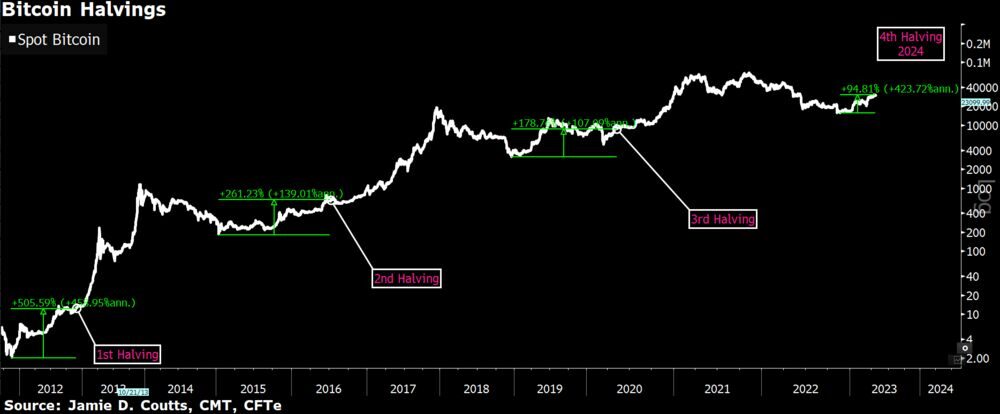
Bitcoin ‘Halving’ Due Next Year Spurs Predictions of Rally in Token Past $50,000

Bitcoin’s rebound is just the start of a rally that will take it past $50,000 next year courtesy of a process known as halving that curbs the supply of new tokens, according to projections from crypto analysts.

READ MORE
  • 1
  • 2
  • 3
  • 4
  • …
  • 11

© 2023 Octavian Precious Metals Trading DMCC. All Rights Reserved.