connect with us
Twitter Linkedin

Type To Search

Octavian Precious Metals Trading DMCC

Octavian Precious Metals Trading DMCC

  • Home
  • About
  • Products
  • Services
  • News
  • Contact
Author: Octavian News
HomeOctavian NewsPage 9
gold-forecast
GOLDMARKETS
November 9, 2022 By Octavian News

Is the Gold Price at a Turning Point?

Gold is in a transition phase. In the past nine months two key developments—war and inflation—have made gold trade much stronger than how it was priced from 2006 through 2021. Both developments are likely to stick around in the coming years and will prove a tailwind for gold. Moreover, the current monetary environment is adding support to the gold market as governments and central banks risk insolvency. For the medium- and long-term I’m therefore optimistic on gold. In the short-term gold still has downside risk due to rising interest rates and the possibility of collapsing asset markets triggering a liquidation event.

Is the price of gold at an inflection point?

Introduction

From 2006 until early 2022 the market priced the U.S. dollar gold price based on the 10-year TIPS yield, which can be seen as the expected real interest rate on 10-year U.S. government bonds, and dollar strength. In my article from January 2022 I have explained the mechanics of TIPS bonds and gold’s inverse correlation with the TIPS yield. Basically, the TIPS yield is the nominal interest rate on U.S. government bonds (the Treasury rate) minus inflation expectations.

TIPS rate = Treasury rate – inflation expectations

The correlation between gold and the TIPS yield is inverted because the lower the TIPS yield (expected real rate) the more investors are incentivized to buy gold and vice versa.

Let’s have a look at an updated chart of the 10-year TIPS yield versus gold prices.
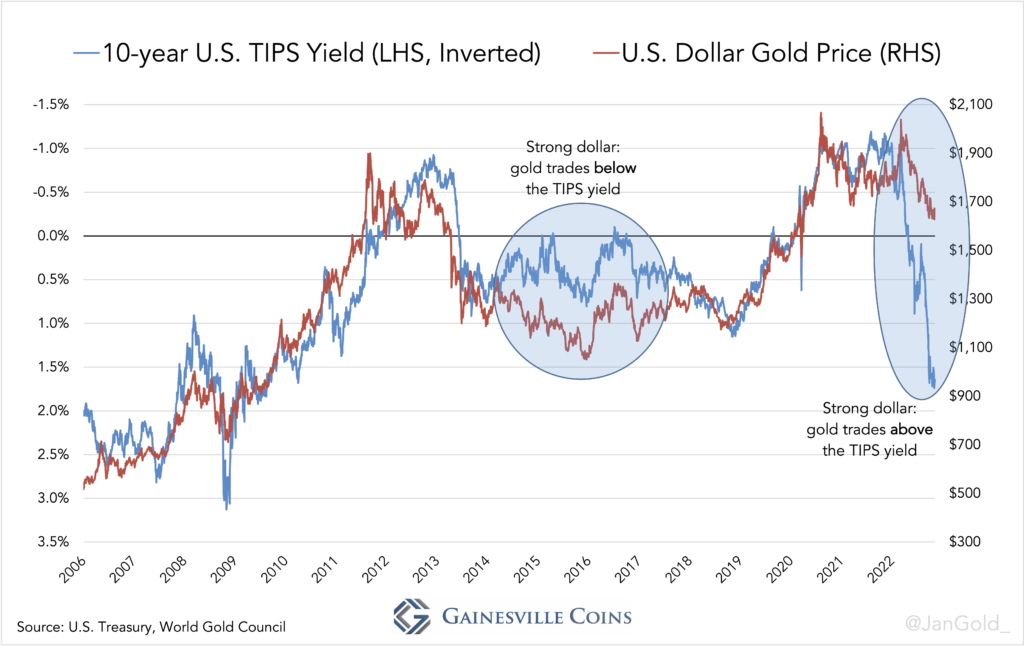
Gold prices vs. 10-year TIPS yield comparison

We can see that until recently the correlation was tight. From 2014 until 2017 the gold price traded below the TIPS yield because of a strengthening dollar. Remarkably, since the war in Ukraine gold is not only trading firmly above the TIPS yield, it’s doing so while the dollar is going up. Based on how it was priced in the past 15 years gold should be trading at $800 dollars an ounce now, but it’s not. At the time of writing gold trades around $1,700. What’s going on?

War and Gold

The first development that has changed how gold is priced is Russia’s invasion into Ukraine, which set in motion a proxy war between the West and Russia. As ties between the U.S. and China are also deteriorating, for example over chip technology and Taiwan, it can be expected the division between East and West will accelerate. The consequences are that the East is hastening to de-dollarize and trade between East and West is declining. The former boosts gold as investors are looking for an alternative store of value. The latter—de-globalization—will reshore production and create new supply chains, which is inflationary and supportive for gold too.

The war made the U.S. decide to freeze dollar assets owned by the Russian central bank (CBR). This watershed moment has startled all foreign holders of dollars. Countries in the East holding large dollar reserves are warned their assets can be rendered worthless in the blink of an eye. Sovereign wealth funds and other investors are buying gold because there aren’t many alternatives for the dollar. Gold isn’t issued by any country or central bank, and thus has no political or credit risk, it’s in limited supply, it’s untraceable, and has a five thousand year track record as a store of value.

The freezing of CBR’s dollars has lowered foreign demand for U.S. Treasury bonds during a trend in which foreigners are already willing to hold less of the total U.S. federal debt. Potentially, this could lead to a funding problem for the U.S.

Recently the World Gold Council (WGC) reported central banks bought close to 400 tonnes of gold in Q3 2022, which is four times as much compared to Q3 2021 and a record since the end of Bretton Woods. Although, this number should be taken with a pinch of salt, as it’s mostly based on field research and not what central banks report to the IMF. Most people I talk to in the industry agree the Chinese central bank, and a few others, buy gold covertly. We may assume this is reflected in WGC’s estimates.

Inflation and Gold

Some investors are disappointed by gold’s performance this year because the price in dollars is down while consumer prices in the U.S. have increased by 8% year-on-year. What they fail to see is how gold was priced in recent years—based on the expected real yield—and how that is changing. Now inflation is showing to be sticky, and the world is de-globalizing, gold seems to be in a transition phase. Some entities sell gold based on the old model; others are buying based on a new model.

There are analysts that presume inflation has peaked and will sharply drop. I’m more tempted to think it will stay elevated for the foreseeable future. First, Deutsche Bank analysts researched 318 episodes across developed and emerging markets since 1920 in which inflation reached 8%. The team concludes we have passed the point of no return:

When zooming in on developed economies since the world is on fiat only money (1970), the team finds that inflation has been even stickier.

More from Deutsche Bank:

Fiscal policy has remained loose throughout this inflation shock to ease the burden of Covid and higher energy prices. Indeed even now, many European countries are still pursuing fiscal stimulus packages of various kinds to cushion their citizens from the impact of the energy shock. In the meantime, monetary policy has also been behind the curve, … And, even after the hikes we’ve already had, central bank policy rates remain incredibly negative in real terms. So, you could argue this is the loosest policy response to inflation we’ve ever seen in peacetime. … However, the current consensus expects us to be back at or even below 3% just two years after we initially moved above 8%.

Perhaps gold knows more about what’s coming than the bond market, and hence gold’s pricing model is changing. Interesting fact: before 1914, inflation was practically non-existent due to metallic monetary standards.

Second, since the pandemic several governments have taken control over the printing press. In an interview with market strategist and historian Russell Napier, he explains that while many central banks are tightening, their governments are easing through loan guarantees. Commercial banks create credit, which increases the money supply, and governments will pay the bill when the loan turns sour. “This is the new normal,” says Napier, and inflation will stay around 5% in the coming years as governments want inflation to lower their debt burden. Finding reasons to ease comes naturally for politicians with endless ambitions to win votes: reducing inequality, general investments to combat climate change, the energy transition, etc. From Napier:

Just to give you some statistics on bank loans to corporates within the European Union since February 2020: Out of all the new loans in Germany, 40% are guaranteed by the government. In France, it’s 70% of all new loans, and in Italy it’s over 100%, because they migrate old maturing credit to new, government-guaranteed schemes. Just recently, Germany has come up with a huge new guarantee scheme to cover the effects of the energy crisis. This is the new normal. For the government, credit guarantees are like the magic money tree: the closest thing to free money. They don’t have to issue more government debt, they don’t need to raise taxes, they just issue credit guarantees to the commercial banks.

Third, the world is still highly dependent on fossil fuels, for conventional energy use and to realize the energy transition, but new oil discoveries are dwindling. From Rystad Energy (June 2022):

Continuing the trend from previous years, Rystad Energy’s 2022 review shows a sizeable drop in recoverable oil resources in what could deal a major blow to global energy security. According to Rystad Energy analysis, global recoverable oil now totals an estimated 1,572 billion barrels, a drop of almost 9% since last year. 

A tight oil market will persist in the coming years, driving up the price of oil, which will be passed on in prices of goods and services, further fueling inflation.

Fourth, commodity price are currently subdued because China is holding on to zero COVID policy, limiting production and thus demand for anything from base metals to oil. If China would reverse course and open up, commodity prices get a push and so too inflation.

Insolvency Risk and Gold

After 40 years of moderate inflation Wall Street is conditioned thinking inflation will always swiftly revert to 2%. This reflects strong confidence in central banks and governments. Misplaced confidence?

Now central banks are raising rates, it’s becoming ever more apparent they themselves, and governments, pose a threat to the economy. In Europe, for example, Italy has so much public debt that the ECB has virtually been the only buyer of Italian government bonds in recent years. So how is the ECB suppose to tighten (sell Italian government bonds) and hike rates without Italy going bankrupt?

Central banks that conducted Quantitative Easing (QE) in the past years and now raise rates are suffering losses due to increasing interest expenses on their liabilities. In my previous article I shared the Dutch central bank is making losses that will have a severe impact on its equity (capital). But other European central banks, the Bank of England, and the Federal Reserve have the same problem.

There are three scenarios for central banks having burned through their equity:

  1. Operate under negative equity and risk people lose confidence in the currencies issued by these central banks.
  2. Treasuries (taxpayers) recapitalize central banks’ equity. Though this option is difficult because of the currently high public debt levels.
  3. Use the central banks’ gold revaluation accounts to increase equity, which requires a floor under the gold price and possibly revaluing gold (explained in my previous article from November 2, 2022).

The theory of revaluing gold has gone mainstream after renowned financial journalist Ambrose Evans-Pritchard mentioned it in The Telegraph on November 7, 2022. Markets might anticipate a gold revaluation and buy gold accordingly. Additionally, they might buy gold as a safe haven for when sovereigns default and cause contagion in financial markets.

Conclusion

There is a plethora of challenges in global finance. Previous to 2022 such challenges could temporarily be resolved by QE and zero interest rate policy (ZIRP), while fundamentally making matters worse: debt levels kept going up. Due to inflation these options are lethal. There is no easy way out anymore. War, inflation, and solvency risk could be a perfect storm for gold.
READ MORE
096cf849-daac-45dd-903b-9c92e1492c84_e183851f
LITHIUMTECHNOLOGY
October 30, 2022 By Octavian News

AVZ vs Zijin: The Fight for the World’s Biggest Lithium Deposit

The discovery of a gigantic deposit of lithium had raised hopes for the sleepy town of Manono in the southeast of the Democratic Republic of the Congo after a tin boom went bust years earlier.

Australia-based AVZ Minerals announced in 2019 that the Manono lithium-tin project in the DRC probably had the world’s largest untapped lithium deposit, with estimates of 400 million tonnes of lithium ore.

Lithium is essential in making rechargeable batteries for phones and electric vehicles, and is in high demand as countries around the world make the shift to green energy.

The stakes are huge and the rewards are great. But infighting and legal battles among shareholders for control of the Manono site is putting the project on hold.

The main fight pits AVZ against Chinese mining giant Zijin Mining in a case in the International Chamber of Commerce (ICC) International Court of Arbitration.

Zijin claims that through its DRC subsidiary Jin Cheng Mining it bought a 15 per cent stake in Dathcom, a joint venture established in 2016 that owns 100 per cent of the Manono lithium mine.

Zijin says it bought the stake from Cominiere, the DRC’s state-owned mining company, which had 25 per cent of Dathcom under a 2017 deal.

As part of the deal, AVZ had a 60 per cent equity stake, while Dathomir Mining Resources (Dathomir) had the remaining 15 per cent.

Zijin said Cominiere agreed to transfer a 15 per cent interest in Dathcom to Jin Cheng, and the two companies set up a joint venture, Katamba Mining, to explore and develop two greenfield projects at the periphery of the Manono mine.

“Zijin Mining’s purchase price for its 15 per cent stake in the Manono project was at fair market value and includes other provisions that benefit the local community and the DRC,” Sun Kuiyuan, Zijin’s in-house legal counsel, said.

“The sale was subsequently approved at a Dathcom extraordinary general meeting, and lawfully registered at the RCCM [Registre du Commerce et du Crédit Mobilier].”

But AVZ disputes suggestions that Cominiere transferred 15 per cent to Zijin, saying they are “spurious in nature, without merit, containing fundamental and material errors, and having no substance or foundation in fact or law”.

The Australian company says such a transfer would have ignored its right to buy the stake.

“Any such transfer would be subject to the terms and conditions of the existing articles of association of Dathcom as well as the Dathcom shareholders agreement,” AVZ said in its 2022 annual report released on October 17.

“AVZ confirms that Cominière breached the pre-emptive rights of AVZI under the shareholders agreement by purporting to transfer a 15 per cent interest to Jin Cheng, making it invalid and of no force or effect.”

AVZ said it continued to “take all necessary action to resist these vexatious and meritless claims and to protect its and Dathcom’s interests”.

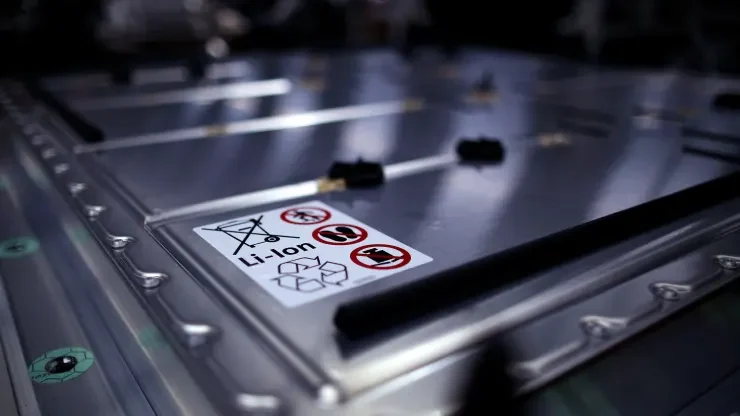
Lithium is essential in making rechargeable batteries for electric vehicles. Photo: AFP

Zijin reportedly paid US$33.4 million for the Cominière share, well above AVZ’s counter-offer of US$15 million.

In a letter dated July 21, 2021, Cominiere director general Athanase Mwamba Misao wrote to AVZ telling it Zijin had expressed interest in acquiring at least 15 per cent of the share capital.

“Having received the green light from the board of directors and the general assembly of Cominiere shareholders to start negotiations with this group, we held a meeting with Zijin on July 14, 2021, during which Zijin expressed its willingness to enter the capital of our joint venture with at least 15 per cent of the share capital,” the letter said.

AVZ replied a few weeks later, opposing the move to sell shares to an outsider and saying it was interested in buying the stake.

“AVZ Minerals hereby notifies you of its willingness to receive the benefit of the right of first refusal, which according to our statutes requires that the shares be first offered and then sold to the shareholders, but this is also in accordance with the agreements between the parties in the Joint Venture agreement of 2017,” AVZ said in its letter to Cominiere.

It warned that any transaction on the sale of shares between shareholders who have discussions outside the company violated corporate governance, the joint venture agreement and the statutes of the company.

These issues are now before the ICC International Court of Arbitration, which is expected to start hearing the case next year.

Another issue is the claim that AVZ acquired a 15 per cent stake from Dathomir, increasing its shareholding to 75 per cent.

However, Dathomir has denied it sold its shares, saying in court documents that although it initially agreed to sell a 5 per cent stake and later another 10 per cent stake, AVZ failed to pay the agreed amounts in time.

Dathomir, owned by a long-time Chinese investor in the country Cong Maohuai, sued in the Congo courts to annul the deal and won.

And in September, the Commercial Court of Lubumbashi suspended the deal, stopping AVZ from buying the shares.

“The transfer of the shares, which were the subject of the sale, to the benefit of the purchaser AVZ International Ltd could only take place after payment in full of the agreed sums; this was not the case for the plaintiff,” Dathomir argued in court.

The Commercial Court of Lubumbashi “ordered the suspension of the payment of the balances of the prices of US$15,000,000 and US$5,000,000 in the two contracts of sale of shares of 5 per cent and 10 per cent that have occurred between the claimant and the first defendant, AVZ International Ltd, while waiting for the arbitration judge to decide on the merits of the case”.

However, AVZ insists it has a 75 per cent stake in Dathcom after acquiring the 15 per cent shareholding from Dathomir.

“AVZI duly completed each of the Dathomir sale and purchase agreements in August 2021, including payment within the required period, and thereby legally acquired a further 15 per cent interest in Dathcom,” it said in its response to the court’s decision.

It said it considered the court’s decision immaterial. “AVZ confirms that it retains legal title to a 75 per cent interest in the Manono project and its pre-emptive rights over the balance of the project.”

AVZ shares remain suspended from trading pending the completion of the sale of its 24 per cent stake in Manono to Chinese battery maker Suzhou CATH Energy Technologies (CATH) for US$240 million.

If the sale goes through and AVZ does not have Dathomir’s 15 per cent share, AVZ’s stake will be reduced to 36 per cent.

While AVZ is based in Australia, its top shareholders, including Yibin Tianyi Lithium Industry, CATH, and Huayou International Mining, are Chinese. Observers say this could mean that the fight for the control of the Manono lithium site is among Chinese mining giants.

Source: South China Morning Post

READ MORE
800x-1
LITHIUMMARKETSTECHNOLOGY
October 29, 2022 By Octavian News

The Lithium Market Is Hotter Than Ever and Traders Are Moving In

When the oil market liberalized in the 1970s, a group of commodity trading buccaneers led by the infamous Marc Rich made fortunes by connecting buyers and sellers and surfing the price swings of this newly tradable commodity. Half a century later, some of Rich’s spiritual descendants are hoping to pull off a similar trick in lithium. 

A vital component in most electric-vehicle batteries, lithium is becoming one of the world’s most important commodities. Prices have soared to unprecedented levels as demand forecasts keep growing, leaving automakers scrambling to secure future supplies.

Yet until fairly recently, it’s been almost impossible to trade. Prices would be fixed in long-term private contracts between the handful of dominant suppliers and their customers, with no need for middlemen. Now, the surging demand is shaking up the way that lithium is bought and sold: Many supply deals have become dramatically shorter — with floating prices linked to the spot market — while exchanges from Chicago to Singapore are experimenting with new futures contracts.

Lithium Prices Skyrocket

Surging prices for the battery material are piling pressure on car-makers

And it’s getting the traders’ attention. Companies like Trafigura Group and Glencore Plc that make money moving commodities from copper to crude and coal around the world, are starting to wade into the lithium market. Traders say they can help the market broaden and mature, and reduce risks for other players in the supply chain. Some, like Trafigura and Carlyle-backed Traxys SA, are also investing in new production sources.

“The activity of traders in the lithium market should make this a more transparent and efficient market over time,” said Martim Facada, a lithium trader at Traxys. “It’s like oil in the 70s when governments would sell to consumers but then traders started providing services and that helped growing and developing the market faster. Lithium’s starting to go through that process.”

Of course, the comparison with oil 50 years ago isn’t a perfect one. The lithium market is tiny compared with more established and liquid commodity markets — annual world oil production is worth more than $3 trillion at current prices, versus $30 billion for lithium. The metal is also refined into highly specialized chemicals that some experts argue are much less fungible. 

Lithium Is a Small But Rapidly Growing Market

The approximate value of annual mined lithium production is dwarfed by copper

One of the concerns in the lithium market is that the extreme supply shortages create a risk that prices rise so high, or metal becomes so difficult to access, that automakers have to stop buying.

Commodity traders have a long history of squeezes and shocks in commodity markets, and the high stakes in lithium — so crucial to the success of the world’s decarbonization efforts — could leave them open to criticism. But despite the industry’s swashbuckling reputation, the traders insist they are treading carefully and are focused on helping to alleviate shortages, not make them worse. 

“If a trader is to get involved, it needs to be done with an entirely different approach,” said Socrates Economou, Trafigura’s head of nickel and cobalt trading, who also oversees lithium. “You already have a price that can lead to demand destruction — if you’re going to have market participants driving the price higher, I don’t see how this market can sustain itself.”

Trafigura estimates demand will hit 800,000 tons of lithium carbonate equivalent this year — overshooting supply by 140,000 tons — and sees demand rising by a further 200,000 to 250,000 tons annually through 2025.

Mining Investment Lags in the EV Revolution

And while the world needs more and more lithium, investment in new supply has not kept pace with rising demand. Trafigura’s focus so far has been on tying up deals with early stage mining and refining projects. Traxys, another early mover into the industry,  is taking a similar approach, scouring the globe for new sources of supply and helping to nudge them into production. The aim is to make money increasing the overall flow to car-makers, said Facada.

Other traders are also looking at lithium. Glencore, which is the largest producer of another key battery metal, cobalt, has invested in recycling startup Li-Cycle Holdings Corp. and is thinking about starting to trade lithium produced by the company, as well as third-party material. 

Traders IXM, Transamine SA and Mercuria Energy Group Ltd. have all set up lithium trading books in recent years, while Japan’s Mitsui & Co. has long been active in the sector.

The traders are stepping into the lithium market at a time of dramatic transformation. For years, the main customers for lithium producers were largely niche manufacturers in sectors like pharmaceuticals and industrial lubricants. Now, as carmakers have taken over as the biggest buyers, miners have been shifting towards a shorter-term pricing model that better reflects the mismatch between demand and supply. It’s a trend that’s drawn comparison to a seismic overhaul in the iron ore market as producers shifted to spot pricing in the 2000s, but it’s placing a strain on consumers and producers alike.

Tesla Inc. CEO Elon Musk has said that spot prices have become “crazy expensive,” and after years of urging producers to supply more, he’s stepping up efforts to refine it himself. Meanwhile, investors are pressuring top miners like Albemarle Corp. to shift their contracts over spot pricing more aggressively, potentially adding to the strain on their customers as the buying frenzy continues.

It will probably take some time before lithium matures to become more of a tradable commodity market, said Kent Masters, chief executive of Albemarle, the world’s largest lithium producer. With the spot market growing, the next key milestone for the industry will be the development of liquid futures contracts.

“We do think ultimately there’ll be an instrument out there where you can hedge lithium prices or speculate on the market financially,” he said in an interview. “It’s a good thing once it matures. But it’s going to take some time — it’s not today.”

In addition to helping make markets more efficient, traders say they can also manage risks for automakers and battery producers that are starting to look at mining projects and investments in a way that would have been unthinkable for many just a few years ago, as supply fears begin to rise. That will take them into riskier jurisdictions than they’re used to operating in, and leave them exposed to cost blowouts and wild price swings that are common to the mining industry.

“One of the roles we play is to connect different levels of supply chain to provide some level of price protection,” said Claire Blanchelande, Trafigura’s head lithium trader. “In addition to banks getting involved, car-makers are also getting comfortable because of our involvement.” 

Source: Bloomberg

READ MORE
6dd65257c8df545d712c8ee390c9b461
GOLDMARKETS
October 29, 2022 By Octavian News

Russia, China May be Preparing New Gold-Backed Currency

China and Russia may be working toward a new gold-backed currency in a move that would aim to dethrone the dollar as the primary reserve currency of the world, but any such currency would unlikely achieve that goal.

“The USD remains the safest, most convenient and most widely used currency in Asia and in the world today,” Min-Hua Chiang, a research fellow and economist at the Heritage Foundation’s Asian Studies Center, told FOX Business. “No other currency (backed by gold or otherwise) is comparable, and that is unlikely to change in the near future.”

Neither country has officially confirmed plans for such a currency, but China earlier this year started to buy up huge quantities of gold at the same time that Russia was forced off the dollar due to sanctions in response to the invasion of Ukraine. The war also led to the steepest discount on gold prices in years.

Some experts caution that these moves, along with the closer relationship that has developed between Moscow and Beijing as the rest of the world has isolated Russia after the invasion, point to the likelihood of China attempting to launch a new currency with gold backing it.

The idea of a joint Russo-Sino currency has periodically surfaced over the past decade, especially after the Russian Central Bank opened its first overseas office in Beijing in 2017.

Craig Singleton, Senior Fellow at the Foundation for Defense of Democracies, noted that Chinese leaders have spoken for two decades about reforming the global financial system and weakening the dollar’s dominance.

“Two components in that strategy center around the development of a Yuan-based global commodities trading system and efforts by China, in partnership with Russia and other like-minded countries, to challenge dollar dominance by creating a new reserve currency,” Singleton told Fox News Digital.

“In essence, Beijing and Moscow are seeking to build their own sphere of influence and a unit of currency within that sphere, in effect inoculating themselves from the threat of U.S. sanctions,” he added.

But the record amount of gold that China has purchased has raised some eyebrows, even as the trend remains under the radar for mainstream media: Swiss gold exports to China hit a five-year high, with Beijing in July alone receiving 80.1 tons of gold valued at around $4.6 billion – more than double the 32.5 tons it bought in June and the second-highest monthly total since 2012, according to Reuters.

International Financial Statistics from March 2022 indicated that China may have the seventh-most gold stores, with more coming every month.

Francis Hunt, a trading expert, told Asia Markets that using gold to back the currency would be the best way to build confidence in said currency, and that currency may be digital in nature to give China a greater scrutiny over its citizens’ activity.

But Chiang downplayed the potential success of a new currency due to the “relatively small trade volume” that would limit its growth, and that a digital currency would prove difficult to promote.

“Even if both countries use a new currency for bilateral trade transactions, the relatively small trade volume between will limit the impact on the U.S. dollar,” Chiang argued, noting that a multinational currency, like the Euro, requires “a level of political and economic coordination and integration that is not present in Asia today.”

“The appeal will be limited,” Chiang said. “Consider that in August 2022, 43% of global payments were conducted in USD, followed by 34% in Euro. RMB accounted for just 2% of total global payments according to RMB Tracker.”

“The RMB is gaining some ground, but it is still leagues behind the USD and Euro,” she concluded, adding that “foreigners’ confidence towards China’s and Russia’s economic prospects (or lack thereof) is a key limitation” to any potential joint currency.

Source: Yahoo Finance

READ MORE
global-demand-lithium-740×493
LITHIUMMARKETSTECHNOLOGY
October 27, 2022 By Octavian News

The Global Demand for Lithium is Reaching New Heights

The global demand for lithium is reaching new heights.

The lithium market has witnessed numerous price increases throughout the year. Additionally, the production of lithium, like other raw materials, is failing to keep up with demand. In fact, demand for lithium has been skyrocketing in recent years, in large part as the result of the ever-expanding electric vehicle (EVs) market.

According to Platts Analytics, global plug-in light-duty EV sales are expected to rise to 6.5 million units in 2022 and 10.5 million units in 2025, up from an estimated 6 million units in 2021 and 3.1 million units in 2020.

Lithium-ion batteries are being rapidly adopted due to their compact size, rechargeability, recyclability and high-density energy output. Infinity Stone Ventures Corp. (OTC: GEMSF) (CSE: GEMS), BrightRock Gold Corp. (OTC: BRGC), Patriot Battery Metals Inc. (OTC: PMETF), Standard Lithium Ltd. (NYSE: SLI), Snow Lake Resources Ltd. (NASDAQ: LITM)

While the EV industry remains in its infancy even as battery technology advances, demand for lithium in the sector is only expected to accelerate.

William Tokash, Senior Research Analyst with Navigant Research, said:

The push by automotive original equipment manufacturers (OEMs) and battery manufacturers to continually reduce battery pack costs continues.

And, the Global Lithium Market size was estimated at USD 5.5 Billion in 2021 and expected to reach USD 9.8 Billion in 2026, at a Compound Annual Growth Rate (CAGR) 11.93%, according to ResearchAndMarkets.

Infinity Stone Ventures Corp. (OTCQB: GEMSF) (CSE: GEMS) announced earlier this month breaking news, “that it has entered into an option agreement to acquire an additional 1,336 hectares directly adjacent to the Company’s Hellcat Project (the “New Claim Block”), which is part of Infinity Stone’s larger Camaro Project, near Patriot Battery Metals (“PMET” or “Patriot”) Corvette Lithium Discovery in the James Bay Region of Quebec.

The block is contiguous with the northwestern boundary of Infinity Stone’s Hellcat Project. The newly acquired area hosts an additional five pegmatite occurrences, with an additional 11 appearing in the southeastern Hellcat Project.

The fall exploration program, conducted by Axiom Exploration Group, Infinity Stone’s contracted technical team, (the “Fall Program”) was extremely successful in confirming historically mapped pegmatites and identified new showings.

87 samples were collected over 3850 hectares of claims adjacent to the Patriot discovery. The samples have been shipped to Saskatchewan Research Council (“SRC”) lab in Saskatoon, Sask., with assay results expected to be returned in the coming weeks.

One of the significant highlights of the Fall Program was the identification of a cluster of highly prospective pegmatitic dykes and cross cutting structures near the northern margin of the Hellcat claims extending to the north, into the newly acquired claim area.

The white, coarse grained, pegmatite dykes in this area were mineralogically characterized by tourmaline, garnet, and muscovite which are common LCT (Lithium-Cesium-Tantalum) pegmatite indicator minerals in the district.

The New Claim Block is underlain by 9 km of strike length of underexplored greenstone and metasediments of the Mesoarchean Rouget formation and Neoarchean Marbot formation respectively.

The under-explored Rouget formation greenstone belt represents an attractive exploration target which is geologically similar and proximal to the Guyer Group greenstone which hosts the PMET Corvette Pegmatites.

Zayn Kalyan, CEO of Infinity Stone, said:

Following our recent Fall Program, we moved quickly to expand our footprint and focus on the most prospective areas of the Camaro Project in James Bay.

“The identification of tourmaline, garnet, and muscovite, in pegmatites on the expanded Hellcat have given us an area of considerable interest and will be critical to our exploration program moving forward,” furthered Mr. Kalyan…

Qualified Person – Technical information in this news release has been reviewed and approved by Case Lewis, P.Geo., a “Qualified Person” as defined under NI 43-101 Standards of Disclosure for Mineral Projects and a director of the Company.

BrightRock Gold Corp. (OTC: BRGC) announced on August 29th, that the team at Red Beryl Mining Company continues their work on an extensive mapping program of the completed 1400 acre expansion. BrightRock is excited to announce that the team has discovered a second mine with a possible substantial lithium deposit.

The Lone Giant Prospect approximately 0.38 miles from the recent P. and G. Beryl discovery. BRGC CEO Mac J. Shahsavar, P. Eng. Commented “Steven Cyros has been commissioned to do an on ground inspection and a live video at both the P. and G Beryl and Lone Giant Prospect.

BrightRock Gold will release the Inspection Video shortly for our investors’ viewing. We continue to establish ourselves as a major contender in the lithium space. With the recent 1400 acre expansion, discovery of two additional historic mines, we are developing a portfolio of lithium-rich assets to become a major supplier of lithium based products.”

Patriot Battery Metals Inc. (OTCQB: PMETF) announced on October 12th, core assay results for twelve (12) additional drill holes (CV22-040, 041, 045, 047 through 054, and 056) from its 2022 drill campaign at its wholly owned Corvette Property (the “Property”), located in the James Bay Region of Quebec.

The primary drill area is focused at the CV5 Pegmatite, located approximately 13.5 km south of the regional and all-weather Trans-Taiga Road and powerline infrastructure with two drills currently coring. A third drill rig has been active at the CV13 pegmatite cluster for initial drill testing since early September.

Standard Lithium Ltd. (NYSE: SLI) provided an update on September 7th, on its first commercial lithium plant in Arkansas.

Dr. Andy Robinson, President and COO of Standard Lithium commented:

The award of this FEED study marks a significant milestone for Standard Lithium as it moves the Company and all our project partners closer to commercialization.

“Our internal project team went through a rigorous competitive selection process, and we are delighted to work with OPD and its partners in KES and M3 Engineering to design our first commercial facility and move towards an EPC contract and then to construction.”

“The selection process and study award are further examples of Standard Lithium’s commitment to disciplined and responsible project development. Commercial discussions with Lanxess that will support the construction and operation of the first commercial plant are ongoing, as are all supporting studies such as permitting, geotechnical investigations and engineering integration with Lanxess’ existing infrastructure.”

Snow Lake Resources Ltd. (NASDAQ: LITM) announced on October 4th, hosted LG Energy Solution in Manitoba, Canada on September 13th to explore the potential next step towards building a domestic supply chain for the North American electric vehicle market. 

Cliff Cullen, Manitoba’s Deputy Premier commented:

Companies such as LG Energy Solution and Snow Lake Lithium are leading the exploration and development of critical minerals that will be key to helping the world pursue the goal of decarbonisation.

Philip Gross, CEO Snow Lake Lithium said:

The visit was a great success and there is an exceptional opportunity here in Manitoba to establish a strong domestic supply chain for the US automobile industry.

“Following our exciting collaboration with world-leading LG Energy Solution we are confident that our rock to road battery supply chain will help the electric vehicle market in North America.”

Source: Batteries News

READ MORE
63541620_1006
AFRICAGOLDMININGSAFETY
October 27, 2022 By Octavian News

DRC: Investigating the Human Cost of ‘Conflict Gold’

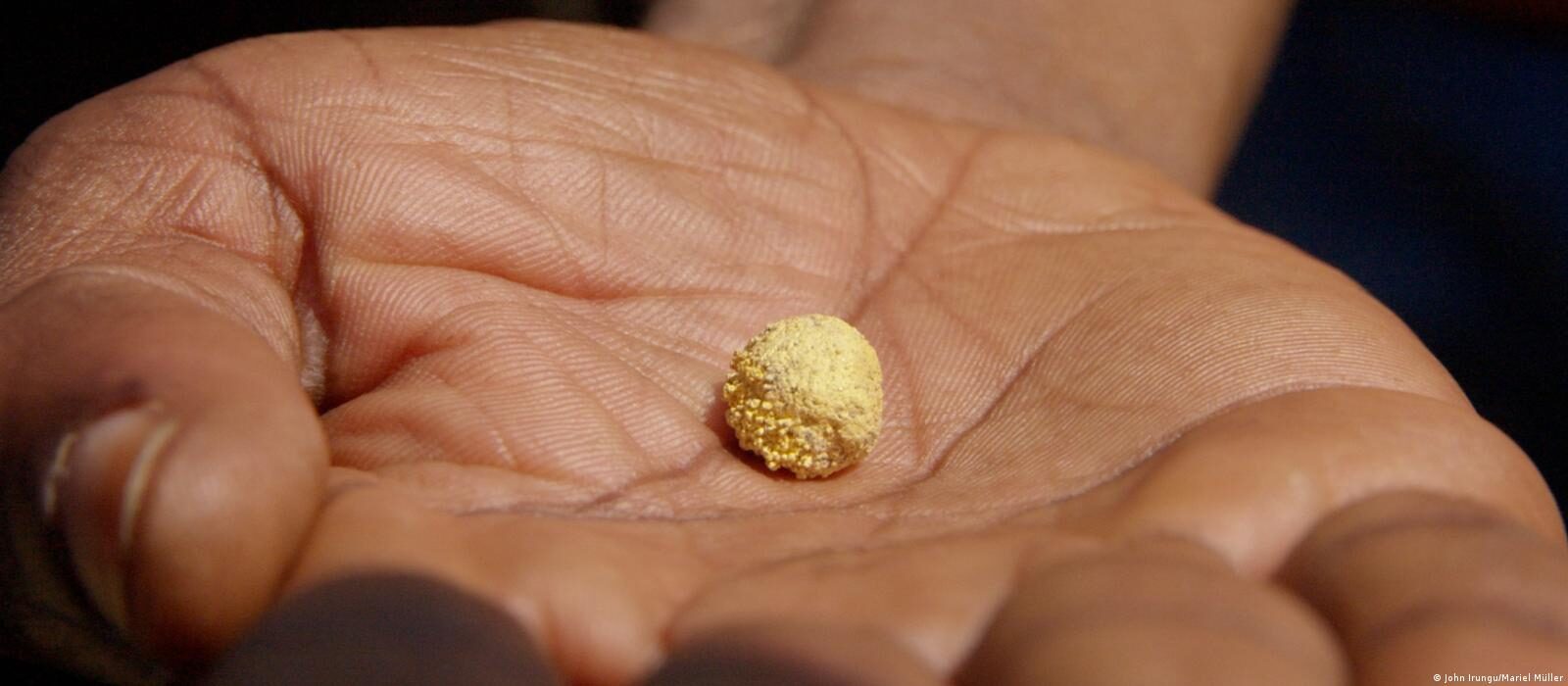
A DW journalist has been given unprecedented access to rebel-controlled gold mines in the Democratic Republic of Congo. Miners and civilians are forced to risk their lives, while the wealthy buy gold in the global north.

We’ve been waiting for hours to meet rebel leader William Yakutumba. As darkness falls, a man who had introduced himself as Raymond, Yakutumba’s secretary general, assures our group of journalists that the rebel strongman is marching through the forest that surrounds Misisi town with his security escort.

He and some other rebels are drinking beers in a hideout, which from the outside looks like a hotel closed for construction. But from behind a barrier, it serves as a base for the Mai-Mai Yakutumba rebels who are from one of the most active groups in eastern Democratic Republic of Congo (DRC).

The Mai-Mai Yakutumba are feared for their brutality. They have repeatedly attacked an ethnic group called the Banyamulenge, a Tutsi group, that they say doesn’t belong to the DRC. They drive them out, indiscriminately raping and killing as they burn down entire villages.

‘Friends in high places’

The rebels can move freely without having to hide because they work together with the army, Raymond explains.

“A colonel of the Congolese army is my good friend,” he brags, calling what he says is the colonel’s number. He has a brief conversation on speakerphone — “proof” for the international journalists.

He shows us pictures on his cellphone: His rebel colleagues posing with AK47s and other heavy weapons as children stand among them. They all wear uniforms he claims they stole from defeated Congolese army soldiers.

“We have all kinds of uniforms. If I want to, I can become a police officer.” He joined the rebels after his whole family was killed when he was 9 years old, he says. They see themselves as a self-defense group against their enemies.

We wait in vain. Yakutumba never shows up. But we receive his permission to enter two mines that the group controls: Mitondo and Makungu, near Misisi town.

Who controls the mines?

According to a recent UN report, the group not only controls these two mines but also the routes to them and a vast area around them.

Our journey brings us to Nyange village, located beside the mines. But the village chief is not happy with our permits. Nor is he convinced by our letter stamped by the governor of South Kivu region. It seems the local chief doesn’t want us to go there.

Officially, the mine is controlled by the local authorities and the mining ministry, but after hours of discussions the village chief eventually admits to our local contact: He can’t let us go to the mines — it’s not safe because the rebels control it, not him.

After a long conversation, we admit to him that the rebels have given us their permission to visit.

He’s stunned. And lets us proceed. But only after we agree to be accompanied by a police officer, a soldier, an intelligence officer, the son of the chief, and a man who introduces himself as part of the local mining cooperative — but whom we later learn is actually one of the rebels.

Rebels in red

We notice all rebels we meet wear something red. Red trousers, red hats, a red ribbon somewhere. Red is their distinguishing feature so that villagers know who they are. They live among the villagers. Everyone knows they control the mine and tax the people working there.

According to the UN report, the Mai-Mai have been in control since December 2021, when they forced government troops out.

The Mai-Mai appointed a parallel administration to govern the mine, says the UN report, which miners confirm.

According to the report, up to 150 diggers are at the site, which produces between 1 and 2 grams of gold per week.

Miners extorted

At the Mitondo mine, our local contact manages to distract our entourage, allowing us to hide in one of the narrow tunnels and speak to one of the miners, who we call Michael. He tells us that he has to pay a “tax” of a few dollars each month to the rebels just to access the mine.

Together with different government taxes and the contribution for the mining cooperative, there’s not much of his salary left on which to survive.

“They take over what is most lucrative. They know exactly which mine is producing most gold, down to which tunnel,” Michael tells us.

In meter-wide tunnels that feel overwhelmingly hot, he scrapes out a gold-bearing rock. He tells us about their special breathing technique to help deal with the stifling heat. Flat, regular breaths to prevent fainting. “When you go to work, you just pray to God. Because we’re feeling like it’s a death sentence,” he says.

Often it is — when the mines cave in. Six years ago, more than 20 people were buried alive.

Another digger, Patrice, remembers it well. “I was there with my three brothers and other miners. All of them were trapped inside the mine. Up until now, their bodies are still inside. I was sad, really sad. But I can’t be sad for long. I have to earn a living.”

Other miners have similar stories. They say the Mai-Mai are never far away, even now that they’re hiding further up the mountain because they were told that we were coming.

Later, we confronted the Mai-Mai Yakutumba via WhatsApp about these allegations, but they never replied. Local government officials also repeatedly declined our interview requests. Several sources tell us that the rebels often work together with local authorities and even share profits with them.

Surviving a rebel attack

We later meet Esther Nanduhura, who is from the Banyamulenge ethnic group targeted by the rebels. She describes how she survived an attack by the Mai-Mai Yakutumba. 

“They found us at the place we had sought refuge and they killed three people. Then they murdered my father-in-law and injured my mother-in-law,” she recalls.

Both of them were over 80, she says. She and her family were forced to march for days with no food. Then they took her husband. She never saw him again. Later she learned he had been hacked to death with a machete. They killed dozens, displaced hundreds in several attacks. 

Now Esther is safe, sheltering with her eight children at a friend’s house in a bigger city.

She is aware that gold from DRC ends up in the rich part of the world; people there pay a lot of money for it.

“The Mai-Mai sell gold to white people to buy weapons — that’s why they sell the gold. I want to tell these white people to stop buying from them. So they stop killing us with these weapons.”

For Esther it is a simple equation: As long as armed groups can reap profits from gold mining, they will keep earning the cash to kill. 

Fake gold certificates

The Democratic Republic of Congo has some of the purest gold in the world. Belgian businessman Yasin Karim Somji tells us that he is convinced of the purity of the gold in Misisi and other places in the North and South Kivu regions. He plans to soon open the first gold refinery in the DRC and export the gold to Europe, Asia and America.

“At the moment we are in long discussions with the government. They will check all artisan mine workers who will come here; they will try and trace it and maybe it will help. I hope it will help,” Somji says.

But it will be hard to make sure the gold that comes out of the region is not linked to rebels. Traders tell us that tracing certificates that indicate the origin of the gold are already altered in the first city they reach, Bukavu, in the DRC’s East.

From here it is often smuggled or officially exported — with fake certificates — across the border to Rwanda and other East African countries. Then it is transported to Dubai, a worldwide trading center for gold.

Eventually, it’s sold to the end consumer in Europe, the United States and other countries.

The vast majority of gold from DRC is smuggled illegally across the border. When it reaches its final destination it is virtually impossible to know where it originally came from.

Source: DW

READ MORE
107139542-1666618538032-gettyimages-1203130013-AFP_1PA94G
LITHIUMMARKETSMINING
October 25, 2022 By Octavian News

France Enters ‘White Gold’ Rush as Top Producer Aims to Supply Europe with Lithium

Paris-headquartered minerals giant Imerys plans to develop a lithium extraction project that it’s hoped will help meet demand and secure supply for Europe’s emerging electric vehicle market.

In a statement Monday, Imerys said its Emili Project would be located at a site in the center of France, with the company targeting 34,000 metric tons of lithium hydroxide production each year from 2028.

According to the business, this level of production would be enough to “equip approximately 700,000 electrical vehicles per year.”

Alongside its use in cell phones, computers, tablets and a host of other gadgets synonymous with modern life, lithium — which some have dubbed “white gold” — is crucial to the batteries that power electric vehicles.

The project being planned by Imerys is taking shape at a time when major economies like the EU are looking to ramp up the number of electric vehicles on their roads.

The EU plans to stop the sale of new diesel and gasoline cars and vans from 2035. The U.K., which left the EU on Jan. 31, 2020, is pursuing similar targets.

With demand for lithium rising, the European Union — of which France is a member — is attempting to shore up its own supplies and reduce dependency on other parts of the world.   

In a translation of her State of the Union speech last month, European Commission President Ursula von der Leyen said “lithium and rare earths will soon be more important than oil and gas.”

As well as addressing security of supply, von der Leyen, who switched between several languages during her speech, also stressed the importance of processing.

“Today, China controls the global processing industry,” she said. “Almost 90% … of rare earth[s] and 60% of lithium are processed in China.”

“So we will identify strategic projects all along the supply chain, from extracting to refining, from processing to recycling,” she added. “And we will build up strategic reserves where supply is at risk.”

Back in France, Imerys said it was finalizing what it described as a “technical scoping study” in order to “explore various operational options and refine geological and industrial aspects relating to the lithium extraction and processing method.”

The site selected for the project has, since the end of the 19th century, been used to produce a type of clay called kaolin for use in the ceramics industry.

The construction capital expenditure of the proposed lithium project is estimated to be around 1 billion euros (roughly $980 million), Imerys added.

“Upon successful completion, the project would contribute to the French and European Union’s energy transition ambitions,” the company said. “It would also increase Europe’s industrial sovereignty at a time when car and battery manufacturers are heavily dependent on imported lithium, which is a key element in the energy transition.”

In recent years, a range of factors has created pressure points when it comes to the supply of the materials crucial for EVs, an issue the International Energy Agency highlighted earlier this year in its Global EV Outlook.

“The rapid increase in EV sales during the pandemic has tested the resilience of battery supply chains, and Russia’s war in Ukraine has further exacerbated the challenge,” the IEA’s report noted, adding that prices of materials like lithium, cobalt and nickel have soared.

“In May 2022, lithium prices were over seven times higher than at the start of 2021,” it added. “Unprecedented battery demand and a lack of structural investment in new supply capacity are key factors.”

In a recent interview with CNBC, the CEO of Mercedes-Benz sketched out the current state of play, as he saw it when it came to the raw materials required for EVs and their batteries.

“Raw material prices have been quite volatile in the last 12 to 18 months — some have spiked and actually some have come back down again,” Ola Kallenius said.

“But it is true as we become electric, all-electric and more and more automakers go into the electric space, there is a need to increase mining capacities and refining capacities for lithium, nickel, and some of those raw materials that are needed to produce electric cars.”

“We have everything that we need now, but we need to look into the mid to long-term and work with the mining industry here to increase capacities.”

Source: CNBC

READ MORE
frank-giustra-interview
GOLDMARKETS
October 22, 2022 By Octavian News

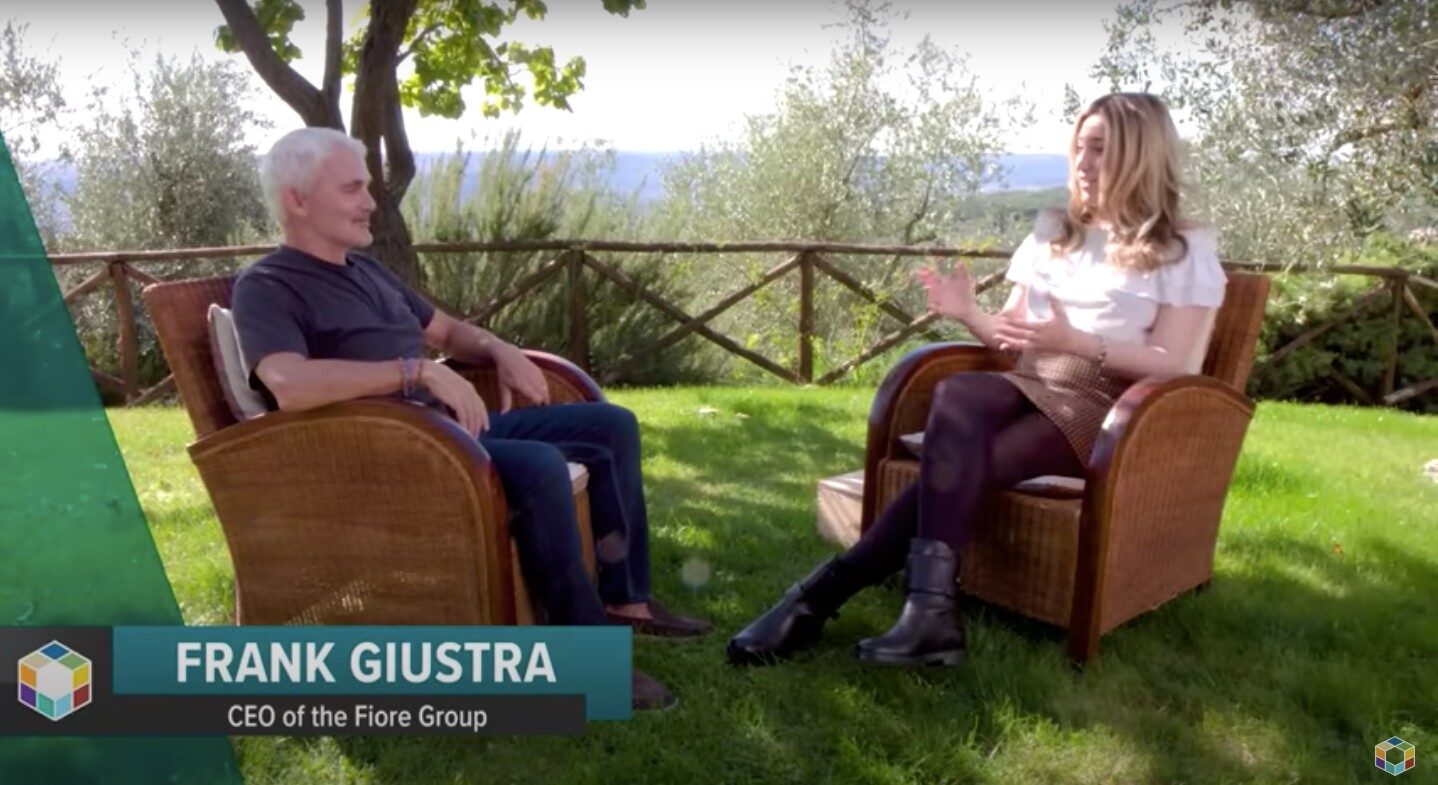
A Global Monetary Reset Is Here; Countries No Longer Want to Be Held Hostage, Warns Frank Giustra

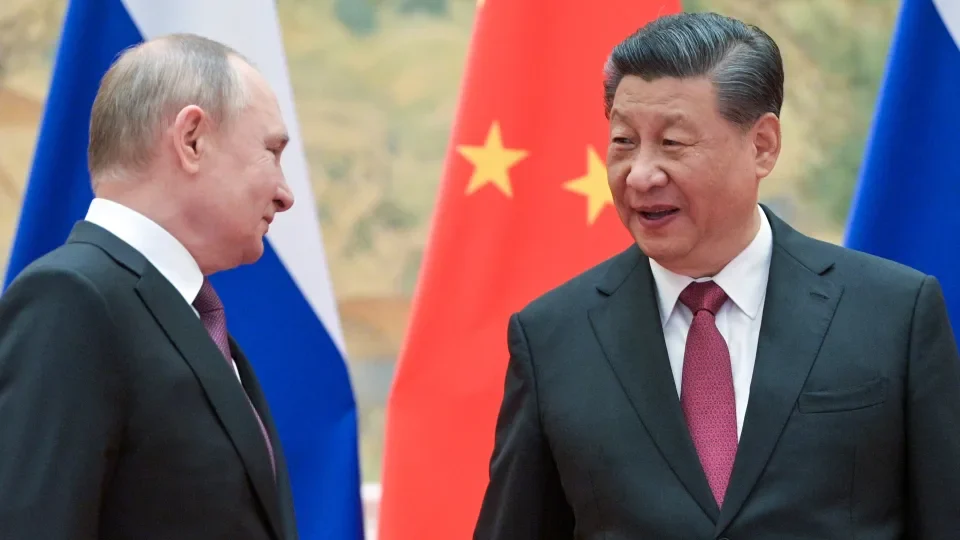
In an exclusive interview with Daniela Cambone, billionaire philanthropist, Frank Giustra lays out his thesis for the global monetary reset already underway. We’re at the beginning of a currency war, “and I’m absolutely certain we’re heading into a global monetary system reset,” warns Frank Giustra, CEO of the Fiore Group. He tells Daniela Cambone, Russian President Vladimir Putin and Chinese President Xi Jinping, “have made it very clear they want an alternative to the U.S. dollar,” after being held hostage by the currency for so long. Predicting that the dollar will lose its status as the world’s reserve currency, Giustra says China will be victorious in its efforts to solidify a new central bank currency backed by gold. “Everybody, and I mean everybody, should own physical gold,” he says when asked about the increasing privacy issues posed by technology. “I think the pivot is around the corner, the [Fed’s] math doesn’t make any sense,” claims Giustra when asked about the rate-hike cycle currently underway for the central bank. “The Fed is trying to talk inflation and something is going to break, they’ve ruined the American dollar,” he concludes.

Source: YouTube

READ MORE
Cobalt-Market-Value-Will-More-Than-Double-by-2030-KMET-Invests-440×250
COBALTMARKETSMINING
October 20, 2022 By Octavian News

Cobalt Market Value Will More Than Double by 2030

The global market size of cobalt is expected to grow from $8.7 billion in 2021 to over $19.4 billion by 2030 according to a recently updated report from Straits Research. Demand for cobalt and other raw metals necessary for electrification is ramping up substantially.

Cobalt is a raw material that has a wide range of uses across many industries and is a by-product of nickel or copper mining. It’s a key component in rechargeable batteries and demand is anticipated to drive a 9.3% compound annual growth rate for the metal between now and 2030.

Use cases for cobalt continue to grow, as the metal is known for its high-temperature resilience, energy storage capabilities, hardness, process efficiency, and more according to the report. Demand is growing within the artificial intelligence industry, additive manufacturing, as well as digital processing as R&D drives continued innovation in the use of cobalt.

Cobalt is currently used in several sectors. It’s used in batteries of portable electronics like laptops and smartphones. It is in integrated circuits, in permanent magnets in wind turbines, and rechargeable batteries for storing renewable energy. It is also used in superalloys used by the aerospace and defense sector as well as in orthopedics and dental implants.

Over half of the cobalt produced today is used for rechargeable batteries for electric vehicles, with each battery requiring between 5-15 kilograms (11-33 pounds) of cobalt. As demand increases exponentially for EVs, so too will the demand for cobalt.

Investing in Cobalt and Electrification Metals With KMET

KraneShares launched its newest fund this month, the KraneShares Electrification Metals ETF (KMET), which offers targeted exposure to the metals that will be necessary for the electrification and clean energy transition of the world’s economy in the pivot to net-zero emissions.

The fund seeks to track the Bloomberg Electrification Metals Index and is comprised of futures contracts on copper, nickel, zinc, aluminum, cobalt, and lithium. These metals are all core components for batteries, electric vehicles, and the renewable energy infrastructure that is being created and expanded as countries aim for net-zero emissions by 2050 to curtail global warming.

KMET has an expense ratio of 0.79% and is part of the climate-focused lineup of funds from KraneShares.

Source: ETF Trends

READ MORE
1200x675_cmsv2_bdfbbfd3-60b3-521c-b568-23359b060381-6444452
LITHIUMMARKETSMININGTECHNOLOGY
October 19, 2022 By Octavian News

Europe Joins the ‘White Gold’ Rush for Lithium and Faces an Energy Transition Challenge

Shortly before arriving at the Paris Motor Show on Monday, French President Emmanuel Macron told the financial daily Les Echos that his administration wanted to make electric vehicles “accessible to everyone”.

Macron then proceeded to announce a series of measures to enable households to acquire electric vehicles. With the EU seeking to ban the sale of combustion engine vehicles from 2035, France is trying to gradually phase out fossil-fuel cars. While the move is seen as an essential step on the road to energy transition, it also poses a serious problem: it will require massive quantities of metals needed to manufacture batteries, especially lithium.

The figures speak for themselves. Since 2015, production volumes of lithium – also known as “white gold” – have tripled worldwide, reaching 100,000 tonnes per year by 2021, according to the International Energy Agency. The volumes could increase sevenfold by 2030. At the European level, about 35 times more lithium will be needed in 2050 than today, according to an April study by KU Leuven, a Catholic research university in Belgium.

“We are at a stage where all countries are starting their energy transition more or less at the same time and this generates very significant metal needs,” noted Olivier Vidal, a geologist and director of research at the French National Centre for Scientific Research (CNRS). “This will certainly create tensions in the coming years, with expected increases in costs and, possibly, supply difficulties. So, there is a real strategic and sovereignty issue for states.”

The European Commission is well aware of these concerns and included lithium in the list of critical raw materials with a risk of shortage, back in 2020. Lithium “will soon be even more important than oil and gas”, said European Commission chief Ursula von der Leyen in September 2022.

Extraction projects in their infancy

Lithium production today is dominated by just a handful of countries: Australia, which has 20% of the world’s reserves of “white gold”, and Argentina, Chile and Bolivia, which have 60%. China, on the other hand, was an early investor in refining and controls 17% of the world’s lithium production. With just five countries controlling 90% of world production, the International Energy Agency calls it a “quasi-monopoly” situation.

Europe hopes to make the most of the new “white gold” rush by exploiting its own subsoil. The continent’s main reserves are in Portugal, Germany, Austria and Finland. In France, the French Geological and Mining Research Bureau (BRGM) drew up an inventory in 2018 highlighting reserves in Alsace, the Massif Central region, as well as in the Armorican Massif area in Brittany.

Europe’s lithium extraction and production projects have been mostly undertaken by small and medium-scale companies across the continent. “The most successful ones are in Finland. Lithium production could start in 2024 thanks to the exploitation of a small mining site located about 600 km north of Helsinki,” explained Christian Hocquard, a geologist-economist and co-author of a book on lithium energy transition. “In the Czech Republic, an Australian company, European Metals, wants to exploit old tin mines located north of Prague. There are similar projects in Germany and Austria,” he noted.

“These are generally minor projects, carried out by small companies. The big ones prefer to invest in Australia or Latin America,” explained Hocquard. “Few of them will see the light of day, blocked by the difficulties of obtaining permits but above all due to resistance from local communities,” he predicted.

Facing the environmental consequences of our consumption

Mining projects often faced public discontent. In Portugal, an open-pit mine – the largest in Western Europe – was supposed to be built in 2026 in the village of Covas do Barroso. Work has however been currently suspended following numerous protests. In Serbia, the opening of the Jedar mine was cancelled a few months before the January 2022 presidential election. In France, Barbara Pompili, former ecological transition minister, floated the idea of exploiting lithium in the tiny village of Tréguennec, in Brittany’s Finistère region back in February 2021. The area however is classified as a protected zone and sparked a local outcry.

Lithium extraction “produces considerable volumes of waste that must then be stored. The waste can also lead to water or air pollution,” explained Vidal.

While Vidal views the outcry as “completely understandable”, he nevertheless supports these projects. “It would be much more ethical. We consume lithium daily, it would be normal for us to suffer the impacts related to our use. Today, this pollution already exists, but in other countries, far from our eyes. This would raise awareness among users, who would be confronted with the impacts of their consumption,” he said.

France looks to ‘green lithium’

France, for its part, is studying an alternative, called the extraction of “green lithium”. Unlike extractions from rocks or salt deserts, which function like traditional mines, “green lithium” is produced from geothermal sources, with an extraction method similar to that of a well. In France’s Alsace region, the European project EuGeLi (for European Geothermal Lithium) is a pioneer in this field. It recently succeeded in extracting its first kilograms of lithium using this technique. “For the time being, however, the technique remains too expensive to be considered on an industrial level,” noted Hocquard.

The other alternative is to focus on refining lithium rather than mining it. A project was announced in Germany in early June and the Strasbourg-based company Viridian Lithium plans to open the first French lithium factory for batteries there by the end of 2025. It will source ores from Latin America and aims to produce 100,000 tons of lithium hydroxide by 2030. “This would not solve the issue of dependence, but it would create know-how and jobs,” said Vidal.

From an ecological perspective, this would also have a major advantage. At present, lithium is almost systematically transited through China to be refined. The EU now plans to open three “gigafactories” for battery production.

Focusing on battery recycling

Vidal warns that even if all these projects come to fruition, they would still not be able to compete with the salt deserts of South America or with Australian production. “On the other hand, where the European Union could really make its mark in the coming years is in battery recycling,” he noted.

“Currently, the quantities of metals to be recycled are still limited since lithium batteries did not exist ten years ago. But by 2035, we will have batteries for electric vehicles at the end of their life and therefore a stock that can be recycled,” he explained. According to the University of Leuven, 40% to 75% of the EU’s metal needs could be met through recycling by 2050. This would guarantee supply security as well as reduce the environmental impact.

“For that to happen, we have to act now,” said Vidal. “We need to design products that will be easily recyclable, at lower cost, to reassure investors.”

But most important, according to Vidal, is our consumption habits. “We need to think about our uses. Lithium is certainly used in car batteries, but also in many everyday gadgets,” he explained. “One of the levers is also to learn to move towards more material sobriety.”

Source: France24

READ MORE
  • 1
  • …
  • 7
  • 8
  • 9
  • 10
  • 11

© 2023 Octavian Precious Metals Trading DMCC. All Rights Reserved.